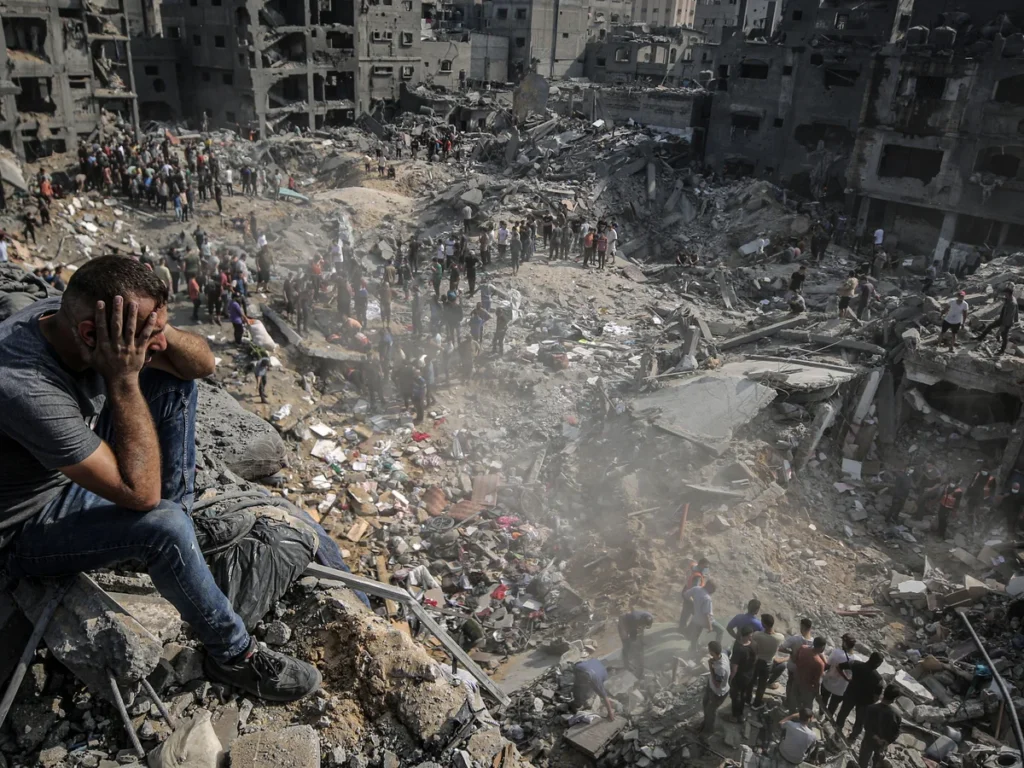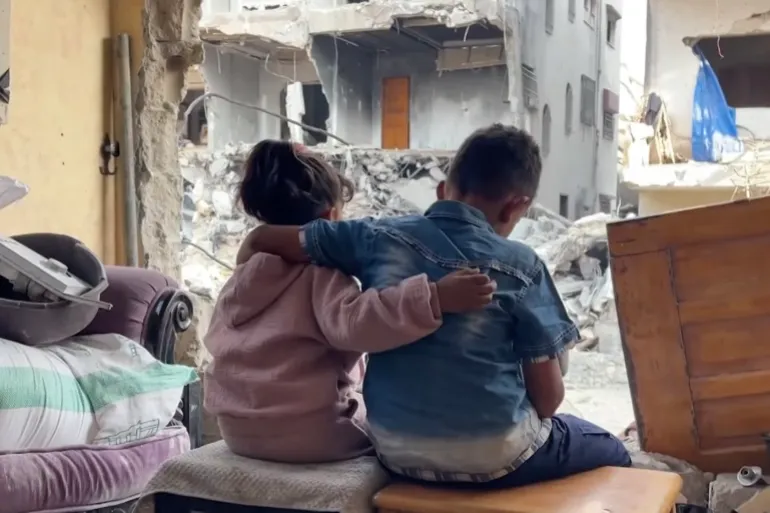
Gaza Herald_ Israel’s decision to suspend the work of 37 international humanitarian organizations represents a grave escalation in its assault on Gaza, transforming an already catastrophic situation into an open war on civilian survival. After more than two years of relentless bombardment, mass displacement, and siege, this move strips Palestinians of some of the last remaining lifelines sustaining life in the enclave.
Presented as a bureaucratic or regulatory step, the suspension cannot be separated from the broader context in which it occurs. It is the latest stage in a sustained campaign to dismantle Gaza’s humanitarian, medical, and social infrastructure, ensuring that even survival itself becomes conditional and precarious.
From Bombardment to Bureaucratic Strangulation
Israel has systematically targeted the foundations of civilian life in Gaza, not only through military force but also through policies that undermine humanitarian response. By defunding, discrediting, and obstructing aid agencies, most notably UNRWA, Israel has steadily narrowed the space in which humanitarian actors can operate.
Accusations against aid workers and medical personnel, often unsupported by evidence, have been amplified internationally with minimal resistance. In the absence of serious global accountability, these allegations have become tools to justify collective punishment, further entrenching a system in which humanitarian assistance is politicized and weaponized.
Initially, Israeli officials claimed the suspensions were due to noncompliance with new registration rules. Later statements revealed the underlying narrative: preventing what Israel alleges is the misuse of aid by Hamas. Such claims have repeatedly been challenged and dismissed, including by Israeli military sources, yet they continue to be invoked to legitimize sweeping restrictions.
Criminalizing Solidarity and Conditioning Aid
The new regulatory framework imposed by Israel extends far beyond technical oversight. It introduces explicit political and ideological criteria for humanitarian work, barring organizations that have supported boycotts or spoken critically of Israeli policies.
This approach does not merely regulate aid delivery; it enforces political conformity. Organizations are effectively told that access to civilians in need depends on silence, neutrality defined by the occupier, or alignment with Israel’s narrative. In this way, humanitarian assistance becomes contingent on abandoning principles of justice and accountability.
UNRWA: The Blueprint for Erasure
The dismantling of UNRWA set a dangerous precedent. For decades, the agency functioned as a cornerstone of daily life for Palestinian refugees, providing education, healthcare, food aid, and social services under prolonged occupation and blockade.
Following October 7, 2023, Israel intensified efforts to portray UNRWA not as a humanitarian institution mandated by the international community, but as a political threat. Allegations involving a limited number of employees were expanded to implicate the entire organization, triggering swift donor suspensions, most notably the immediate freezing of US funding, despite the lack of verified evidence.
Israel then moved to block UNRWA’s operations and pass legislation criminalizing its presence. The international response was marked by hesitation and weakness. Although some funding was later restored, no binding enforcement measures or meaningful political consequences followed. This failure signaled that even the most established humanitarian institutions could be dismantled with impunity.
Removing the Last Pillars of Life
The suspension of additional aid organizations now threatens to collapse what little remains of Gaza’s humanitarian system. For years, international groups have filled gaps created by Israel’s systematic destruction of civilian infrastructure and repeated attacks on healthcare facilities.
Organizations such as Doctors Without Borders and Medical Aid for Palestinians provide far more than material aid. They deliver emergency surgeries, trauma care, cancer treatment, rehabilitation for the wounded, and mental health services, functions that are irreplaceable in a health system pushed to the brink.
Israel has sought to minimize the impact of the suspensions by claiming the affected organizations contributed only a small percentage of total aid entering Gaza. This framing is deeply misleading. Humanitarian impact cannot be measured solely by the volume of supplies. It lies in capacity, expertise, and the ability to save lives.
In 2025 alone, Doctors Without Borders conducted hundreds of thousands of medical consultations and treated tens of thousands of trauma cases. Medical Aid for Palestinians expanded critical services in areas where hospitals were barely functioning. To portray these contributions as marginal is not an assessment, it is a narrative designed to normalize their removal.
Weaponizing Dependency
What is unfolding in Gaza reflects a deliberate and coherent strategy. First, Israel creates dependency through siege, destruction, and the systematic dismantling of Palestinian institutions. Then, it weaponizes that dependency by controlling, restricting, or withdrawing the means of survival.
In a territory where homes, hospitals, and basic infrastructure have been destroyed, the removal of humanitarian actors is not a neutral administrative act. It is a calculated escalation that turns survival itself into a battleground.
This is not a humanitarian failure. It is the logical extension of a broader policy aimed at rendering life in Gaza increasingly unliveable, using aid restrictions as another instrument in an ongoing campaign of collective punishment and erasure.