Gaza Herald_ Hamas has categorically rejected Israeli accusations linking it to an explosion that occurred in Rafah, stressing that the incident took place in an area under full Israeli military control and devoid of any Palestinian presence or resistance activity.
In an official statement, the Hamas Movement emphasized that it had repeatedly warned of unexploded remnants of war left behind by Israeli forces in Rafah and other areas of the Gaza Strip. Hamas stated that such hazards are a direct consequence of Israel’s prolonged military operations and bombardment, not the actions of Palestinian factions, particularly since the implementation of the ceasefire agreement.
The Movement underlined that it bears no responsibility for explosions caused by unexploded ordnance, especially in zones where Israeli troops exercise complete operational control. Hamas reaffirmed its full commitment to the ceasefire and all obligations arising from it, calling on international mediators to pressure Israel to adhere to the signed agreements rather than fabricate incidents to justify renewed aggression and undermine the truce.
Hamas further warned that repeated Israeli attempts to shift blame onto Palestinian resistance serve as a dangerous tactic aimed at evading accountability and paving the way for further military escalation against Gaza’s already devastated population.
Israeli Officer Injured in Rafah Blast
Earlier on Wednesday, the Israeli army announced that one of its officers was injured when an explosive device detonated near an armored military vehicle in Rafah, in the southern Gaza Strip.
According to the Israeli military’s statement, the officer sustained minor injuries and was transported to a hospital for treatment. The army did not provide clear details regarding the nature of the explosive device, its origin, or how it remained in an area described as being fully secured by Israeli forces.
Despite the lack of evidence linking the incident to any Palestinian faction, Israeli officials were quick to frame the blast as a violation of the ceasefire agreement, raising concerns among observers that the incident may be exploited politically rather than investigated transparently.
Shortly after the announcement, the office of Israeli Prime Minister Benjamin Netanyahu issued a statement threatening retaliation, accusing Hamas of breaching the ceasefire, claims that Hamas and Palestinian officials firmly deny.
Israeli Claims and Escalatory Rhetoric
The Israeli army claimed that Hamas “continues to violate the ceasefire and President Donald Trump’s 20-point plan,” asserting that the movement must be held accountable for an agreement that Israel alleges includes the removal of Hamas from governance in Gaza, its disarmament, and the elimination of what it describes as “extremism.”
These claims, however, are widely disputed, as no publicly acknowledged ceasefire framework obliges Hamas to disarm or relinquish political authority under the current agreements. Palestinian analysts argue that such rhetoric reflects Israel’s longstanding objective of reshaping Gaza’s political landscape through force rather than negotiation.
Israel’s statement concluded by warning that it would “respond accordingly,” language that Palestinians have come to associate with imminent military action, including airstrikes and ground operations that overwhelmingly impact civilians.
Palestinian Analysis, A Familiar and Dangerous Pattern
Commenting on the developments, Al-Araby TV correspondent Ahmad Al-Batta said Palestinians view the Israeli narrative as part of a familiar and deeply troubling pattern that has followed previous ceasefire agreements.
He explained that Israeli claims often revolve around alleged security incidents in areas under full Israeli military control. These claims, he said, are frequently used as a prelude to renewed airstrikes that result in dozens of Palestinian casualties, the majority of them women and children.
Reporting from Khan Younis, near Rafah, Al-Batta stressed that Rafah is currently under complete Israeli control and that there is no presence of Hamas, the Qassam Brigades, or any other Palestinian armed factions in the area where the explosion reportedly occurred.
He added that Israeli forces have maintained extensive ground deployment, surveillance, and clearance operations in Rafah, making it implausible that Palestinian resistance could operate freely or plant explosives in the area without Israeli knowledge.
Gaza Residents Fear Manufactured Pretexts for War
Al-Batta further noted that even Israeli narratives previously used to justify ongoing violations, such as the alleged presence of Hamas fighters in Rafah, have not been mentioned for more than two weeks. Israeli officials themselves have suggested that this issue has been closed, claiming those fighters were killed.
According to residents in Gaza, whether the explosion was caused by unexploded Israeli ordnance or exaggerated for political purposes, it occurred in an area controlled by the Israeli army and should not be used as a justification for bombing civilian neighborhoods or so-called “safe zones.”
For many Palestinians, the episode reinforces widespread fears that Israel is actively searching for pretexts to resume large-scale military escalation, despite the ceasefire and the catastrophic toll already inflicted on Gaza’s civilian population.
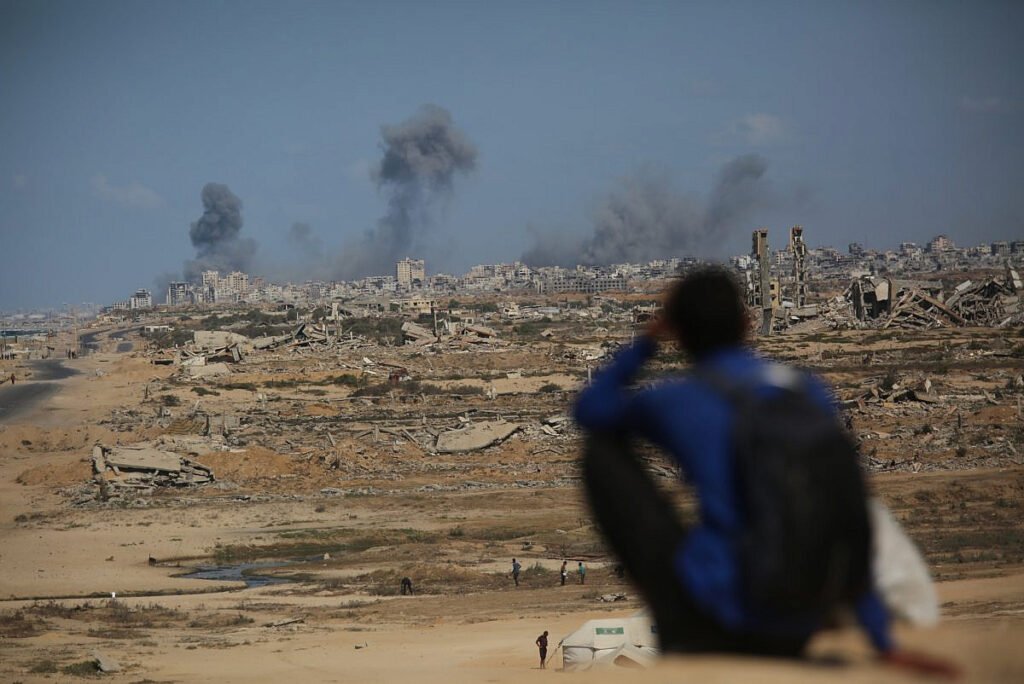
After more than a year of relentless bombardment, mass displacement, and the destruction of Gaza’s infrastructure, Palestinians warn that any renewed escalation would further deepen an already unprecedented humanitarian catastrophe, while exposing the fragility of ceasefire arrangements in the absence of genuine international accountability.