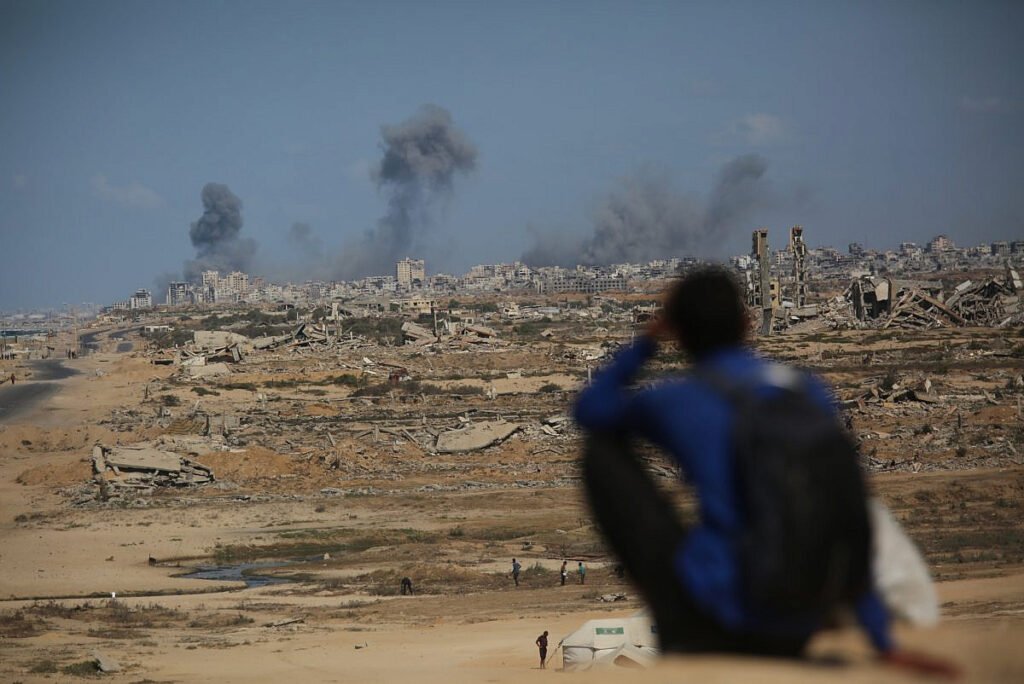
Gaza Herald — New satellite imagery analysis reveals that Israeli forces have continued demolishing residential and agricultural structures in areas of the Gaza Strip under their control, despite a ceasefire that formally came into effect on October 10. The findings indicate that large-scale destruction has persisted well beyond the halt in major hostilities, raising serious legal and humanitarian concerns.
Palestinian factions have condemned the demolitions as a clear breach of the ceasefire agreement, arguing that the continued leveling of civilian infrastructure amounts to an extension of military operations by other means. Legal experts and United Nations officials have repeatedly warned throughout the war that the systematic destruction of civilian property may constitute war crimes under international law.
Satellite Evidence and Expanding Military Control
The satellite images, reviewed by an independent fact-checking and analysis unit, show that demolitions intensified between November 5 and December 13, with the heaviest concentration in Gaza City’s Shujayea and Tuffah neighborhoods. Additional destruction was documented in the southern city of Rafah, as well as the apparent razing of agricultural facilities east of Deir el-Balah in central Gaza.
Since the ceasefire began, Israeli forces have maintained control over approximately 58 percent of the Gaza Strip, repositioning behind what Israeli officials have referred to as a “yellow line” separating coastal Gaza from border regions. This continued presence has enabled extensive ground-level alterations, including the clearing of neighborhoods and farmland.
The analysis also indicates that Israeli forces established a new advanced military outpost in the Tal al-Za’atar area of northern Gaza during the same period, with new tents and equipment appearing over time. Before this development, at least 39 active Israeli military positions were already operating inside the enclave.
Legal Concerns and Humanitarian Impact
International law specialists have stressed that such actions face an exceptionally high legal threshold. Under the Fourth Geneva Convention, the destruction of private property by an occupying power is prohibited unless it is rendered necessary by active military operations. Experts emphasize that this exception is extremely narrow and does not apply to actions taken for convenience, long-term control, or strategic advantage.
With a general ceasefire in place and only sporadic exchanges of fire reported, legal analysts argue that it is difficult to justify the widespread demolition of civilian property as a military necessity. The scale and timing of the destruction, they note, further undermine claims that it was required for immediate combat-related purposes.
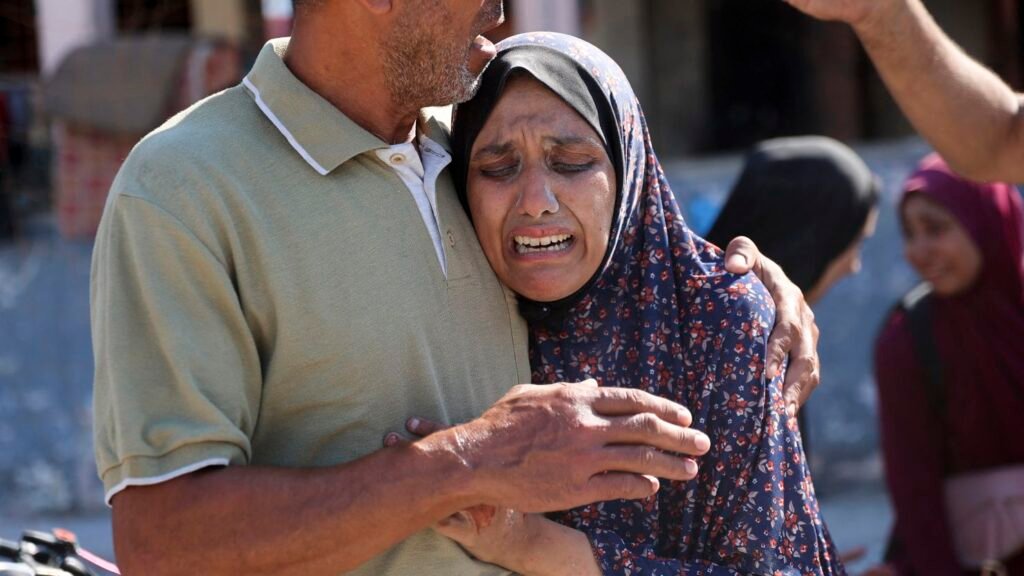
The cumulative impact of Israeli military operations has been catastrophic. UN agencies report that more than 282,000 housing units have been destroyed across Gaza, leaving roughly 1.5 million Palestinians displaced. Nearly 93 percent of schools have been damaged or destroyed, while close to two-thirds of hospitals remain out of service, deepening an already severe humanitarian crisis.
Ceasefire Violations and Mounting Death Toll
A UN Human Rights Council independent commission has previously cited repeated attacks on civilian infrastructure, particularly medical facilities, in its conclusion that Israel has committed acts of genocide in Gaza. Despite the ceasefire, Gaza’s Health Ministry reports that hundreds of Palestinians have been killed in continued Israeli attacks since October 10.
Since October 7, 2023, the total Palestinian death toll in Gaza has surpassed 70,000, a figure that continues to rise amid ongoing strikes, demolitions, and displacement. Palestinian officials view the sustained destruction within the so-called “yellow line” zone as evidence that Israel is consolidating military control rather than adhering to the spirit or letter of the ceasefire agreement.
As Israel entrenches its presence and reshapes large swathes of Gaza through demolition and militarization, ceasefire violations appear increasingly structural, transforming a supposed pause in war into a prolonged phase of controlled devastation.