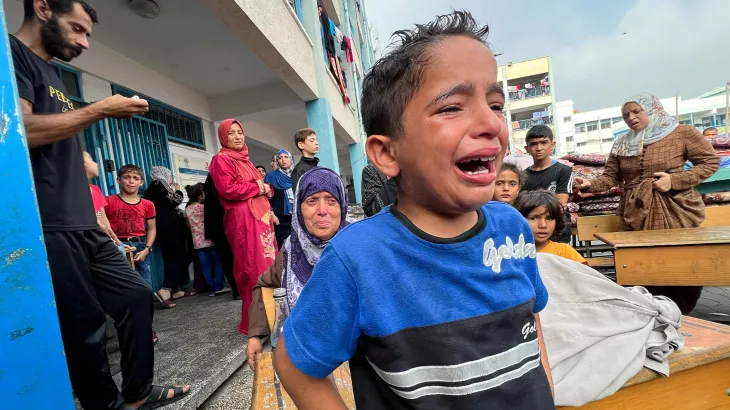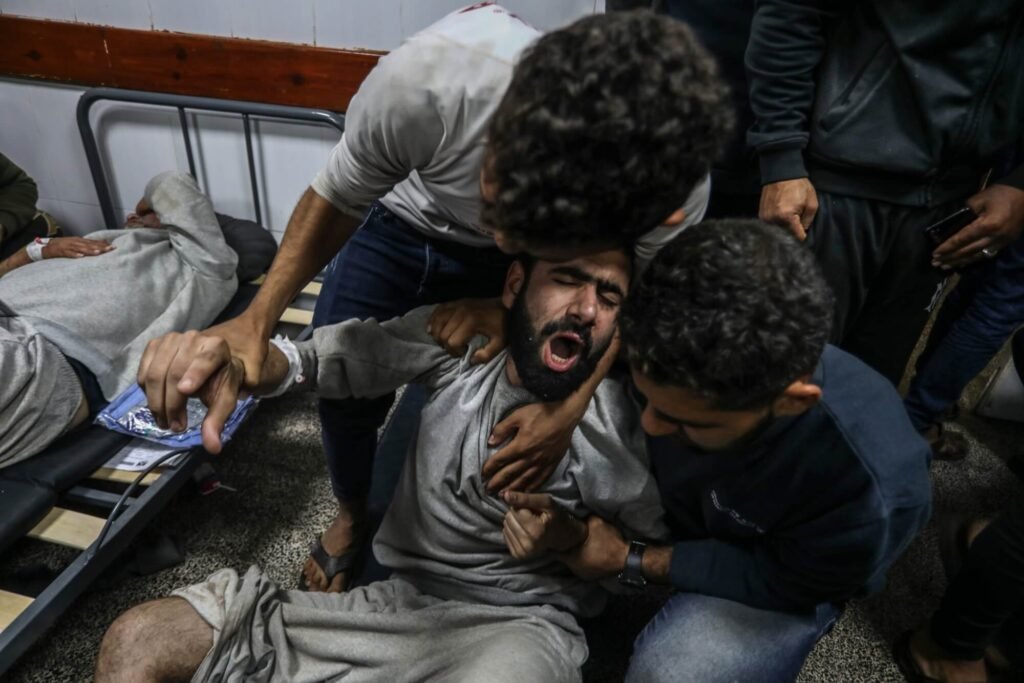
Gaza Herald_ A new UK documentary has broadcast unsettling firsthand testimony from Israeli soldiers deployed to Gaza, with participants describing scenes of destruction, a relaxed approach to civilian casualties, and tactics that rights groups say amount to war crimes. The film, Breaking Ranks: Inside Israel’s War, shown on ITV, presents soldiers who alternate between shame, blunt confession, and self-justifying detachment as they recount their experiences inside an enclave reduced to rubble.
One soldier, speaking about Gaza after months of sustained bombing, described the landscape in apocalyptic terms: “Terrible heat. Sand. Stench. And dogs wandering around in packs. They eat dead bodies … It’s horrifying … It’s a kind of zombie apocalypse. No trees. No bushes. No roads. There’s nothing.” The footage and on-camera interviews lay bare not only the physical devastation but also the language and attitudes that some troops used to justify or normalize extreme violence.
The documentary includes candid accounts of operational policies and field practices that raise serious legal and ethical questions, from permissive firing rules to the routine use of civilians as shields and a pattern of indiscriminate destruction. One interviewee, identified as Captain Yotam Vilk of the Armoured Corps, described how the usual protections, that a person must have the means, intent, and ability to threaten soldiers, were effectively suspended. “There’s no such thing as means, intent, and ability in Gaza,” he said. “It’s just a suspicion of walking where it’s not allowed.’ Anyone who crosses the line is automatically incriminated and can be put to death.”
Other soldiers described tactics they said were normalized by their units. A tank commander known as “Daniel” dismissed official denials that the army used human shields, explaining a practice he called the “mosquito protocol”: seizing Palestinians, strapping phones to them, and sending them ahead to probe for militants. He said every company kept its own “mosquitoes”, treated like insects and deployed routinely. Daniel recalled that when some soldiers freed two teenage human shields out of legal concern, a senior officer instructed them that they did not need to learn international law, only the unit’s “spirit.”
Several participants also described an operational culture in which property destruction, looting, and humiliation of civilians became commonplace. Social-media clips from some soldiers show homes ransacked and household items paraded for ridicule. One conscript, named only as “Yaakov,” summed up the attitude: “You feel that every day could be your last and that you can do anything… Not out of revenge, but just because you can.” Others admitted to burning or bulldozing homes, sometimes celebrating the destruction.
The film includes footage and testimony from figures who have already been the subject of complaints to international authorities. Avraham Zarbiv, a rabbinical judge now based in the occupied West Bank, appears in material boasting of driving a bulldozer to tear down houses and of posting videos framing those acts as morale-boosting for troops. In his footage, he declared, “Until the end, until victory, until settlement… we will not give up until this village is wiped out,” and claimed credit for tactics now widely used across Gaza.
Context in numbers underlines the scale of devastation described on camera. Over two years of fighting have left Gaza’s housing stock almost erased, the United Nations says, with some 92 percent of dwellings damaged or destroyed and an estimated 1.9 million people displaced, many multiple times. Institutions from universities to hospitals have been targeted or shattered, and observers warn reconstruction will take decades, if it is possible at all.
The documentary also examines the limited record of military accountability. While Israeli authorities deny systemic abuses and point to internal probes, outside monitors say those inquiries rarely produce meaningful action. A recent UK study of military investigations found few prosecutions or punishments arising from inquiries into alleged crimes, including incidents like the killing of 15 paramedics, raising concerns about impunity.
Several soldiers voiced the moral toll of their actions. Some expressed remorse and shame, admitting privately that they felt complicit in atrocities. Others, more candid and unrepentant, described the psychological and moral corrosion that accompanies prolonged exposure to a campaign of destruction: a normalization of brutality and a sense that the rules no longer apply. “All mosques, almost all hospitals, almost all universities, every cultural institution has been destroyed,” one former soldier said. “You’ve destroyed a society. You don’t have to kill them one by one to destroy every sign of the society that once existed there.”
As the documentary aired, it prompted renewed calls from human rights groups for independent, external investigations into conduct in Gaza and for accountability where abuses are alleged. The testimonies shown on screen feed into an expanding body of evidence cited by international lawyers and rights monitors who argue that patterns of deliberate targeting, collective punishment, and the use of civilians as instruments of war could amount to war crimes or crimes against humanity.
For viewers, the film’s most chilling throughline is a recurring phrase: when soldiers feel no constraints, the calculus of violence shifts. “You can do anything,” a participant said on camera. That sentiment, captured on a major UK broadcaster, has re-energized debates about oversight, the laws of armed conflict, and the urgent need for independent scrutiny of the conduct of hostilities in Gaza.