
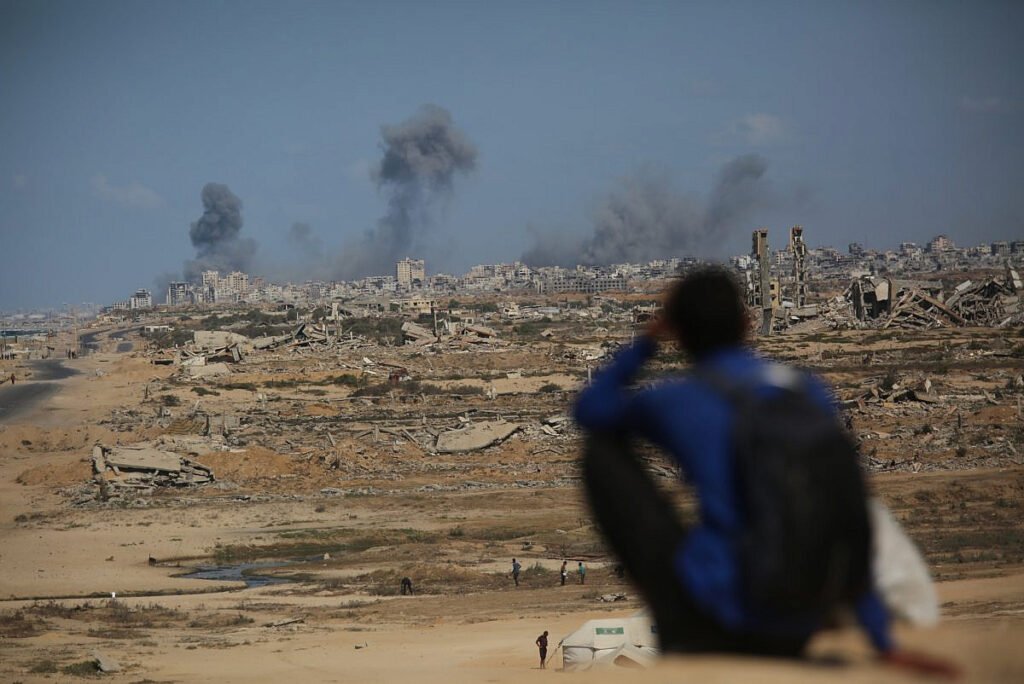
Gaza Herald_ In Gaza, the passage of time no longer marks progress or change, only endurance. Each day bleeds into the next, defined not by the rhythm of life but by the struggle to remain alive. For Palestinians, what was once a temporary hardship has hardened into routine, reshaping every street, every home, every breath. The war has rewired even the most basic acts of living, turning survival itself into a full-time occupation.
Nothing resembles normal life anymore. The past two years have stripped the Strip of the familiar, replacing it with a new reality where loss, hunger, and exhaustion are constants. Every corner of Gaza carries traces of what once was, children’s laughter replaced by silence, homes turned to dust, markets standing half-empty beneath a sky still thick with the memory of airstrikes.
It is not uncommon to see people break down in the middle of the street, not out of sudden despair, but because the weight of memory has become unbearable. A glimpse of a destroyed building may trigger the thought of a loved one buried beneath it, or a hospital now without power may hold someone’s dying parent. The entire city moves under the heavy gravity of grief.
Survival here begins with calculation. Every decision is measured: how long to stand in line for a few liters of water; whether to spend a day searching for bread or fuel; which market might still have something edible among shelves filled with instant noodles and overpriced biscuits. Gaza’s economy has collapsed under siege, and so has the dignity that comes with providing for one’s family.
Even the act of eating has lost its meaning; food is no longer a comfort but a question of endurance. Parents often skip meals so their children can have something, anything. And when night falls, the search begins again — for firewood, for candles, for a safe corner to sleep in beneath the open sky.
As winter approaches, a new wave of fear settles in. The cold will soon creep through tents and shattered walls, and thousands have no homes left to shelter them. The landscape of Gaza is now one of ruins, skeletal remains of buildings standing as reminders of what has been lost, and of what the world has chosen to ignore.
In Gaza today, survival is not living. It is persistence, a defiant act of existence against a system that seeks to erase it.

