Gaza Herald_ The Israeli army has been dumping large quantities of waste and construction debris inside the Gaza Strip, raising growing fears of an imminent environmental disaster in the already devastated enclave.
Footage and testimonies reviewed by Gaza Herald reveal that trucks are entering Gaza loaded with construction rubble, dumping it across parts of the territory that have already been flattened by the war. Heavy machinery can be seen unloading waste near border crossings and repeating the process throughout multiple locations in the Strip.
Soldiers Question Orders
Some soldiers have expressed frustration, questioning the logic of throwing thousands of tonnes of debris so close to residential areas on both sides of the fence. One soldier described the situation as “mountains of garbage rising right in front of our homes,” calling it a reckless act that will leave a permanent scar on the region.
Others raised concerns that much of the discarded material, including metal pipes and concrete blocks, could later be reused by Palestinian groups, a possibility that they said highlights how poorly planned and short-sighted the dumping practice is.
Toxic Risk Rises
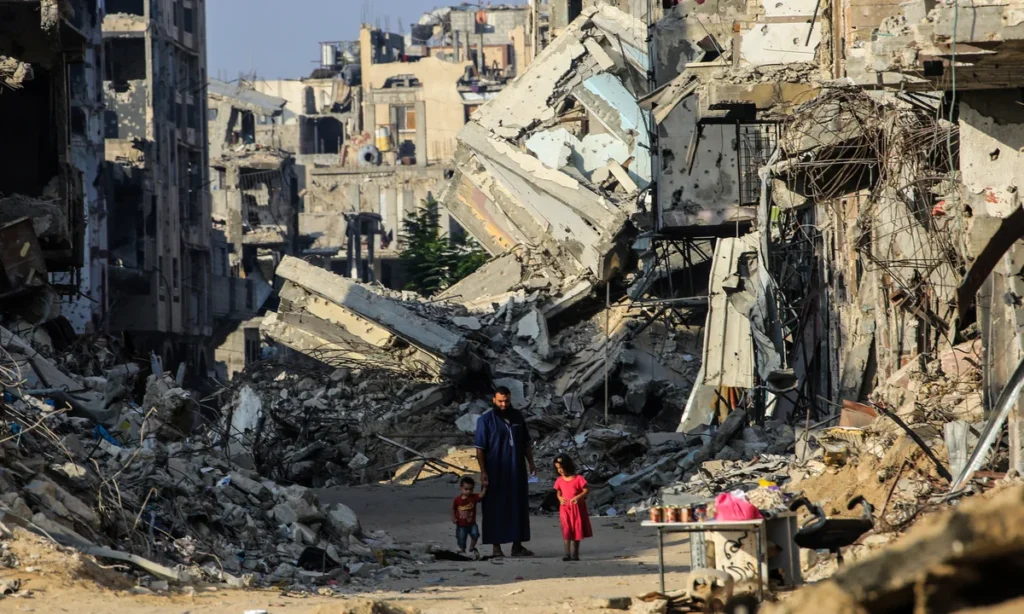
Environmental experts warn that Gaza is already suffocating under more than 60 million tonnes of debris produced during Israel’s assault, with nearly a quarter of a million buildings damaged or destroyed. They note that the waste could contain toxic materials such as asbestos, heavy metals, and industrial chemicals, which pose long-term risks to air, soil, and water quality.
According to local assessments, most of the debris was generated in the first five months of the war, with destruction accelerating in the southern areas of Rafah and Khan Younis earlier this year.
Urgent Cleanup Needed
Humanitarian agencies have called for urgent cleanup operations to remove debris and restore access to essential services such as water and sanitation. Experts emphasize that the recovery of Gaza’s environment, including its freshwater systems and soil, is vital not only for survival but for any future reconstruction.
A Second Wave of Catastrophe
As the war’s human toll continues to rise, environmental destruction has become a second wave of catastrophe, one that threatens to poison Gaza’s land, water, and future generations if left unaddressed.