Gaza Herald —As a long-awaited ceasefire begins to take hold in Gaza, major Palestinian factions have firmly rejected any attempt to impose foreign authority over the territory’s governance, insisting that Gaza’s future must be decided solely by Palestinians.
In a joint statement released Friday, Hamas, Palestinian Islamic Jihad, and the Popular Front for the Liberation of Palestine (PFLP) praised the steadfastness of Gaza’s residents, saying their endurance had thwarted Israel’s plans for mass forced displacement.
“We renew our rejection to any foreign guardianship, and we stress that the administration of the Gaza Strip and its institutions are an internal Palestinian matter to be determined by the national component of our people directly,” the factions said.
The groups also announced plans for an “urgent comprehensive national meeting” to discuss next steps following the ceasefire , aiming to unify the Palestinian position and rebuild national institutions on the foundations of partnership, credibility, and transparency.
It remains unclear whether Fatah, the faction dominating the Palestinian Authority, will join the talks.
Trump’s “Board of Peace” Plan
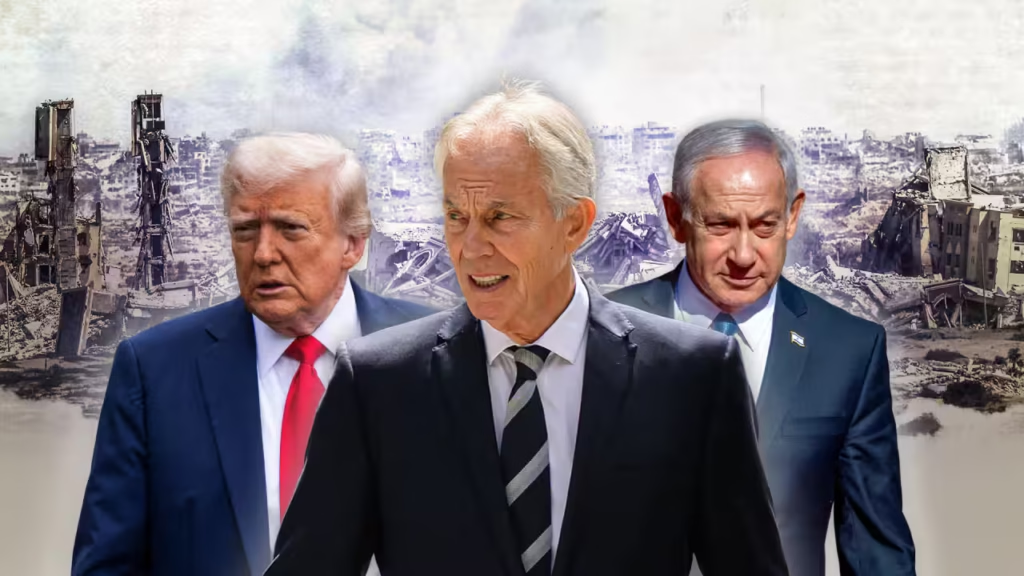
U.S. President Donald Trump’s 20-point Gaza plan proposes forming a new international body , the so-called “Board of Peace” , to oversee an interim technocratic authority governing Gaza. Trump himself would chair the board, joined by former British Prime Minister Tony Blair and other international figures.
While both Israel and Hamas have agreed to the ceasefire’s first phase, it remains uncertain how Gaza’s governance will evolve under Trump’s proposal.
Aid and Prisoner Exchange Provisions
According to documents obtained by Al Jazeera, the deal calls for Hamas to release Israeli captives within 72 hours, without public ceremonies, and ensures that at least 600 aid trucks enter Gaza daily. The agreement also allows for the rehabilitation of water stations and the establishment of temporary shelters for displaced families.
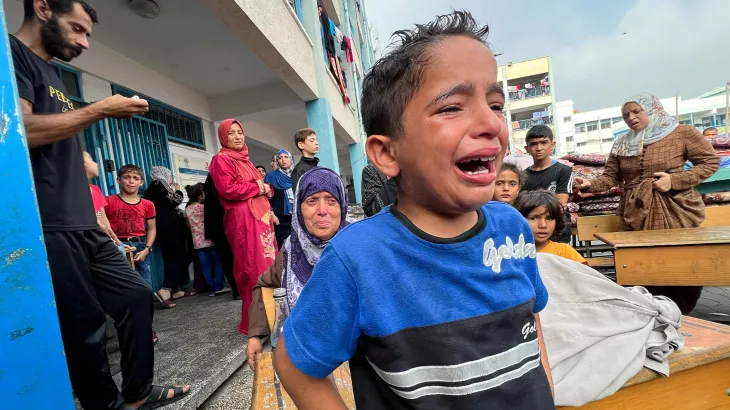
Tens of thousands of Palestinians began returning north on Friday as Israeli forces began withdrawing from coastal areas. The Palestinian Civil Defence reported retrieving 63 bodies from Gaza City streets after the truce took effect, while thousands remain missing beneath the rubble.
Al Jazeera’s Hani Mahmoud described “near total destruction” in Gaza City after weeks of relentless bombardment:
“When we left the city, there were 15 buildings still standing. On our way back, we saw none.”
Calls for Reconstruction and Accountability
The Gaza Government Media Office has called for a comprehensive reconstruction plan, beginning with the removal of debris and the reopening of essential infrastructure. The agreement assigns distribution of aid to United Nations agencies and recognized humanitarian groups , effectively sidelining the controversial Gaza Humanitarian Foundation (GHF), an Israel- and U.S.-backed entity accused of mismanagement and abuse.
Despite widespread condemnation, GHF said it will continue to operate.
“We will not rest so long as there are Gazans in need,” GHF director John Acree stated.
Whistleblowers, however, have documented serious human rights violations at and around GHF-controlled sites, which rights groups have described as “death traps” for Palestinians seeking food and aid.
A Ceasefire in Name Only
While the truce has provided a brief pause in active fighting, residents across northern Gaza report that Israeli bombardment has not stopped for a single minute since the ceasefire was declared. Explosions continue to echo through the night, casting doubt on whether this agreement marks the end of the war , or merely another chapter in Gaza’s long struggle for survival and self-determination.