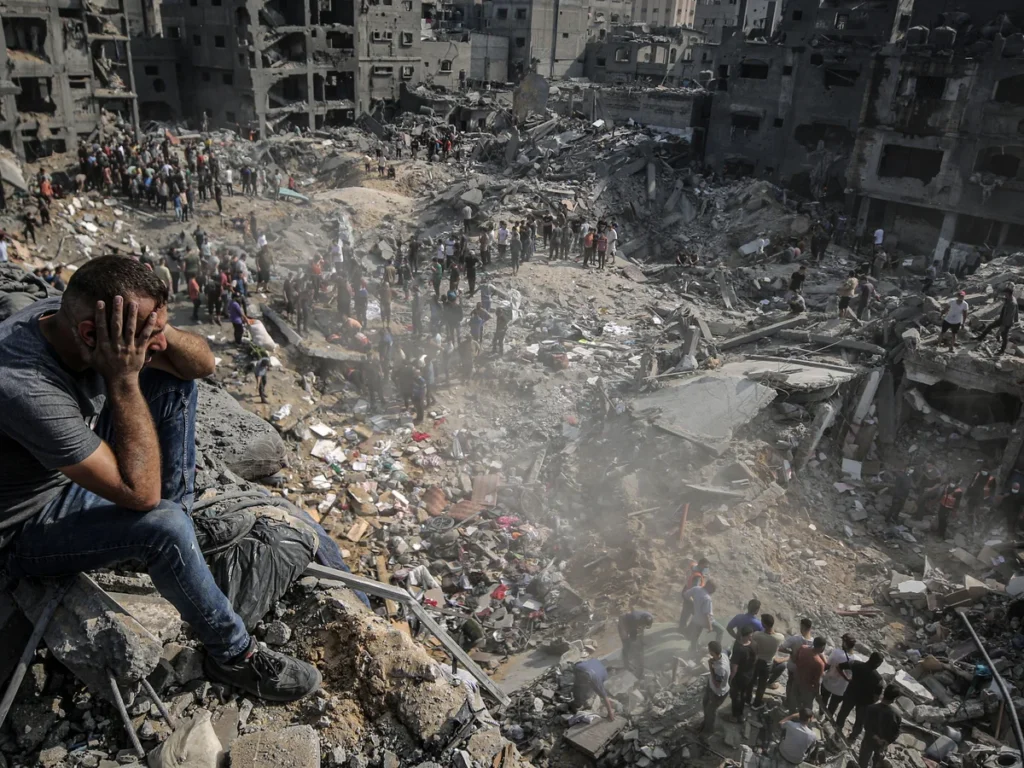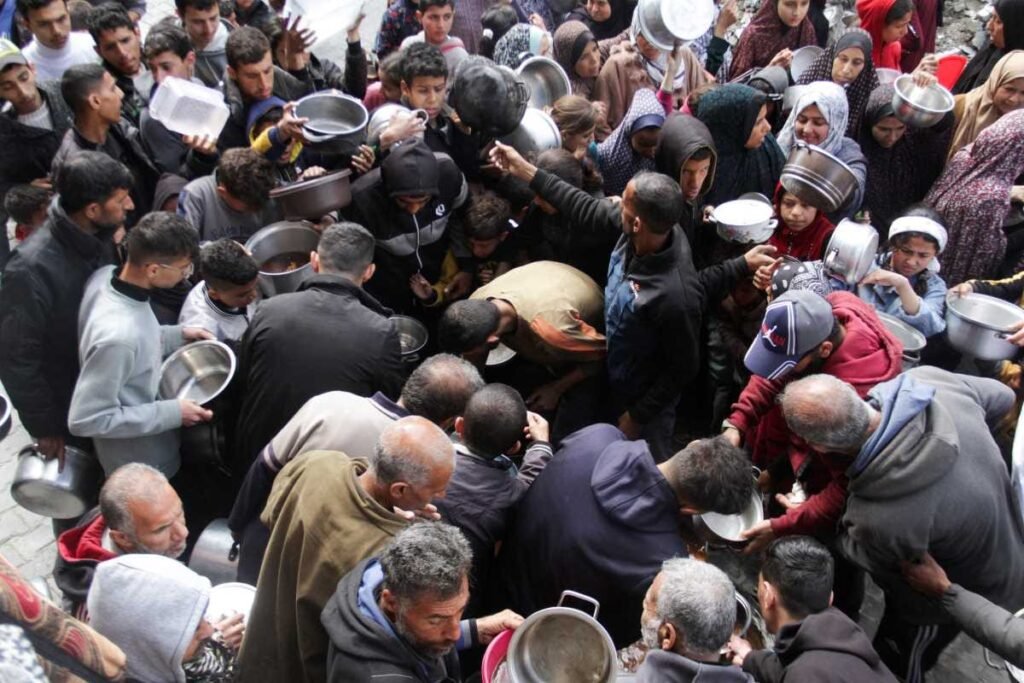
Gaza Herald- The humanitarian situation in Gaza is rapidly deteriorating as aid remains blocked at the border, creating an urgent crisis for the city’s hospitals and relief organizations. Doctors and aid workers on the ground warn that the restrictions imposed by Israel are not only preventing life-saving supplies from reaching those in desperate need but are also contributing to an ongoing cycle of injury, trauma, and suffering among civilians.
“There is aid sitting all along the border between Israel and Gaza that is not being allowed through,” Natasha Davies, a nursing activity manager with Doctors Without Borders (MSF), told reporters. “Although we have managed to get a few trucks into Gaza, it is barely a drop in the ocean,” she said via video link from Khan Younis in southern Gaza. “Our hospital primarily treats trauma patients, so every single person we see has wounds that require supplies that we are only receiving intermittently.”
Davies described the situation as a full-scale humanitarian catastrophe, highlighting the deadly consequences of the current system: “The GHF sites are a disaster disguised as aid. They generate mass casualty incidents and increase the number of injuries we are forced to treat with very limited resources.” She emphasied that these distribution points, which are supposed to provide food and supplies, often create dangerous conditions, resulting in additional harm to vulnerable civilians.
“The aid drops are not only ineffective but also dangerous,” Davies explained. “They create chaos, leading to more injuries. The Palestinian people are trapped in an endless cycle of trauma and suffering, which could be avoided if Israel allowed our trucks to move freely into the area. We have roads, trucks, and everything ready; all that is needed is permission to deliver the aid.”
The blockade and restrictive policies not only exacerbate medical emergencies but also undermine the entire humanitarian infrastructure in Gaza. Hospitals struggle to operate without basic supplies, and aid agencies face bureaucratic and security hurdles that prevent a timely response to urgent needs. Davies stressed that the humanitarian system itself is at risk of collapse if these restrictions continue, leaving millions of Palestinians increasingly vulnerable to starvation, disease, and preventable death.