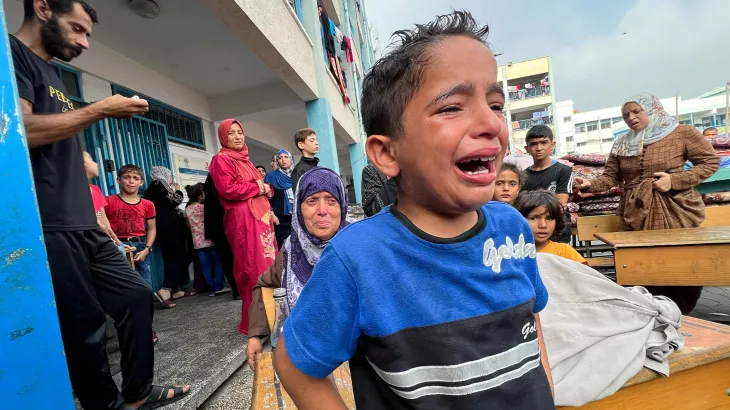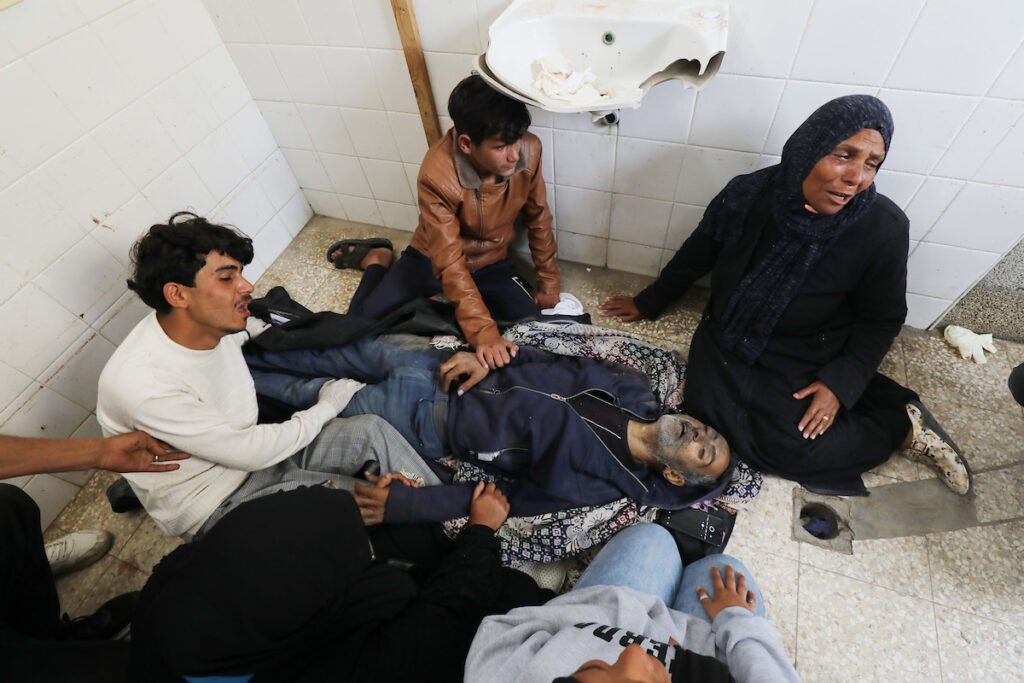
Gaza Herald- The limited aid allowed into Gaza in recent days remains far below what is needed to prevent the famine long predicted by humanitarian experts. Relief organizations warn that Israel’s restrictions have created a crisis that now extends beyond children and infants, with more and more elderly and vulnerable adults dying from hunger.
On Sunday alone, six more adults died from malnutrition, raising the total to 82 adult deaths in just over a month since such fatalities began to be officially recorded. Meanwhile, 93 children have lost their lives due to the deliberate deprivation of food in Gaza since the war began, deaths directly linked to the policies enforced by Israel.
But what does starvation truly entail? What happens to the body, and who is most at risk? Here is what we know so far.
The Physical Reality of Starvation
“Starvation is horrific,” explained Dr. James Smith, an emergency doctor who has volunteered twice in Gaza. In the early phase, when the body is denied food for several days, it begins breaking down its tissues, primarily muscle, to survive.
“It is one of the cruelest ways to kill,” he said. “Starvation is not an accident. It is always inflicted by one person on another. It is designed to prolong pain and destroy dignity.”
As starvation progresses, the body’s metabolism slows drastically. The ability to regulate temperature disappears. Kidney function declines, and in Gaza, where access to medical care is limited, the immune system weakens and healing becomes impossible.
Once fat and sugar reserves are depleted, the body can no longer sustain vital organs. The heart and lungs become less effective. People become frail as their muscles waste away. Eventually, with no protein left, the body begins to consume its tissues, leading to death.
How Long Can a Person Survive Without Food?
Because of the ethical challenges of studying starvation, precise data is scarce. Still, estimates suggest that a healthy, well-nourished adult might survive without food for 45 to 61 days.
But this is not the case in Gaza. After nearly two years of siege and bombardment, the population is already weakened. Malnutrition, repeated displacement, lack of clean water, and widespread disease have left most people extremely vulnerable.
“Once the body is starved, its immune system fails. People no longer fight off common infections or injuries. They die not just from hunger, but from things like gastroenteritis, respiratory infections, and trauma things that would otherwise be survivable,” Dr. Smith explained.
Who Is Most Likely to Die from Hunger?
The people most vulnerable to starvation are children, the elderly, the chronically ill, and those left alone without family or support.
“A child will deteriorate more quickly,” said Dr. Ghassan Abu-Sittah, a British-Palestinian surgeon who spent 43 days in Gaza during the war. “They lose fat and muscle very rapidly. The same applies to the elderly, whose bodies can’t compensate for prolonged deprivation.”
But it’s not just about age. “Thousands of children in Gaza are orphans now. They have no one to care for them or risk everything to find food. Their chances of survival are tragically low,” he added.
Starvation in Gaza Is Widespread and Intentional
The evidence is overwhelming: starvation is no longer limited to vulnerable groups. It now threatens the entire population of Gaza. Years of siege and aid restriction have turned food into a weapon of war.
In February 2024, the World Health Organization reported that one in six children under two in northern Gaza, an area under intense Israeli siege, was already acutely malnourished. That was five months into the war.
Now, in August 2025, starvation has killed at least 82 adults in just the last five weeks, and many more are expected to die unless immediate access to food is allowed.
A History of Controlled Starvation
Israel’s use of food restrictions is not new. For years, it has tightly managed the amount of aid entering Gaza. This control suggests that Israel has long known exactly how much food is required to sustain life, and how much deprivation it takes to push a population into famine.
Back in 2007, when Hamas took control of the enclave, Israel imposed its first major blockade. It drastically reduced the amount of aid allowed in, while publicly denying it was starving the population.
The current situation is the culmination of years of calculated deprivation. The use of hunger as a tool of war has stripped the people of Gaza not only of food, but of dignity, health, and life.
What is happening in Gaza is not a natural disaster; it is a human-made catastrophe. Starvation here is not an unintended consequence of war, but a deliberate method of control and punishment. As bodies wither and lives fade, the silence of those with the power to act becomes complicit. Gaza’s slow death by hunger is a moral failure of global proportions, and unless the blockade is lifted and full humanitarian access is restored, this manufactured famine will continue to claim lives, one by one, organ by organ, child by child.