Gaza Herald- As the humanitarian catastrophe in Gaza deepens, the Hamas Movement has issued a firm declaration: it will not return to ceasefire negotiations unless immediate steps are taken to end the famine and lift the siege imposed by Israel.
With starvation spreading across the Gaza Strip and aid being deliberately obstructed, Hamas has emphasized that no meaningful dialogue can occur while Palestinians continue to suffer under what the group describes as a genocidal campaign. Meanwhile, Israeli officials have indicated a hardening of their position, rejected phased or partial deals, and instead demanded the full dismantlement of Hamas.
In a statement issued on Thursday, Hamas announced its readiness to “immediately re-engage in negotiations” — but only if humanitarian aid is delivered to those in urgent need and the dire conditions in Gaza, including widespread hunger and deprivation, are effectively addressed. The group stressed that continuing talks while Israel maintains its siege and blocks essential goods from entering the Strip would be “meaningless and futile.”
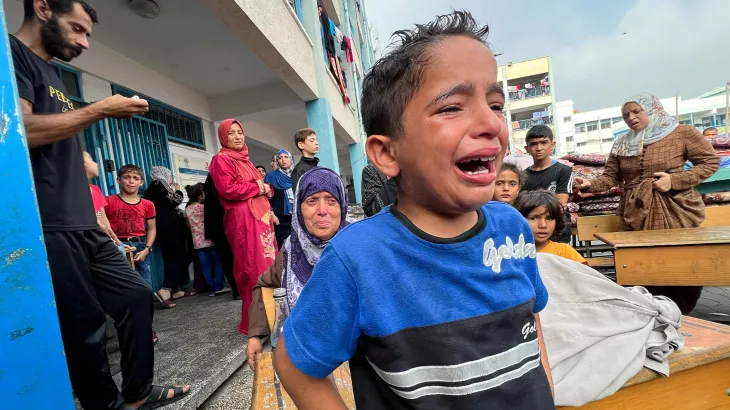
Hamas accused Israel of using starvation as a weapon of war, stating that the siege, tightened significantly since March, has led to catastrophic consequences for civilians. The blockade has resulted in near-total restrictions on the entry of food, medicine, and other life-saving supplies. Gaza’s health authorities have reported a sharp rise in deaths caused by hunger and malnutrition. At least 159 Palestinians, including 90 children, have died from starvation-related causes in recent months, a toll that continues to climb daily.
UN chilling warning
Earlier this week, a UN-backed global hunger monitoring organization issued a chilling warning, stating that the “worst-case scenario of famine” is now unfolding in Gaza, with no signs of meaningful international intervention. According to Hamas, the situation has reached an “unbearable” level, posing an existential threat to more than two million Palestinians. “The starvation war waged by the Zionist occupation in the Gaza Strip has become the greatest threat to the lives of our people,” the movement declared.
Khalil al-Hayya, a senior Hamas political leader based in Qatar and responsible for Gaza affairs, reiterated this stance over the weekend. He stated that there is no justification for continuing ceasefire negotiations while Israel persists in its genocidal military campaign and civilians remain deprived of basic needs, including food and clean water.
This hardened position comes after the United States and Israel unexpectedly withdrew from indirect ceasefire negotiations with Hamas last week. Mediators had previously indicated that the parties were making significant progress toward a possible agreement. However, those talks have since collapsed, with Hamas insisting that it will not return to the table unless the starvation crisis is addressed.
According to reporting by The Times of Israel, sources involved in the mediation, including an Arab diplomat and a figure close to the talks, confirmed that Hamas negotiators in Doha have clearly stated they would not re-engage in any ceasefire discussions unless humanitarian access to Gaza is restored and the famine is halted.
Tensions have also escalated between Hamas and the two primary Arab mediators, Jordan and Egypt, particularly after both countries endorsed a joint declaration calling on Hamas to disarm and relinquish control of Gaza. This demand was viewed by Hamas as deeply unjust and out of touch with the reality on the ground, where the group sees itself as the primary force defending Palestinians against Israeli aggression.
In a recently broadcast speech, al-Hayya directly addressed both Egypt and Jordan, urging their governments and the broader Arab public to act decisively to help lift the siege on Gaza. His remarks reportedly sparked irritation in both Cairo and Amman, further complicating the already fragile dynamics of regional mediation.
Meanwhile, in Israel, officials appear to be shifting toward a more rigid and uncompromising stance. A senior Israeli government official, speaking to the press on condition of anonymity, stated that “there will be no more partial deals”, signaling that Israel is no longer interested in phased ceasefire arrangements. Instead, Israeli authorities are pushing for a single, all-encompassing agreement on their terms.
Israeli Finance Minister Bezalel Smotrich, speaking at a far-right political gathering, reaffirmed this position. He stated that the only acceptable deal would include the full disarmament and exile of Hamas, along with the unconditional return of all Israeli captives. These remarks reflect a broader shift within the Israeli government toward seeking a final resolution that would completely dismantle Hamas’ political and military presence in Gaza.
Multiple Israeli sources have confirmed in recent months that Israel is now expected to demand not only the removal of senior Hamas military leaders from Gaza, but also guarantees that neither Hamas nor the Palestinian Authority will be allowed to govern the territory under any future arrangement. Such proposals have been firmly rejected by Hamas, which has repeatedly stated that it will not accept any deal that strips Palestinians of their right to self-determination or surrenders the group’s weapons.
Catasrophic ground situation
Last week, Abu Obaida, the spokesperson for Hamas’ armed wing, the Qassam Brigades, warned that the group would not return to the path of partial or incremental agreements if the latest round of talks failed to deliver a real, comprehensive outcome. Since the beginning of the war in October 2023, Hamas has maintained a consistent negotiating position, calling for a complete end to the war in exchange for the release of all captives held in Gaza.
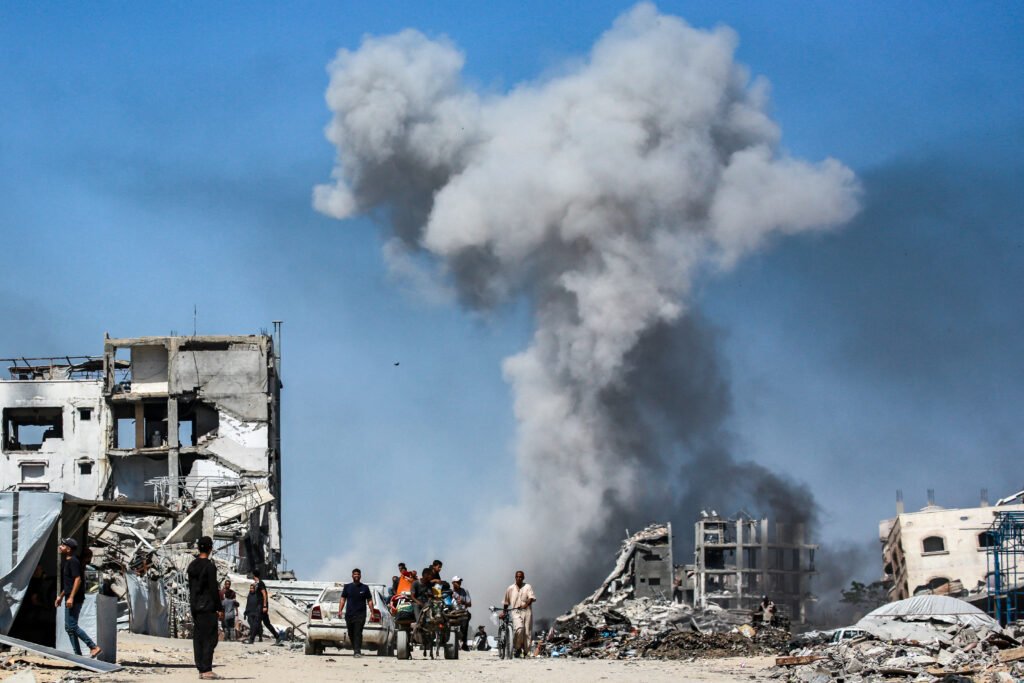
The situation on the ground remains catastrophic. According to Palestinian and international sources, Israeli forces have killed over 60,000 Palestinians since October, with at least 18,500 children among the dead. The relentless bombardment and ground invasion have devastated Gaza’s infrastructure, destroying homes, hospitals, schools, mosques, and even UN shelters. Nearly the entire population has been displaced, with families forced to live in makeshift tents, exposed to disease, hunger, and constant airstrikes.
In the face of this devastation, Hamas insists that justice, not surrender, must be the starting point for any negotiations. As famine spreads and diplomacy collapses, the Palestinian people are once again left to pay the highest price for a world unwilling to enforce even the most basic humanitarian standards. The path to peace cannot be built on the graves of starving children or the silence of those who witness genocide and do nothing. It must begin with the lifting of the siege, the restoration of aid, and an end to Israel’s war of annihilation.