Gaza Herald _As Eid al Adha approaches across the Muslim world, Palestinians in Gaza are once again being denied the ability to observe one of Islam’s most important religious traditions under Israel’s ongoing war and blockade. For the third consecutive year, families in the besieged enclave are unable to perform the ritual sacrifice of Eid in any normal sense, as hunger, mass displacement, and the near-total collapse of Gaza’s livestock sector strip the holiday of its spiritual and social meaning.
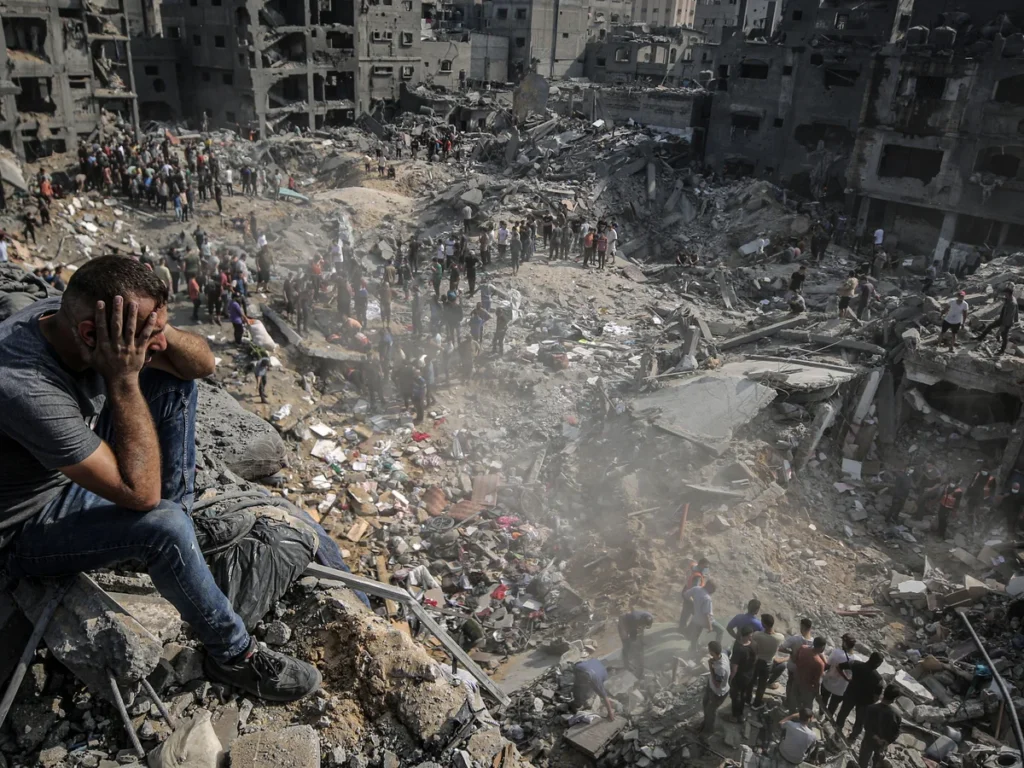
In Gaza, the arrival of Eid al Adha no longer brings crowded markets or the familiar sounds of livestock filling the streets and neighborhoods. Instead, the holiday has become associated with scenes of destruction, starvation, and deprivation as Israel’s assault and suffocating siege continue to devastate daily life.
With livestock imports blocked, farms and animal shelters destroyed by Israeli attacks, and prices reaching unimaginable levels, the ritual sacrifice has become an impossible dream for most families in the territory. More than two million Palestinians are now living through what humanitarian organizations describe as one of the worst humanitarian catastrophes in Gaza’s history.
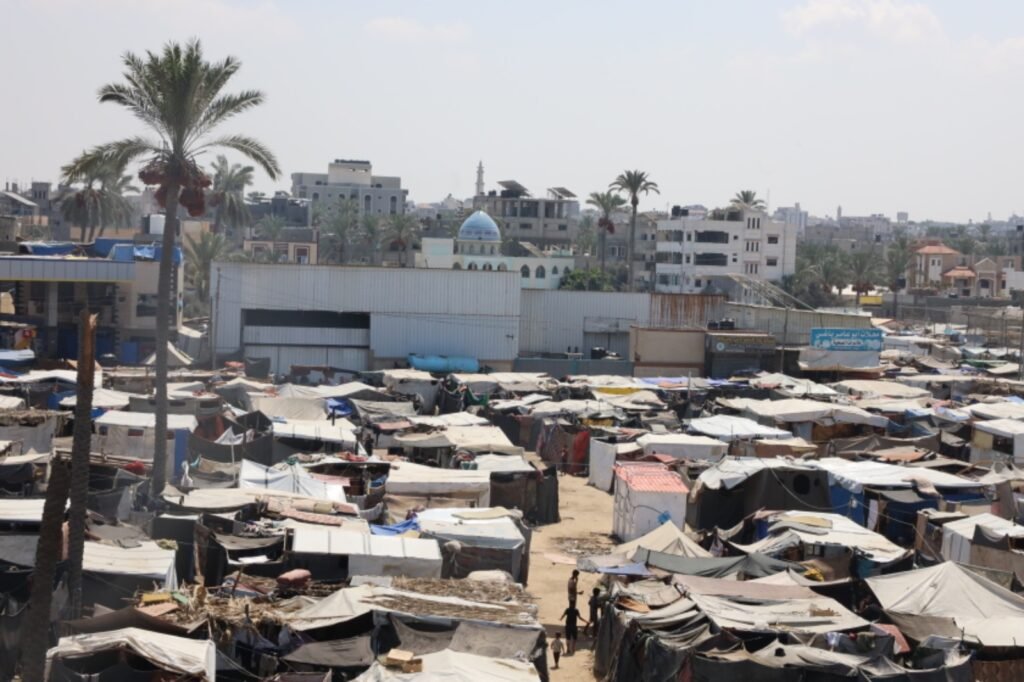
What was once a joyful religious and social occasion eagerly anticipated by Gazans each year has now turned into another painful reminder of loss and survival. Most families are struggling simply to secure basic food, clean water, and shelter.
Mohammad Al Sousi, a father of five from Gaza, said the holiday has lost all traces of joy since the beginning of the war, but described this year as “the harshest yet.”
“In previous years, we waited for Eid to make our children happy and distribute meat to relatives and poor families,” he said. “Today, we cannot even afford to buy a single kilogram of meat.”
“The children ask about the sacrifice and Eid clothes,” he added sorrowfully. “But priorities have completely changed. People are now searching for food, water, and safety.”
Skyrocketing Prices and Vanishing Livestock
The crisis is not only tied to collapsing purchasing power, but also to the severe shortage of livestock in Gaza’s markets after Israeli strikes targeted farms, animal shelters, and feed warehouses throughout the war, alongside the continued closure of border crossings and the ban on livestock entry into the enclave.
Livestock trader and breeder Akram Saeed said the animals currently available in Gaza amount to “no more than 5% of the livestock that existed before the war.”
“Before the war, Gaza imported between 10,000 and 20,000 calves, in addition to 30,000 to 40,000 sheep annually before Eid,” he explained. “Today, not a single head of livestock is entering the Strip.”
He noted that sacrifice prices have moved completely beyond the reach of ordinary people. A sheep weighing around 45 kilograms now costs nearly 14,000 shekels, while the price of one kilogram of locally produced meat has surpassed 300 shekels, compared to around 25 shekels before the war.
“Public demand is almost nonexistent,” he said. “Ordinary citizens account for less than 1% of purchases, while some charities and volunteers are buying limited quantities to distribute meat to needy families.”
Deepening Humanitarian Catastrophe
The sacrifice crisis comes as Gaza’s humanitarian disaster continues to worsen. According to data from the World Food Programme, around 1.6 million people , approximately 77% of Gaza’s population , are facing severe levels of acute food insecurity, including more than 100,000 children and 37,000 pregnant and breastfeeding women.
Israeli authorities are also allowing only about 38% of the humanitarian aid agreed upon under humanitarian protocols to enter Gaza, despite the desperate need for food, medicine, and fuel.
Meanwhile, the consequences of Israel’s assault, ongoing since October 7, 2023, continue to devastate the territory. According to medical sources, more than 72,772 Palestinians have been killed and over 172,707 wounded, alongside widespread destruction targeting infrastructure, homes, agricultural lands, and economic facilities.
Since the latest ceasefire agreement took effect, nearly 900 Palestinians have reportedly been killed and more than 2,600 injured, while hundreds of bodies have been recovered from different areas across Gaza.
An Eid Without Joy
Under these conditions, Eid al Adha in Gaza feels painfully hollow and overshadowed by grief. There are no overflowing dinner tables, few family visits, and almost no ability for most households to carry out the traditions associated with the holiday.
Umm Mohammad, a displaced woman from northern Gaza, said children now hear about Eid more than they actually experience it.
“We used to prepare for Eid by buying clothes, sweets, and the sacrifice,” she said. “Now we are living inside tents and searching every day for food.”
“Even the children’s happiness has been postponed,” she added. “The war has taken almost everything.”
Despite the devastation, many Palestinians in Gaza continue trying to preserve what remains of Eid’s spirit through modest visits, exchanging greetings, and supporting families in even worse conditions, an effort to maintain some sense of social solidarity amid a war that has left little room for joy.