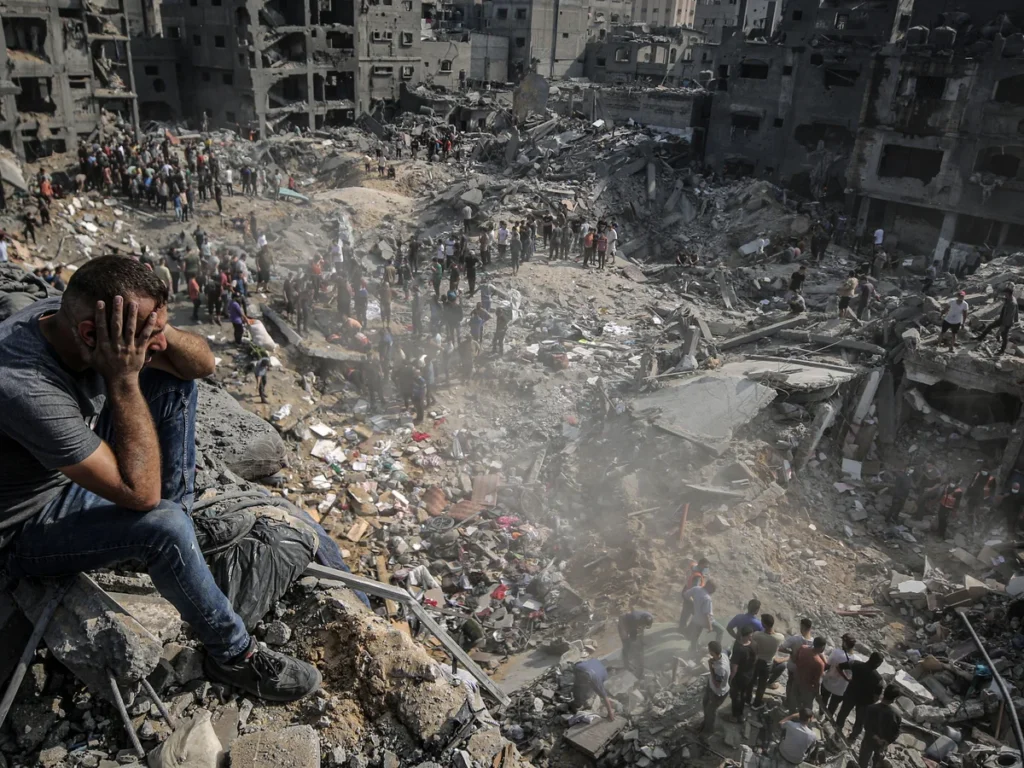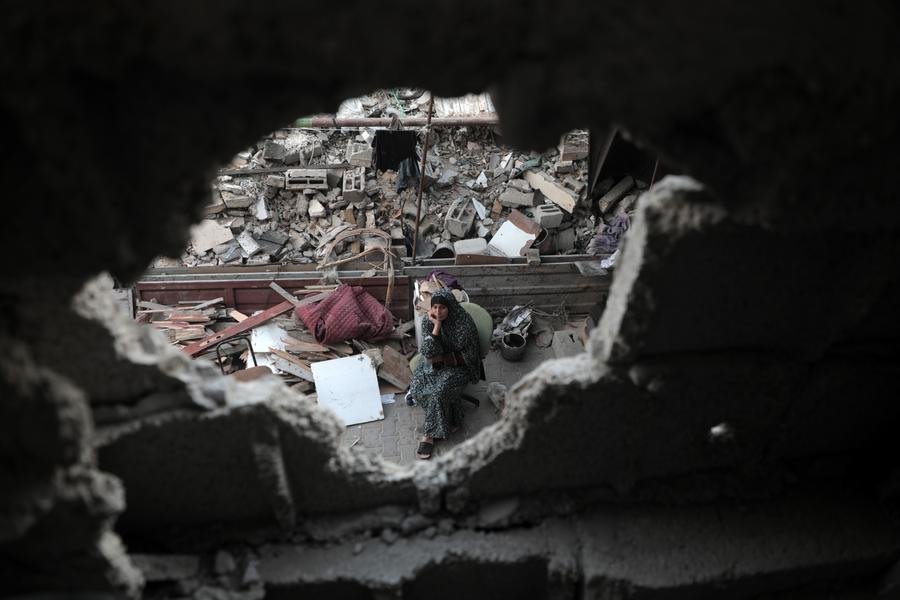
Gaza Herald _ As millions of Muslims around the world prepare for the sacred rituals of Hajj and welcome the Day of Tarwiyah with prayer and spiritual reflection, Palestinians in Gaza face another season of war, displacement, and deprivation under Israel’s ongoing assault. Families who once marked these holy days with worship, gatherings, and Eid preparations are now struggling for survival inside shelters and amid the ruins of destroyed neighborhoods, deprived not only of safety and stability, but also of the ability to experience the spiritual atmosphere of one of Islam’s holiest occasions.
As waves of Muslim pilgrims arrived in Mina at the start of the Day of Tarwiyah, preparing for the sacred journey to Mount Arafat, the reality in Gaza stood in painful contrast. While millions across the Islamic world turned toward the holy sites with hearts filled with faith and hope, Palestinians in Gaza faced the spiritually significant day surrounded by the ruins of destroyed homes, the sound of relentless Israeli airstrikes, and the exhaustion of endless displacement.
Every year, the Day of Tarwiyah symbolizes preparation. Pilgrims gather water, ready themselves for the rituals of Hajj, and enter a state of spiritual devotion and reflection. It is a day associated with peace, prayer, and anticipation for one of the holiest moments in Islam.
But in Gaza, the day arrived under the shadow of Israel’s military assault. The traditions and seasonal rituals that once filled the streets with life have largely disappeared, replaced by fear, uncertainty, and the daily struggle to survive amid destruction.
Between the Pilgrims’ Chants and the Cries of Survivors
As pilgrims raised their voices with the call, “Labbaik Allahumma Labbaik,” Gaza echoed with a different kind of prayer — prayers for survival, for safety, and for the simple hope that the coming hours would pass without another family being torn apart by Israeli bombardment.
No caravans are heading toward Mina here, no joyful preparations for Eid as in previous years. Families carry only what little they can salvage and move constantly from one place to another in search of temporary shelter. Eyes remain fixed on the sky more than the ground, as every passing moment carries the possibility of another strike.
While pilgrims prepare themselves with water ahead of the Day of Arafah, Palestinians in Gaza prepare themselves with endurance. Long lines form around scarce water supplies, desperate attempts continue to secure bread, and mothers reduce all hopes and prayers into one plea: “God, let this day pass safely.”
In Gaza, Tarwiyah Means Patience
The religious meaning of Tarwiyah is tied to preparing water before the Hajj rituals, but Gaza has come to understand the day through another meaning entirely. The land is buried beneath the scars of bombardment, the sky remains thick with smoke, and people sustain themselves not with water, but with patience.
Inside overcrowded displacement shelters, nothing resembles the holidays and sacred seasons Palestinians in Gaza once knew. Children understand that Eid al Adha is approaching, yet many do not know where they will be by the next sunrise. Families displaced multiple times gather the few belongings they still possess and attempt to create fragments of normal life in conditions that offer neither safety nor stability.
Umm Mohammad Al Arabashli, while arranging a worn blanket across the floor of a fragile tent, recalled how different these days once felt.
“In years past, we waited for Arafah and Eid with joy,” she said. “We used to watch the pilgrims, exchange greetings, and prepare for celebration. Today, we do not know what the night will bring. All we ask is for our children to survive.”
Looking toward her children, she added: “Even our prayers have changed. We once prayed for blessings and prosperity. Now we pray simply to stay alive.”
Eid Approaches While Gaza Counts Its Losses
As Eid al Adha draws near, Gaza remembers seasons once filled with joy — crowded markets, mosque takbeers, family visits, and simple traditions that gave the days warmth and meaning.
Today, however, the scene is painfully different. An entire city lives between mourning and uncertainty, counting the names of the dead while watching the remaining fragments of ordinary life disappear day after day under Israel’s ongoing war.
Yet despite the devastation, faith remains deeply rooted among Palestinians in Gaza. Many still believe that God hears every prayer no matter how overwhelming the suffering becomes, and that seasons of worship and spiritual devotion remain greater than war, larger than destruction, and closer to the heart than the grief surrounding them.