
Gaza Herald – On Palestinian Prisoners’ Day, marked annually on April 17, statistics alone fail to capture the scale of violations endured by detainees inside Israeli prisons. Behind the numbers are thousands of individual accounts that reveal the harsh realities of kidnapping and torture.
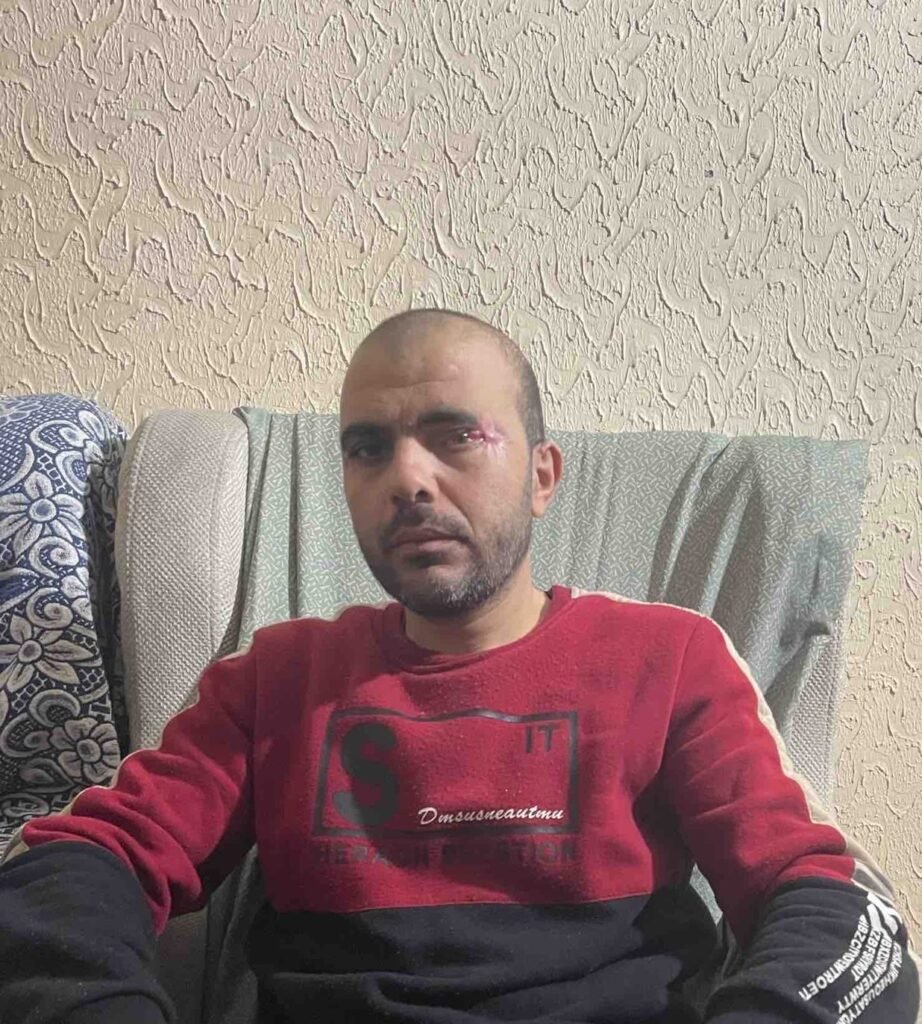
The story of Mohammed Nawaf Abu Tawila, a 36-year-old from the Shuja’iyya neighborhood in Gaza, is one such testimony.
After the outbreak of genocide in October 2023, Abu Tawila fled with his pregnant wife to southern Rimal in search of safety. But the war soon followed them.
Siege and Arrest
 On March 13, 2024, Israeli occupation tanks surrounded the building where he was sheltering. Abu Tawila and dozens of civilians remained trapped inside for five days, surviving on minimal supplies of oil, thyme, and water.
On the fifth day, Israeli occupation forces detonated the building’s entrance. Men were forced to exit nearly naked, with their hands raised. Shortly after being detained, Abu Tawila was taken to a nearby building, where he says systematic abuse began.
Torture with Chemicals and Fire
Abu Tawila recounts that he was repeatedly beaten during interrogation before being subjected to severe torture methods.
He says his head was forced into a container filled with chemical substances, including chlorine and corrosive liquids, which were then poured over his body multiple times.
He further alleges that his body was set on fire twice after flammable substances were poured on him, while he was restrained and unable to move.
“I was just trying to put out the flames with my body on the ground,” he recalled, describing moments he said felt close to death.
Harsh Detention Conditions
 For days, Abu Tawila remained detained under harsh conditions, blindfolded, handcuffed, and without adequate medical care for his burns.
He was later transferred to a detention facility near Sofa, then to Soroka Medical Center, where he received basic treatment before being returned to custody.
He spent weeks in makeshift detention barracks, where detainees were forced to kneel for long hours daily despite injuries. He was later moved to a field hospital, where he received limited treatment while still restrained to a bed.
In June 2024, he was transferred to Ofer prison and later to other detention facilities, where, according to his account, the intensity of abuse decreased but did not stop.
Long-Term Physical and Psychological Impact
Abu Tawila also reported being subjected to dog attacks on three occasions. In one incident, he said a dog struck his head with a metal muzzle, causing significant swelling.
He described food portions in detention as extremely limited and insufficient to meet basic needs.
After nearly a year in detention, he was released in February 2025 as part of a prisoner exchange deal. However, his suffering did not end with his release.
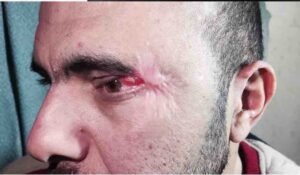
Today, he continues to experience long-term physical and psychological effects, including vision impairment in his left eye, eyelid damage, and extensive burn scars across his back. He requires specialized surgeries, some of which are not available in Gaza.
A Broader Pattern
According to human rights organizations, Abu Tawila’s case reflects a broader pattern of violations faced by Palestinian detainees in Israeli custody, particularly since the escalation of the genocide in October 2023.
On Palestinian Prisoners’ Day, such testimonies serve not only as documentation of alleged abuses but as a reminder that behind every statistic is a human being still living with the consequences of detention and torture.
As international calls for investigation and accountability continue, Abu Tawila’s story stands as a stark example of the ongoing suffering experienced by thousands of Palestinian detainees.

