
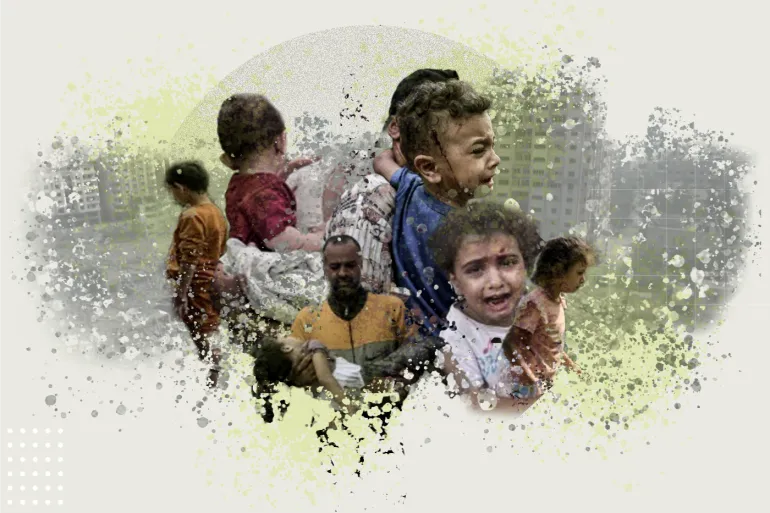
Gaza Herald – In Gaza, surviving an airstrike has not meant survival in the true sense; it has marked the beginning of a prolonged journey of physical and psychological suffering.
Five-year-old Adam Abu Halib embodies this reality. “My friends are scared of me and run away. What did I do to deserve this?” he asks, after losing his left eye and suffering severe facial disfigurement in an attack that struck his family.
The blast not only took his features; it killed his older brother and left his mother with an amputated leg, now receiving treatment abroad. Adam remains behind, alone, facing trauma far beyond his years, and now at risk of losing his remaining eye due to medical complications that doctors are unable to treat.
In another painful story, 30-year-old Radi Ismail Abu Saad lies immobilized after a single bullet shattered his spine, breaking vertebrae and causing partial spinal cord damage that left him permanently paralyzed. A bullet still lodged beneath his heart continues to threaten his life, while the lack of advanced medical care in Gaza prevents the life-saving intervention he urgently needs.
Radi’s family is appealing for immediate international assistance to evacuate him for treatment before it is too late.
These cases reflect a much broader reality. According to health authorities and the World Health Organization, nearly 42,000 people in Gaza are now living with life-altering injuries as a result of the war.
Children account for roughly one in every four of the injured, making them disproportionately affected by long-term disabilities. These injuries include amputations, blindness, hearing loss, spinal damage, and severe disfigurement.
Data indicates more than 22,000 limb injuries, over 2,000 spinal cord injuries, 1,300 brain injuries, and approximately 3,300 severe burn cases. These figures underscore an overwhelming need for specialized surgical and rehabilitation services, needs that remain largely unmet due to the near-total collapse of Gaza’s healthcare system and the severe shortage of medical resources and trained personnel.

