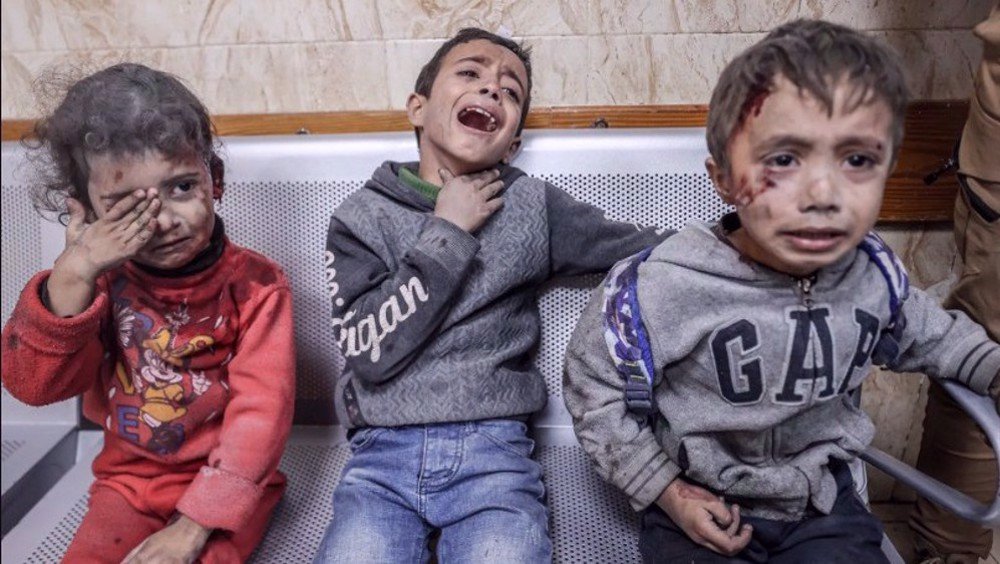
Gaza Herald – Palestinian water authorities have issued urgent warnings about a looming water and environmental catastrophe in the Gaza Strip, calling on the international community to take immediate action to rehabilitate water networks and provide safe water and fuel for approximately 2.3 million residents.
In a statement released on World Water Day, 22 March, the Palestinian Water and Environmental Quality Authority highlighted the severe deterioration in water and sanitation services caused by the destructive genocide between 2023 and 2025, leaving residents with extremely limited access to safe drinking water.
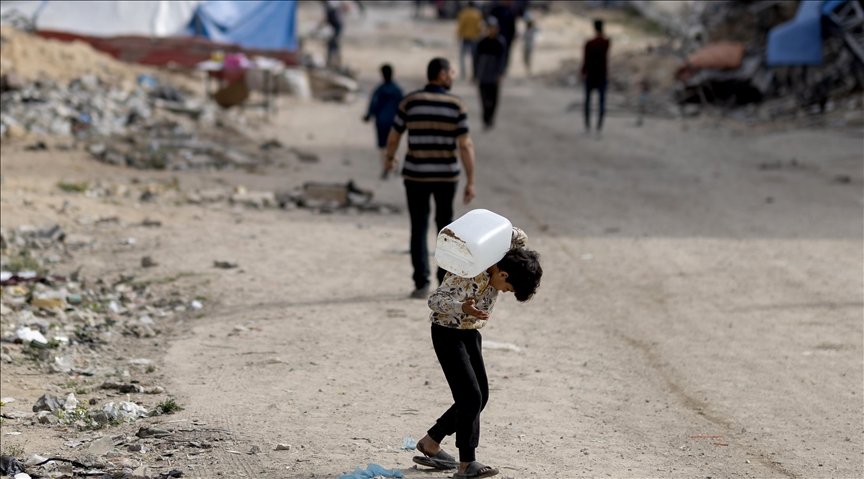
“Gaza is facing a full-scale water and environmental catastrophe,” the authority said, noting that women and girls spend between six to eight hours daily fetching small quantities of water, impacting their education, safety, and health.
Technical reports from the Palestinian Water Authority, Coastal Municipalities Water Utility, and international organizations estimate that the cost of rehabilitating Gaza’s water and sanitation systems is around $800 million. Water production has fallen from approximately 300,000 cubic meters per day before the war to less than 120,000 cubic meters per day as of February 2026, creating a deficit of over 60%.
The authority also reported that nearly 85% of water and wastewater facilities are damaged, with 67% of municipal wells and 85% of desalination plants out of service. Distribution networks are 75% destroyed, and more than 120 kilometers of main pipelines have been damaged. Water loss in networks has reached 70%, while 80% of the sewage system has collapsed, resulting in untreated wastewater flowing into the environment and more than 25,000 cesspits threatening groundwater contamination.
Currently, the per capita water supply ranges from 3 to 15 liters per day, mostly saline, with only about two liters of safe drinking water per person, far below the minimum emergency standards set by the World Health Organization.
The authority urged the international community to immediately provide fuel and generators, restore electricity for pumping stations, allow the entry of chlorine, spare parts, and network repair equipment, deploy mobile desalination units, and officially declare Gaza a “water disaster zone.”