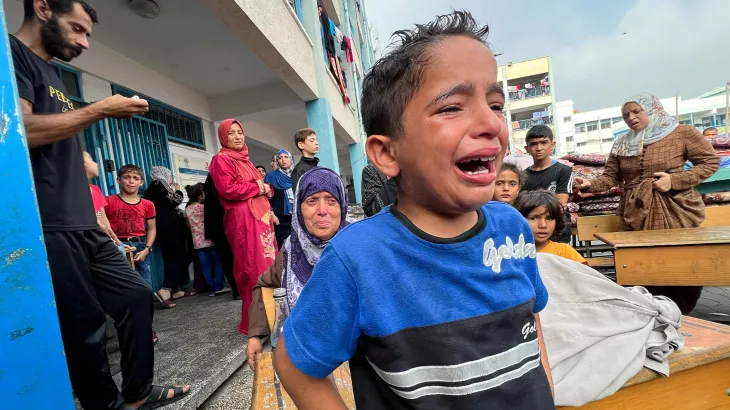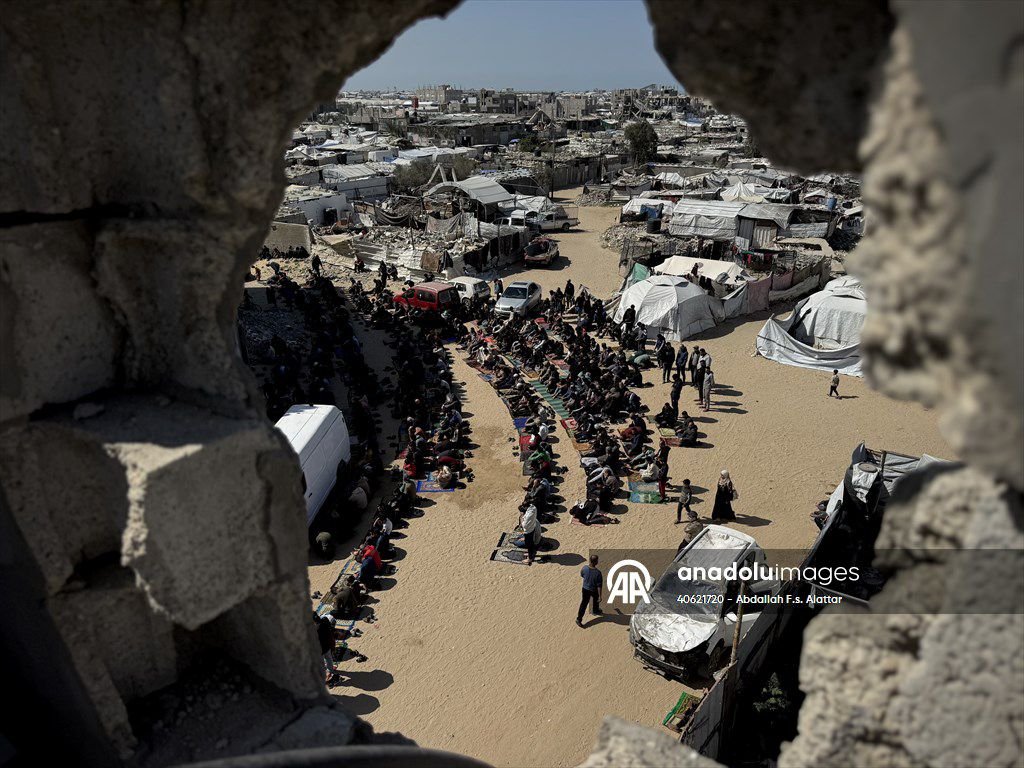
Gaza Herald- People of the Gaza Strip performed the first Friday prayers of Ramadan among the ruins of destroyed mosques and buildings, amid harsh living conditions and severe shortages of food, while Israeli forces continued airstrikes and demolition operations across various areas.
Worshippers gathered around the remains of destroyed mosques, holding prayers on the rubble and listening to sermons that emphasized patience and solidarity.
According to Al Jazeera, the “Al-Kanz” Mosque in Gaza City has become a symbol of resilience, as worshippers from different neighborhoods flocked there to pray, reflecting the population’s commitment to their religious practices despite the destruction and blockade.
Prayers also took place in damaged historic mosques, including the Great Omari Mosque, as well as in temporary prayer spaces set up using tents and makeshift coverings to replace destroyed places of worship.
Observers say the large turnout for prayers, including nightly Taraweeh during Ramadan, reflects a collective determination to preserve religious and spiritual identity, even as restrictions on the entry of construction materials and large tents complicate efforts to rebuild mosques.
Field testimonies indicate that, after each escalation, residents of Gaza have adapted by repairing damaged mosques using basic means to continue holding prayers, demonstrating the persistence of religious life despite ongoing constraints.
The Ministry of Endowments and Religious Affairs in Gaza reported that Israeli forces have destroyed 1,109 out of 1,244 mosques in the Strip, either completely or partially, during the recent war.
A ceasefire agreement ended a two-year war that, according to official Palestinian data, resulted in the deaths of 72,069 Palestinians and injuries to 171,728 others, along with the destruction of around 90% of civilian infrastructure. The United Nations has estimated reconstruction costs at approximately $70 billion, marking one of the most extensive waves of destruction in Gaza’s history.