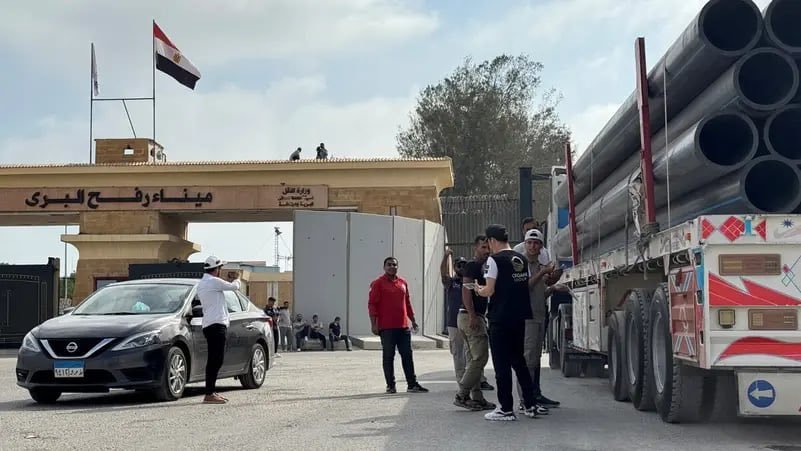
Gaza Herald_Those who managed to return to Gaza through the Rafah crossing did not describe a homecoming. They described an ordeal.
The journey back was long, draining, and saturated with uncertainty. Hours were spent waiting without explanation. Identity documents were checked and rechecked. Instructions shifted constantly, offered and withdrawn at the whim of Israeli authorities until, at the very last moment, permission to pass was granted or denied.
For some, the return involved far more than bureaucratic cruelty. People spoke of Israeli soldiers stationed nearby, of fear that followed them even after crossing. Three Palestinian women were detained by soldiers, blindfolded, handcuffed, and taken to a military checkpoint. There, they were interrogated about alleged security matters they knew nothing about. Their only act was attempting to go home.
This is what “return” means for Palestinians: not a right, but a test of endurance.
The ordeal begins long before anyone reaches the crossing itself. Travellers describe the route from inside Gaza toward Egypt as a passage through devastation and military domination. Buses move from central Khan Younis, past al-Sikka roundabout and along Salah al-Din Street, before reaching the al-Tahliya area south of the city. From that point onward, Israeli quadcopter drones hover above the buses without interruption, tracking every movement until the road leading toward Rafah.
Along the way, travellers pass through multiple army checkpoints, where buses are deliberately stopped for extended periods without explanation. The designated route is saturated with surveillance cameras, and scrutiny is intense. Only at the final point do passengers reach the Palestinian side of the crossing, where they are received by local officials and international monitors. Crucially, while those leaving Gaza are directed straight through, Palestinians returning from Egypt are subjected to Israeli searches, inspections, and interrogation, turning return itself into an act treated with suspicion.
Movement in and out of Gaza is presented to the world as a humanitarian measure, reduced to the language of crossings opening and closing. In reality, it is a system of control designed to exhaust, intimidate, and discipline. Every delay, every interrogation, every hovering drone reinforces the same message: Palestinians do not control their own movement, not even when returning home.
And yet, despite the humiliation, fear, and violence embedded in this process, those who make it back carry a message that cuts through every official narrative: no one should ever leave Gaza.
They say this not because life inside Gaza is easy, but because they have seen what lies beyond its borders for Palestinians: dispossession, vulnerability, and a permanent state of uncertainty. Leaving does not guarantee safety, dignity, or stability. It often means separation from family, loss of legal status, and the possibility of never being allowed to return.
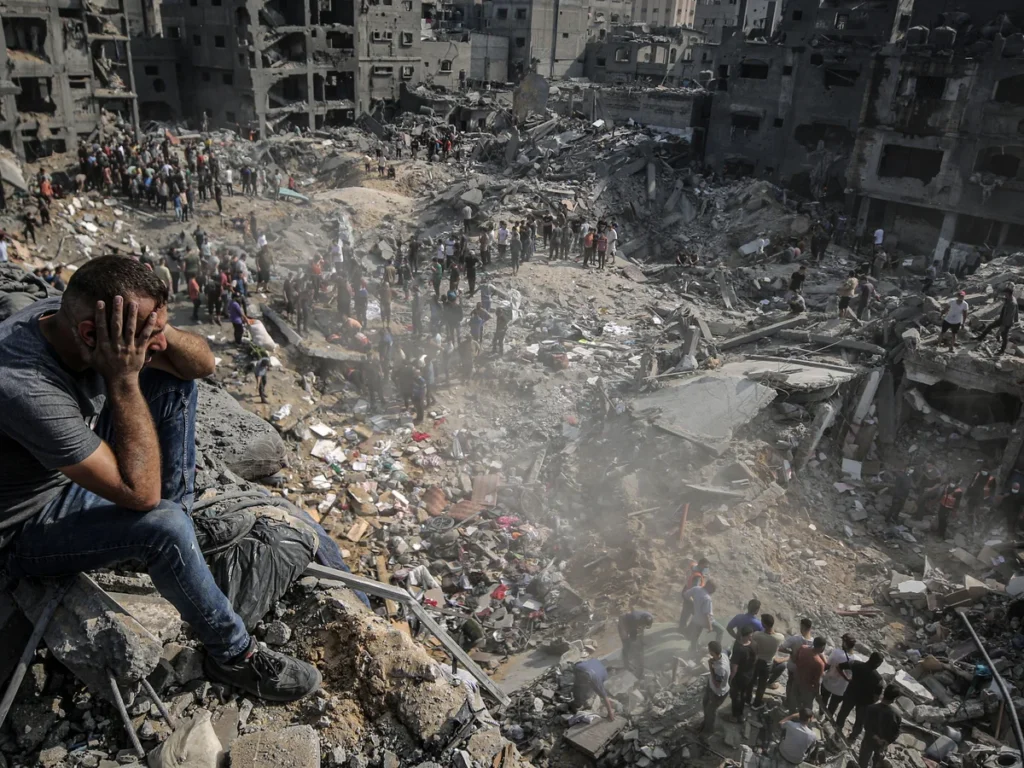
Life in Gaza is brutally hard. It is shaped by siege, destruction, and grief. But it is also home. It is where identity remains intact, where memory is rooted, and where people are not reduced to case files, interrogations, or security threats simply for existing.
To say “no one should ever leave Gaza” is not a romantic statement. It is an accusation. It exposes a system that turns movement into punishment and return into humiliation. It reveals that the objective is not security but domination over land, over bodies, and over the very idea of Palestinian belonging.
Palestinians do not leave Gaza by choice. They leave because they are forced to—by bombs, by hunger, by medical necessity. And when they try to come back, they are reminded that even survival is conditional.
Until Palestinians can move freely, return freely, and live without fear of detention or disappearance, every promise of humanitarian access will remain hollow.
Gaza does not need gates that open and close at the occupier’s discretion. It needs freedom.