Gaza Herald_ A new academic study has issued a stark warning that hunger and war-induced psychological trauma are devastating Gaza’s children, undermining their ability to learn and placing the future of an entire generation at risk. Researchers found that extreme food deprivation and prolonged exposure to violence not only impair children’s cognitive development but also erode their sense of identity, safety, and hope.
The study, published by the University of Cambridge, was conducted by scholars from the Research for Equitable Access and Learning (REAL) Centre and the Centre for Lebanese Studies, in cooperation with the United Nations Relief and Works Agency for Palestine Refugees (UNRWA). It examines the condition of childhood and education in Gaza, as well as in the West Bank and East Jerusalem, since 7 October 2023, concluding that ongoing hostilities have almost entirely dismantled children’s ability to engage in everyday life, including learning and play.
Childhood Under Siege
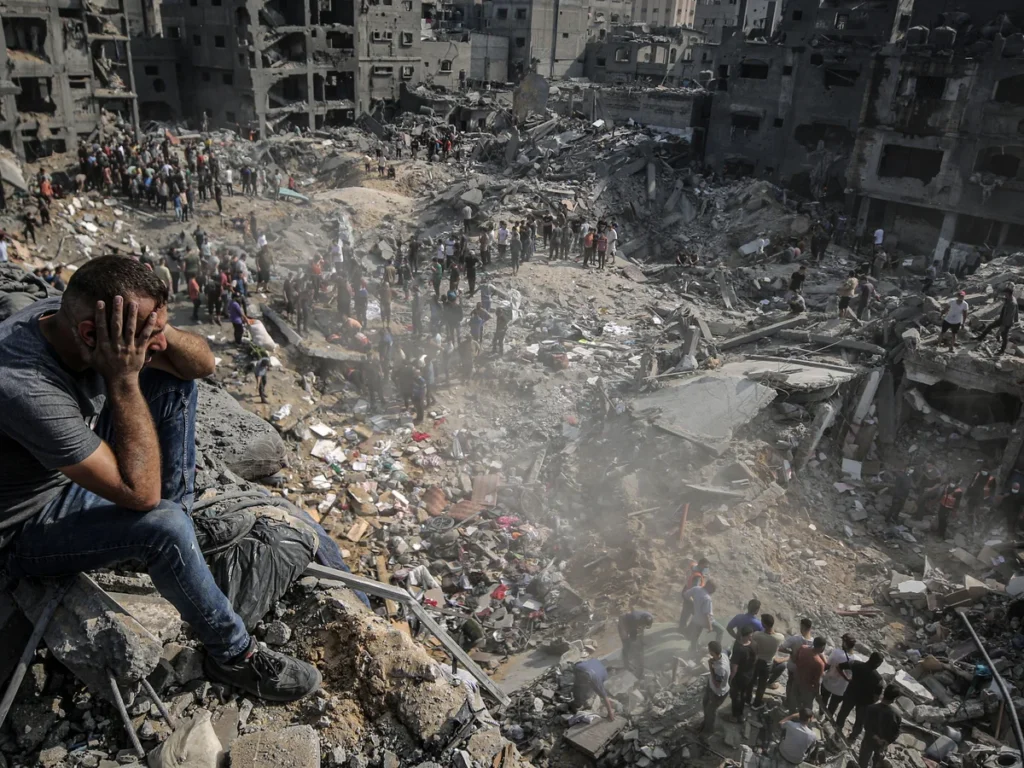
After more than two years of continuous violence, large numbers of Palestinian children in Gaza are experiencing severe physical exhaustion alongside deep psychological trauma. According to the study, many children are no longer capable of participating in basic activities such as studying, playing, or socialising. Some children reportedly believe they may be killed “simply because they are from Gaza,” a reflection of the pervasive fear shaping their daily lives.
The report highlights that access to education has been nearly wiped out, stripping children of one of the few remaining sources of stability and identity formation. Schools have been destroyed or shut down, while displacement, hunger, and constant insecurity have erased any resemblance to a normal childhood.
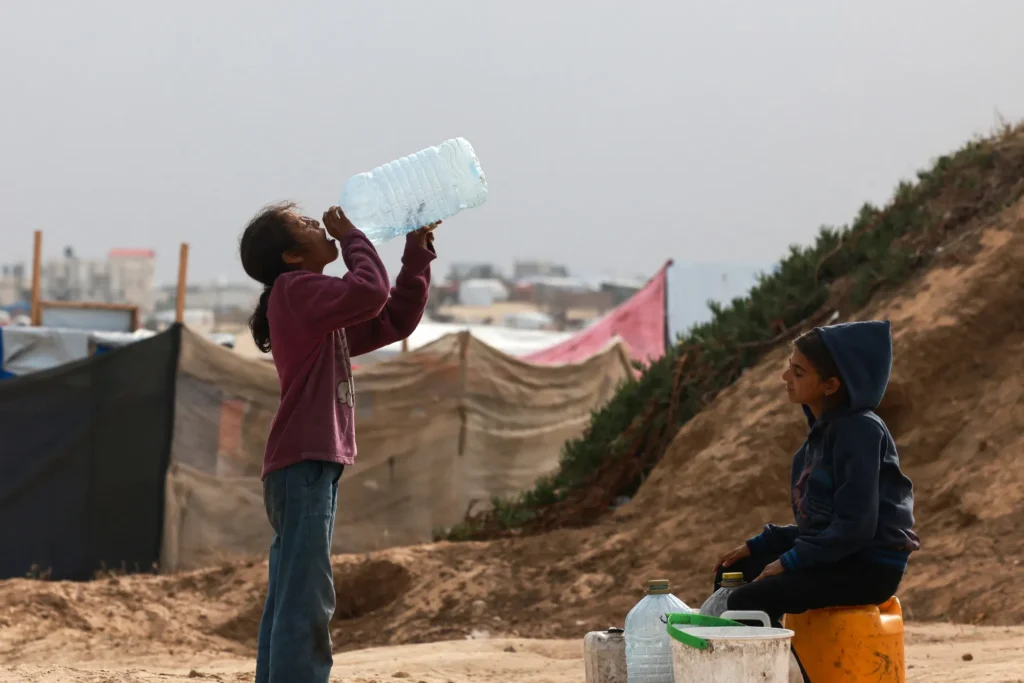
Building on similar findings published in 2024, the researchers document how war has reshaped every aspect of children’s lives. Teachers and parents described children collapsing from exhaustion, while others were discouraged from playing to conserve what little energy they had. Before the most recent ceasefire, families were often forced to choose between helping their children survive and attempting to continue their education. In some cases, entire households survived on no more than a single plate of lentils per day.
Loss of Hope and Faith in the World
One of the most alarming conclusions of the study is the sharp decline in children’s optimism and trust in international institutions. Researchers reported growing anger among children and youth, alongside fading belief in concepts such as peace, justice, and human rights.
An international aid worker quoted in the report said that students increasingly question the reality of these principles, expressing the feeling that they are being targeted and killed simply because they are from Gaza.
Warnings of Total Collapse
Pauline Rose, Director of the REAL Centre at the University of Cambridge, warned that the situation has deteriorated dramatically. “A year ago, we said education was under attack. Today, children’s lives themselves are on the brink of total collapse,” she said.
Rose stressed that despite relentless bombardment and deprivation, Palestinians have continued to show a strong commitment to education. However, she warned that the deepening despair among children and young people should be a wake-up call for the international community, emphasising that delay is no longer an option.
The Threat of a Lost Generation
The authors caution that Gaza now faces the very real prospect of a “lost generation,” produced by the combined impact of disrupted education, physical injury, and psychological trauma.
As of 1 October 2025, figures from the UN Office for the Coordination of Humanitarian Affairs show that at least 18,069 students and 780 education workers have been killed in Gaza, while 26,391 students and 3,211 teachers have been injured. Save the Children estimates that during the fighting, an average of 15 children per day sustained life-altering injuries.
Teachers involved in the study described a climate of overwhelming despair. Some parents reportedly asked, “Why should I care about my children’s education if I know they will die of hunger?” Focus group discussions revealed that many children are “afraid of everything,” while others described themselves as feeling “like the living dead.”
Years of Education Already Erased
Researchers estimate that children in Gaza have already lost the equivalent of five full years of schooling due to repeated closures since 2020, first during the COVID-19 pandemic and later because of the war. While UNRWA and the Palestinian Ministry of Education introduced emergency and remote learning initiatives, their impact has been severely limited by ongoing violence, destroyed infrastructure, and shortages of basic resources.
By October 2025, approximately 13,000 children in Gaza had been treated for acute malnutrition, including 147 who later died. The study warns that if schools remain closed until September 2027, many adolescents could fall up to ten years behind expected educational levels.
Beyond Gaza: The West Bank and East Jerusalem
The crisis extends beyond Gaza. In the West Bank, including East Jerusalem, at least 891 students and 28 teachers have been killed or injured since October 2023. Hundreds of students have also been arrested in cases described by the UN Office of the High Commissioner for Human Rights as “arbitrary.”
Schools in these areas have faced repeated disruptions, raids, and closures, resulting in the loss of at least 2.5 years of education for many children.
The Price of Rebuilding Education
The study estimates that rebuilding education across the occupied Palestinian territories will require around USD 1.38 billion. Yusuf Sayed, Professor of Education at the University of Cambridge, said that teachers and counsellors continue to show remarkable resilience and dedication to protecting Palestinian identity through education, but warned that the scale of need is immense.
Thousands of additional teachers will be required to replace those killed or injured and to support any meaningful recovery. With Gaza’s economy largely paralysed, education is expected to rely heavily on external assistance. The report also points to growing donor fatigue, noting that only 5.7 percent of the USD 230.3 million requested by OCHA for education in 2025 was funded, amounting to roughly USD 9 per child. Full reconstruction costs are estimated at USD 1,155 per person.
Fragile Glimpses of Hope
Despite the bleak assessment, the study identifies limited but meaningful signs of hope. During the ceasefire in early 2025, schools were rapidly reopened and secondary school final exams resumed. One teacher described the return of classrooms and exams as a “miracle,” a rare moment of normalcy and hope amid an otherwise relentless crisis.
Still, the researchers warn that without urgent international action to address hunger, trauma, and the destruction of education, such moments risk remaining isolated exceptions in the lives of a generation growing up under siege.