
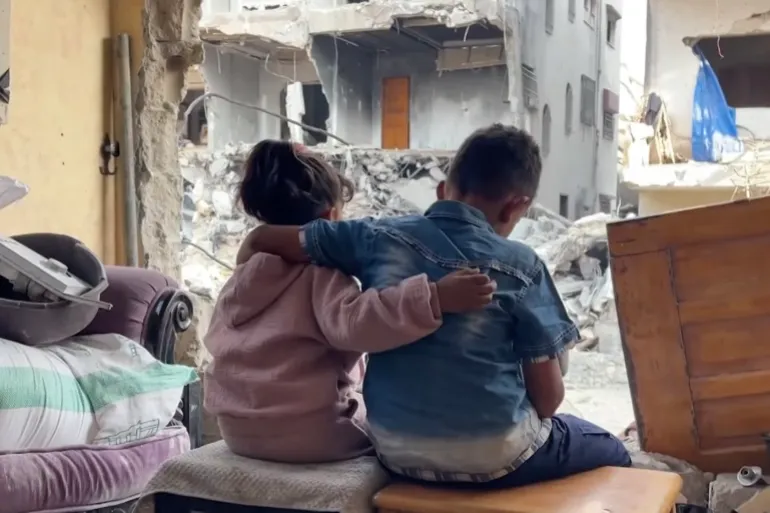
Gaza Herald_ In a fragile tent shaken by the echo of nearby gunshots, seven-year-old Tulin prepares to return to school after a two-year interruption. For many children, the first day of class brings excitement. For Tulin and her family, it brings fear.
Years of conflict have devastated Gaza’s education system, leaving most school buildings damaged or destroyed. In response, families and educators have set up temporary “tent schools” in areas dangerously close to military positions, including zones identified by Israel as high-risk buffer areas.
Tulin’s mother says every morning is filled with anxiety. She often walks behind her daughter, unable to stop herself from watching until the child disappears into the tent classroom. Despite the danger, she insists education cannot wait any longer. Tulin should already be in second grade, she says, but war has stolen years of learning. Still, the family remains determined.
A Dangerous Journey to Class
The route to school passes through rubble-strewn streets and exposed open areas. Tulin says the lack of shelter terrifies her.
She explains that when shooting starts, there are no walls to hide behind. The fear of bullets or shelling follows her every step until she reaches the tent.
Inside the makeshift classrooms, protection is minimal. Thin canvas walls offer no defense, yet children sit closely together on the ground, holding notebooks and pencils, determined to learn.
Teachers describe daily lessons interrupted by sudden gunfire. When shots ring out, they instruct the children to lie flat on the ground, hoping the danger passes without injury. Despite repeated exposure to gunfire, educators continue teaching, saying that knowledge is their form of resistance against despair.
Dreams Persist Amid Loss
Among the students is Ahmed, a young boy who lost his father during the war. Reaching school is difficult, he says, but he refuses to give up.
He explains that his father dreamed of seeing him become a doctor, and attending class, even under threat, feels like honouring that wish.
A Collapsed Education System
The situation in northern Gaza reflects a broader collapse across the territory. According to humanitarian officials, nearly all schools in Gaza have suffered damage, with most requiring major repairs or complete rebuilding.
Hundreds of thousands of children have lost two full academic years and are now entering a third without stable access to education. Kindergartens have also been heavily affected, disrupting early childhood development during critical years.
Trauma and Developmental Setbacks
Temporary learning centers have been established to address the crisis, serving more than a hundred thousand students. However, educators and specialists report alarming psychological effects.
Field observations indicate that many children are experiencing developmental regression. In some areas, roughly one-quarter of students exhibit speech difficulties linked to trauma, prolonged stress, and interrupted learning. Specialists warn that addressing these issues will require sustained psychological and educational support.
Education Without Books
Beyond damaged buildings and emotional trauma, schools face a severe shortage of supplies. Since the start of the war in late 2023, nearly all educational materials, including textbooks and learning tools, have been blocked from entering Gaza.
Humanitarian organizations are developing programs that aim to restore basic education in core subjects, while also focusing on recreational and psychological recovery. Yet officials stress that meaningful progress depends on allowing educational materials to enter the territory.
They warn that denying children access to learning not only deepens the current crisis but risks long-term consequences for an entire generation.

