📅 January 6, 2026
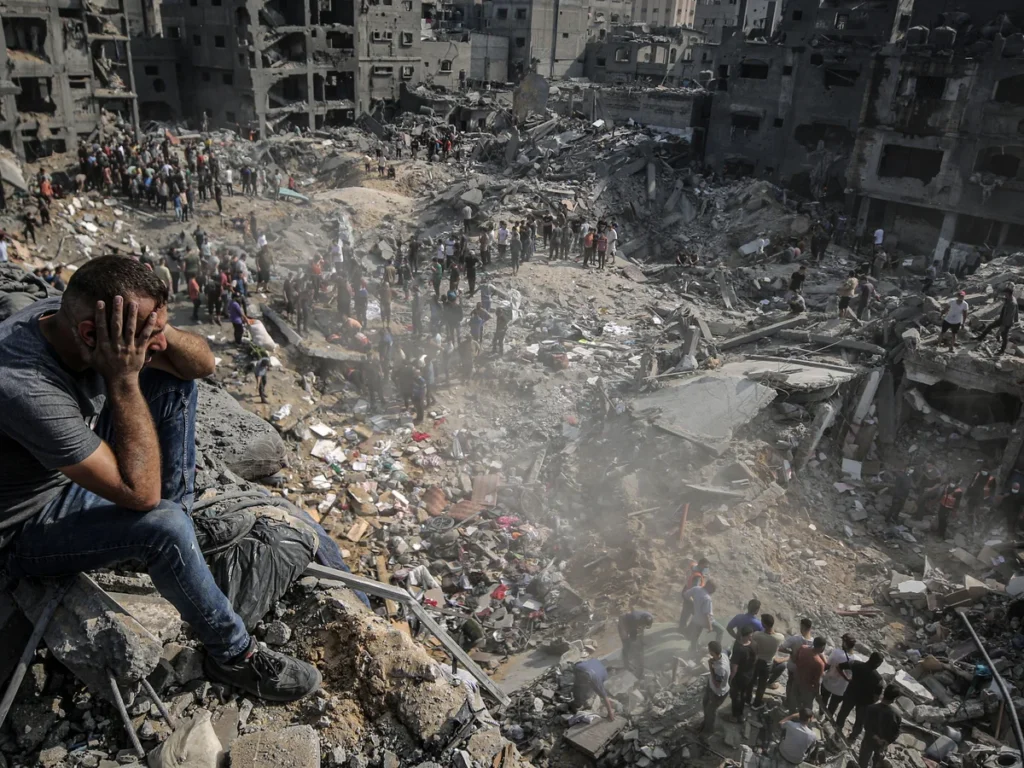
Gaza Herald_Food insecurity in the Gaza Strip has moved beyond academic discussion or humanitarian assessments. It has become a daily struggle for more than two million people living under prolonged siege, repeated military assault, and restrictions that undermine access to necessities. The most recent war did not merely devastate infrastructure; it systematically dismantled Gaza’s ability to sustain life by crippling food systems, water access, agricultural production, and supply networks.
Severe limitations on food imports, coupled with the destruction of bakeries, markets, warehouses, and farmland, have pushed Gaza toward a near-total breakdown of food availability. Under these conditions, most residents have been forced to depend on humanitarian assistance that arrives irregularly, in insufficient quantities, and under tight controls. Hunger, rather than being a byproduct of war, has become a sustained condition shaping daily life.
Although a ceasefire was announced in October 2025, uncertainty persists about whether it has produced tangible improvements, particularly in food access and nutritional stability.
To assess post-ceasefire conditions, a field survey of 110 residents in Gaza City was conducted, examining daily eating patterns, meal frequency, food sources, and perceptions of whether famine conditions have eased.
Survey Insights: Life Under Lingering Scarcity
The survey results reflect lived realities rather than abstract data points—how often families eat, what foods are available, and whether hunger remains a constant concern.
While limited geographically to Gaza City, the responses offer important insight into public sentiment regarding food security, predictability, and the ability to plan meals without fear of deprivation.
Rather than signaling recovery, the findings point to ongoing fragility shaped by restricted supply chains and inconsistent aid flows.
An overwhelming 91 percent of respondents stated that famine conditions persist, while only 9 percent believed that hunger has subsided since the ceasefire.
Public Perception: Famine Remains
The dominant perception that famine has not ended highlights the gap between official claims of stabilization and the lived experiences of residents. For most households, consistent access to sufficient food remains uncertain and unreliable.
Protein Availability: Limited and Uneven
Some improvement was noted in access to chicken, with 64 percent reporting consumption three times or more since the ceasefire. However, over a third reported eating chicken infrequently or not at all, suggesting that availability remains inconsistent and dependent on short-term factors such as aid distributions or sporadic market supply.
Egg consumption revealed even greater vulnerability. About one-third of respondents consumed eggs once or less during the survey period, with a notable portion reporting no access to eggs whatsoever—an indicator of shrinking dietary diversity.
Meal Frequency: A Measure of Deprivation
Responses regarding daily meals underscore the depth of the crisis:
•67 percent reported eating two meals per day
•Approximately 20 percent reported eating only one meal
•Just 11 percent reported eating three meals daily
These figures indicate that full, regular meals have become uncommon. For many families, reducing food intake has become an imposed coping strategy rather than a temporary adjustment.
Health Implications of Reduced Meals
Sustained reliance on one or two meals per day increases the risk of malnutrition, particularly among children, pregnant women, and older adults. Over time, this can lead to weakened immune systems, anemia, developmental delays, and the worsening of chronic health conditions.
Sources of Food: Dependence Over Autonomy
The survey shows a heavy reliance on external food sources:
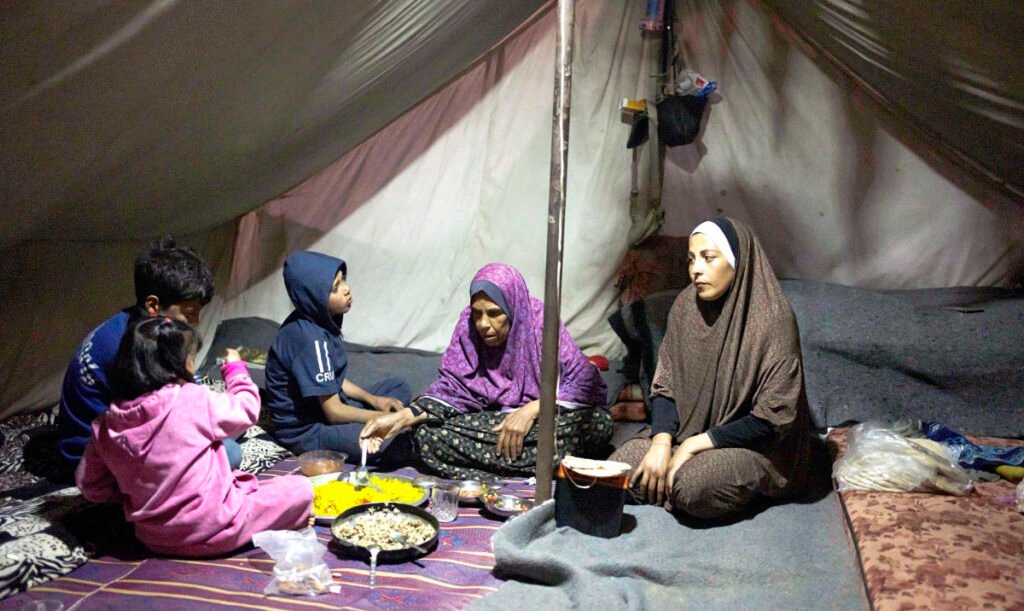
•48 percent depend primarily on charity kitchens
•36 percent rely on home-prepared meals
•16 percent depend on food parcels
This distribution reflects the erosion of household food independence and the transformation of food from a guaranteed daily necessity into an uncertain relief resource.
Aid Sufficiency: A Persistent Gap
When asked whether humanitarian assistance meets basic needs, the vast majority responded negatively. Only a small minority, 9 percent, said aid was sufficient, underscoring the mismatch between the scale of need and the current level of response.
Hunger Persists Beyond the War
The findings demonstrate that food insecurity in Gaza is not a temporary emergency tied solely to active conflict. It is a prolonged condition driven by blockade, economic collapse, and continued restrictions on the entry of food and essential goods.
Despite the ceasefire, daily life for many remains defined by scarcity and uncertainty. Claims that famine has ended do not align with realities on the ground, where securing enough food remains a daily challenge. Without sustained access to supplies, restored livelihoods, and freedom of movement, hunger will continue to shape life in Gaza long after the fighting has paused.