Gaza Herald_ When Storm Byron first appeared on regional weather maps, Israelis were inundated with safety instructions: secure windows, avoid driving near trees, take precautions, and keep emergency numbers handy. Israeli media spent more than a week tracking forecast models, debating potential infrastructure strain, and offering tips on how to stay safe.
Municipalities sent text messages to residents. Businesses announced closures. Families stocked up on supplies.
This is how a functioning society prepares for a winter storm.
For Israel, Byron was a challenge, inconvenient, perhaps disruptive, but ultimately manageable. Homes stand, drainage systems work, emergency services function, and the state protects its citizens.
But under the same sky, in the blockaded Gaza Strip, the forecast was a death sentence.
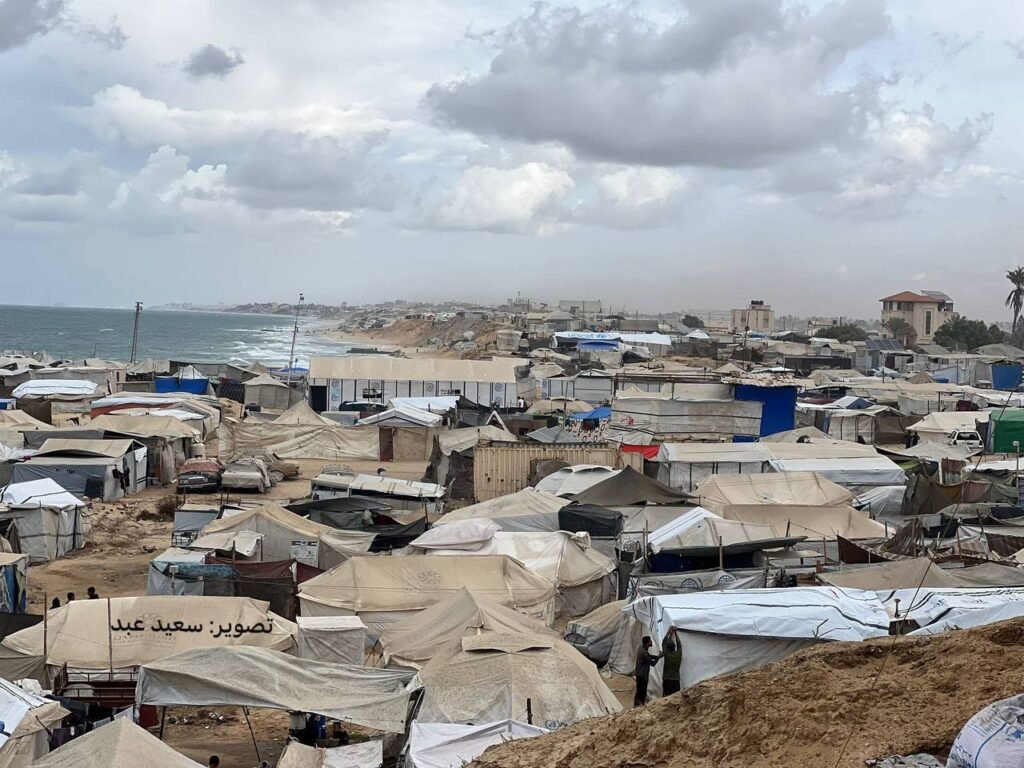
Storm Byron began battering Gaza on Wednesday with torrential rain and flooding that continued into Thursday, and is expected to persist through the week. Hundreds of thousands of Palestinians displaced by Israel’s ongoing genocidal war huddled inside tent camps that offer no protection from the elements, many already flooded because the Strip’s sewage and drainage systems were obliterated by months of bombardment.
Two months into the so-called “ceasefire,” nearly two million displaced Palestinians face the harshest stretch of winter with nothing resembling shelter. The first raindrops brought immediate scenes of catastrophe: tents collapsing, tarps shredding in the wind, families wading through knee-deep water to salvage whatever they could.
Meanwhile, Israel continues to block lifesaving aid. More than 6,500 trucks are stalled at the crossings, carrying winter essentials, tents, blankets, warm clothing, and hygiene kits, while children in Gaza Walk barefoot through freezing mud in summer clothes.
A Population Submerged, Literally and Politically
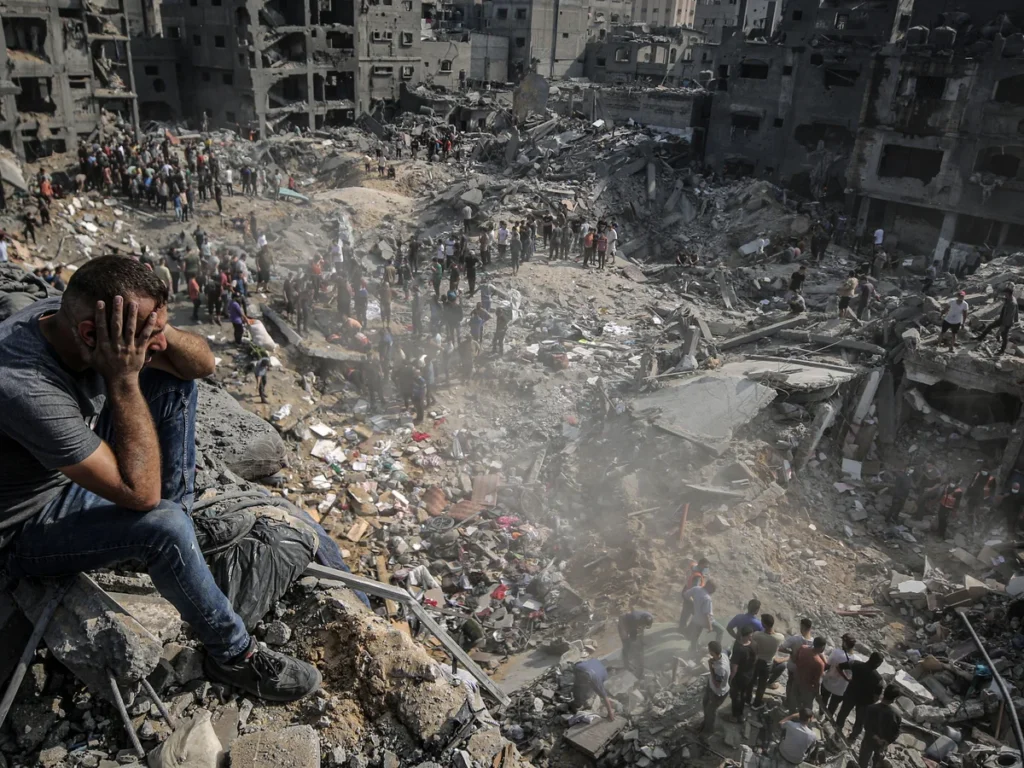
Years of war, siege, and the near-total destruction of housing, sanitation, and drainage systems have left almost two million people living in flimsy tents and makeshift shacks that collapse under a single night of rain.
Civil defense teams received desperate calls from every corner of the Strip as tents filled with water. Many families had only one option: flee to slightly higher, and only marginally drier ground, if they could find any at all.
Footage from across Gaza showed tents sinking, blankets soaked, mothers holding screaming children as waters rose. Some families stood atop piles of rubble to stay out of the flood. Others simply clung to each other, watching their last possessions wash away.
Forgotten by the World
The storm did not pause for ceasefires, negotiations, or humanitarian pledges. It exposed, with brutal clarity, the moral disparity between who receives protection and who is abandoned, a disparity shaped by policies, geopolitics, and deliberate neglect.
International attention has drifted. Aid pledges remain unfulfilled. The world continues to look away.
For displaced Palestinians like 19-year-old Amro Akram, the storm is not just another hardship; it is a reminder that they have been forgotten. His family fled Khuza’a months ago with no winter clothing. Their tent collapsed when Byron swept through.
“Our tent sank and was torn apart by the wind,” he said. “We pray that the rain stops.”
With no mattresses, no warm clothes, and one blanket shared between siblings, his family, like hundreds of thousands of others, is not surviving. They are being abandoned.
Floodwaters, mixed with raw sewage due to the collapse of Gaza’s drainage systems, now fill the same tented spaces people are forced to live in. Humanitarian officials warn that outbreaks of disease are imminent, and deaths from hypothermia and waterborne illnesses are likely.
Just days ago, Moain Hamo, a young man, died after falling while trying to seal his shattered windows with plastic to keep his family warm. His name never made headlines.
Israeli Media Mock Gaza’s Misery
Amid this devastation, several Israeli media figures openly celebrated the storm’s impact on Gaza. On Channel 14, one panellist declared he did not care if tents were destroyed or Palestinians displaced again, calling the storm a “cleanup.”
“I don’t think a single tent will remain standing by Friday morning,” he said. “And I don’t have a problem if the people aren’t there either. God gave them punishment, and now He is cleaning the Strip with water.”
These words are not fringing rhetoric. They reflect a broader dehumanization that has become normalized, a moral collapse in how Palestinian suffering is viewed, mocked, and dismissed.
The Storm Exposes a Larger Failure
As rain continues to fall, the consequences spread: ruined food, soaked clothing, destroyed shelters, children shivering in the cold, and families pushed further into despair. The health crisis will intensify in the coming weeks, particularly for children already weakened by hunger.
Storm Byron did not create this catastrophe; it revealed the collapse of humanitarian protection in Gaza, a collapse engineered by years of war, siege, and an international community unwilling to confront it.
For much of the world, storms are temporary disruptions. Infrastructure holds. Lives continue.
In Gaza, Byron has become another chapter in a long story of isolation and imposed vulnerability, a storm amplified by political cruelty, indifference, and deliberate policy choices.
Storm Byron did not simply pound Gaza with rain.
It exposed the moral bankruptcy of a world that allows an entire people to drown under the same storm others weather with ease.