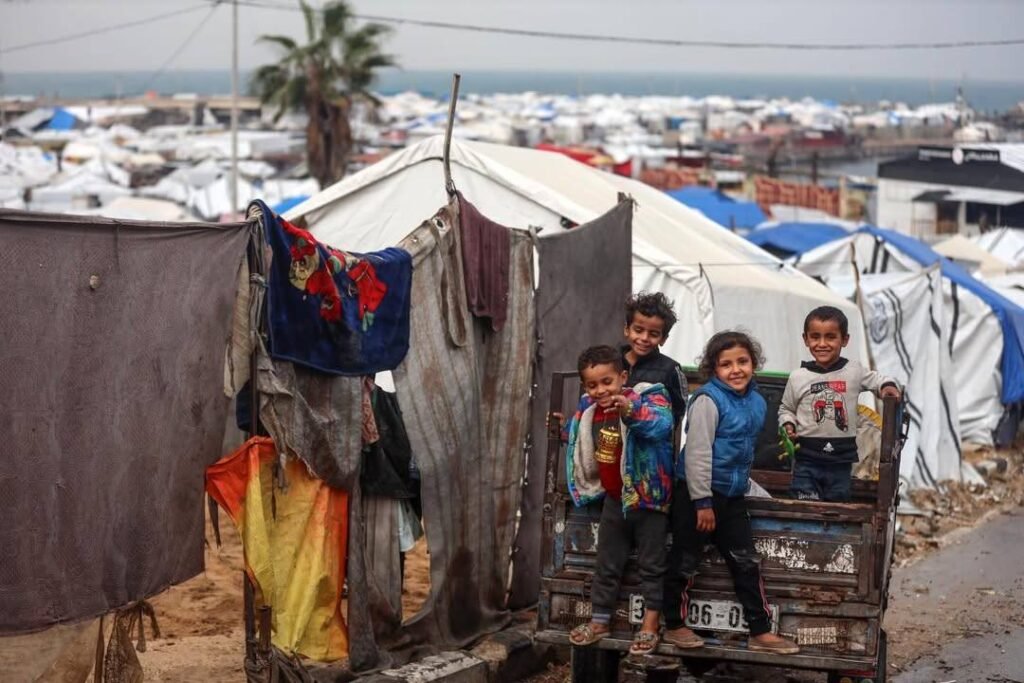
Gaza Herald_ In the vast displacement camps of Gaza, endless rows of makeshift tents now cover rubble, vacant lots, and the ruins of once-busy neighborhoods. As Storm Byron barrels toward the besieged enclave, fear is sweeping through a population already worn down by nearly two years of Israel’s war, a campaign marked by relentless bombardment, engineered starvation, and systematic destruction.
For the 1.5 million Palestinians surviving under plastic sheets, frayed tarps, and scavenged debris, the approaching storm is not merely harsh weather. It is yet another threat layered onto an already brutal daily struggle for survival, one they must face with tents reinforced by scrap metal, walkways that turn to rivers of mud after a single night of rain, and families who own nothing left that can be ruined.
Solidarity as a Survival Strategy
In the camps of Gaza City, scenes of deep vulnerability stretch in every direction. Most shelters are patched together from aid tarpaulins, pieces of plastic pulled from collapsed buildings, and blankets tied to wooden poles salvaged from the ruins. Many sag visibly; others tremble under even a light breeze, as though one strong gust might flatten them completely.
“When the wind starts, we all hold the poles to keep the tent from falling,” said Hani Ziara, a father sheltering in western Gaza City after losing his home months ago. His tent flooded overnight, forcing his children to spend hours outside in the cold. He wonders what more he can possibly do to shield them from rain and wind when he no longer has walls or a roof to rely on.
Across many camps, previous rainfall has already softened the ground into wet sand and thick mud that clings to everything: shoes, blankets, and cooking pots. Trenches dug by volunteers to divert floodwater often collapse within hours. Families living in low-lying areas are bracing for the worst: that floodwaters will surge straight into their tents with nowhere else to drain.
Ordinarily, preparing for a storm means stocking food, storing clean water, and securing shelter. In Gaza, such steps are a luxury. Water deliveries are infrequent and insufficient; some families go days without enough to cook or wash. Food is equally scarce. Irregular aid distributions may bring rice or canned goods, but rarely enough to survive, let alone prepare. Storing extra supplies for a storm is simply impossible.
“We could not sleep last night. Our tent was flooded with rainwater,” said Mervit, a mother of five sheltering near Gaza’s port. “Everything we had was washed away. We want to prepare, but how? We barely have food for tonight. We can’t save what we don’t have.”
Yet, despite deprivation, solidarity has become Gaza’s strongest and, often, only survival mechanism. Neighbours work together to secure tents; young men roam through rubble searching for metal scraps and wood to reinforce shelters; women pool resources to cook collective meals for the most vulnerable, especially young children and the elderly.
These networks intensify as storms approach. Volunteers visit tent after tent, helping families lift sleeping spaces off the ground, sealing holes with sheets of plastic or nylon, and digging new drainage channels. Crowds mobilize to move families living in especially dangerous areas, those exposed to the sea winds or trapped in low-lying terrain, to slightly safer spots when possible.
‘We Are Exhausted’
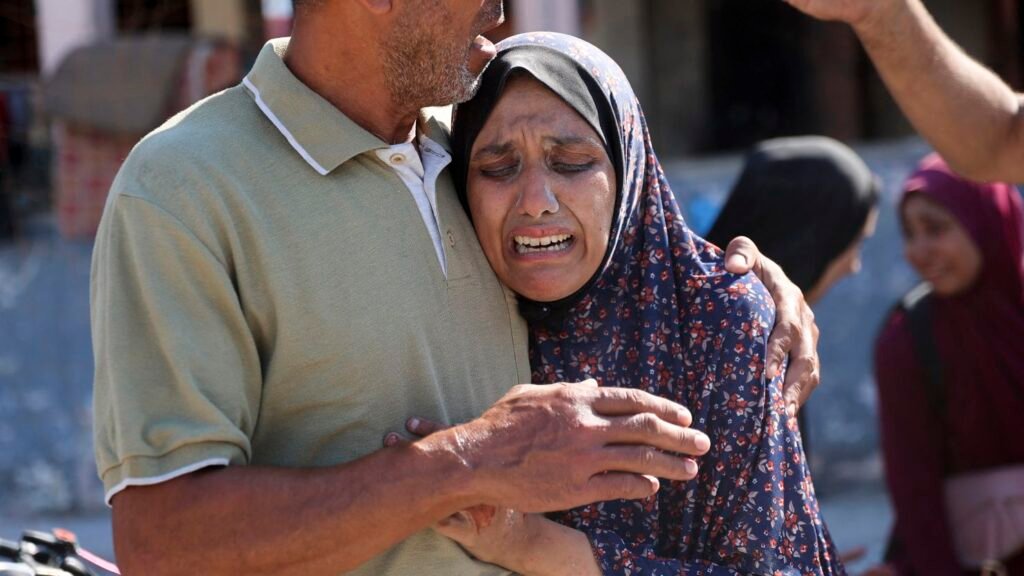
The psychological toll is immense. After months of displacement, loss, disease, and hunger, the arrival of a powerful winter storm feels like yet another blow to a population already pushed to its limits.
“Our tents were destroyed. We are exhausted,” said Wissam Naser. “We have no strength left. Every day there is a new fear: hunger, cold, disease, now the storm.”
Many describe the feeling of being trapped between the sky and the earth: exposed from above and below, with no solid ground and no protective roof, utterly unable to shield their families.
As heavy clouds gather along Gaza’s coastline, families brace themselves. Some weigh down tent walls with stones and sandbags. Others move children’s blankets to the driest corner, hoping the roof will hold. Few have a real plan. Most simply wait, because waiting is all they can do.
For Gaza’s displaced, this storm will not be just one difficult night. It is another reminder of how fragile life has become, how survival now depends not on preparation but on endurance. They face the winds with almost nothing, relying on each other and hoping that, this time, the storm will spare them.