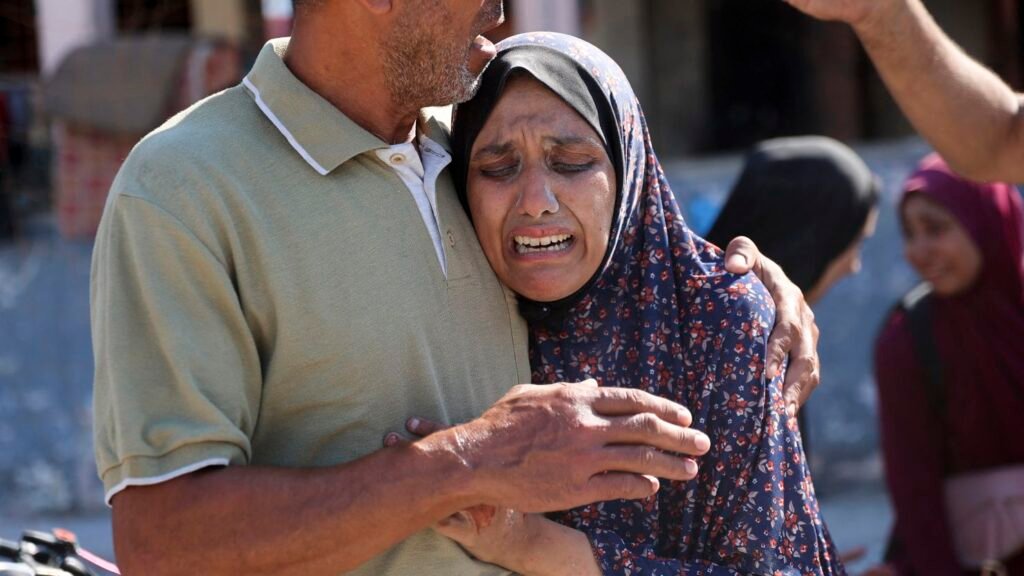
Gaza Herald_ While Gaza struggles to survive its harshest winter in years, the Palestinian government is sounding the alarm: tens of thousands of displaced families are facing freezing temperatures, flooded tents, and a growing risk of death, especially among children and the elderly. The Gaza Herald has documented the humanitarian collapse unfolding inside makeshift shelters, where Israel’s destruction and obstruction of aid have turned a winter storm into a new chapter of suffering. As world powers debate political frameworks and “phases” of an agreement, Palestinians warn that no diplomatic plan can move forward while basic survival remains under threat.
Palestinian Government Urgently Appeals for Aid as Polar Storm Batters Displaced Gazans
A senior U.S. official said that negotiations on advancing to the second phase of the Gaza agreement are registering “real movement” despite what he described as substantial obstacles, as the United Nations reaffirmed its categorical opposition to any unilateral alteration of Gaza’s borders by Israel.
The latest diplomatic activities came as the Palestinian government issued an urgent appeal for immediate assistance to Gaza’s displaced communities, who are enduring harsh conditions amid a severe polar storm sweeping the region.
Ahead of Israeli Prime Minister Benjamin Netanyahu’s expected visit to Washington later this month, a source told the Hebrew daily Israel Hayom that the U.S. administration is applying significant pressure on Netanyahu to endorse President Donald Trump’s declaration outlining the shift to phase two of the Gaza agreement.
In Washington, the senior American official acknowledged that the negotiations are grappling with “difficult issues, multiple challenges, and divergent positions,” noting that the talks are being conducted behind closed doors in an effort to maintain momentum.
He said that the first components of an international stabilization force could be deployed in Gaza at the start of 2026, initially involving one or two participating states. The force, he stressed, would not operate in areas under Hamas control. Discussions remain centered on force composition, command-and-control arrangements, deployment mechanisms, rules of engagement, and logistical frameworks. Several countries, including Arab states, are in consultations over potential participation. The question of a U.S. leadership role in the force remains unresolved, he added, underscoring that the U.N. Security Council resolution on Gaza explicitly links Israel’s withdrawal to the implementation of phase two.
Israeli Foreign Minister Gideon Sa’ar said Israel would extend full support to Trump’s plan, accusing Hamas of working to derail it. Energy Minister Eli Cohen reiterated that Gaza requires an international force, but “not one led by Turkey or Qatar.
Displaced Families Face Disaster as Storm Floods Camps
Meanwhile, the Palestinian presidency urged international institutions, humanitarian agencies, and local relief groups to immediately deliver shelter materials for Gaza’s displaced families as a severe polar storm batters the territory.
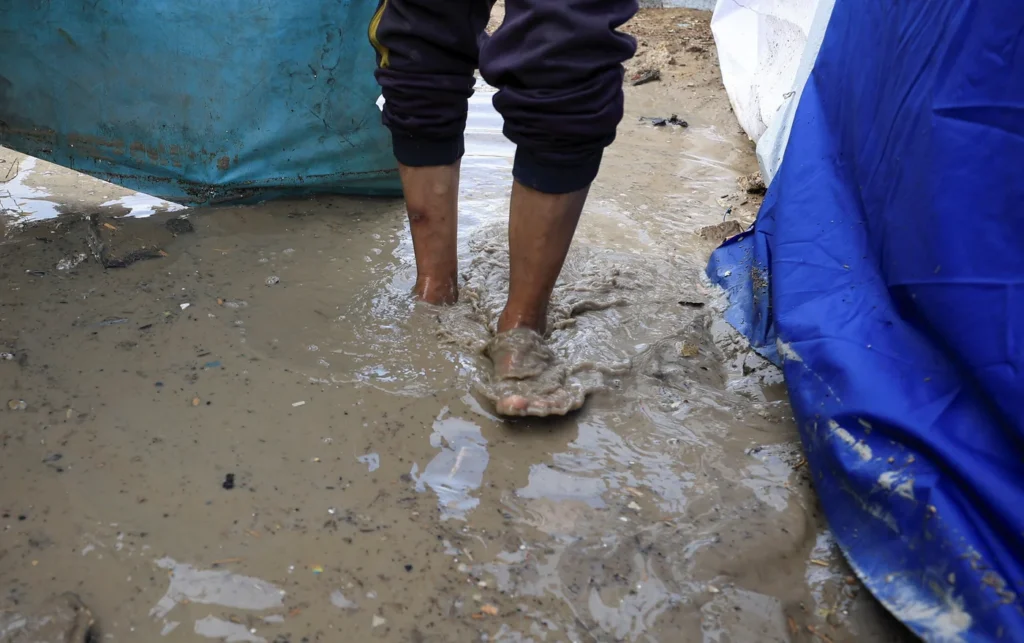
The government’s emergency operations room reported extensive flooding across displacement camps, saying heavy rains inundated dozens of tents and destroyed the few remaining possessions families had managed to preserve. Officials said the storm has sharply worsened already dire conditions, with virtually no protection from freezing temperatures, high winds, or further rainfall.
Authorities cautioned that the deteriorating situation poses a direct threat to the lives of children, the elderly, and the sick, as temperatures continue to fall and essential heating and shelter supplies remain out of reach in overcrowded camps and makeshift tent clusters.
The presidency appealed to the international community to pressure Israel to allow the unrestricted entry of humanitarian relief, especially tents and prefabricated housing units, describing them as the only effective means of safeguarding hundreds of thousands of displaced people from the deadly winter cold.
Hamas also called for an urgent, coordinated relief operation and the rapid establishment of dignified, weather-resilient shelters by all responsible parties.
Israel Continues to Violate the Agreement
At the same time, Israeli forces continued to breach the ceasefire terms with a series of escalating actions across the Gaza Strip. Military units carried out the demolition of residential and public buildings in Gaza City and Beit Lahia, despite the agreement’s explicit prohibition on offensive operations and destruction of civilian infrastructure.
Local witnesses and civil defense teams reported that army bulldozers and engineering units flattened several structures under the pretext of “operational needs,” a justification Palestinian officials described as a clear attempt to alter conditions on the ground before the next phase of the agreement takes effect.
In southern Gaza, the Israeli army conducted renewed air and artillery strikes on Rafah and Khan Younis, targeting areas already devastated by months of bombardment and mass displacement. The attacks triggered panic among residents and displaced families sheltering in makeshift camps, many of whom had believed the ceasefire would offer a measure of safety.
Medical teams said the violations have resulted in new casualties and have further complicated emergency response efforts, particularly as winter storms and flooding strain Gaza’s already crippled infrastructure.
Palestinian officials condemned the ongoing violations as deliberate attempts to undermine the ceasefire’s fragile progress, warning that continued military actions threaten to derail negotiations over the transition to phase two of the agreement.
UN Rejects Israeli Army Chief’s “Yellow Line”
In New York, UN spokesperson Stéphane Dujarric responded to Israeli Chief of Staff Eyal Zamir’s remarks about a “yellow line” inside Gaza: “We strongly oppose any change to the borders of Gaza and Israel,” he said. The statement, he added, contradicts the spirit and text of Trump’s peace plan. The UN, when referring to Gaza, recognizes only the established borders, not the so-called yellow line.
Record-Setting Settlement Expansion in the West Bank
In the occupied West Bank, the Israeli Broadcasting Authority revealed what it called “historic shifts” over the past three years, noting the establishment of around 140 new settlement outposts covering nearly one million dunams, four times the footprint of previously existing settlements.
The investigation, based on leaks and documents, showed that the process involves declaring lands as “state land” and then transferring them to settlers under a plan designed by extremist Finance Minister Bezalel Smotrich. In some cases, a single settler has been able to seize tens of thousands of dunams.
The investigation also highlighted warnings from Israeli security officials about the consequences of these policies and the growing wave of Jewish settler violence in the West Bank, warnings that were ignored. It noted that the Religious Zionism Party, led by Smotrich, has transformed the reality on the ground through dozens of newly created “grazing outposts,” set up without government decisions or security consultations.
At the same time, the Israeli government approved the construction of more than 1,000 settlement units in the West Bank. The so-called Higher Planning Council approved 764 units yesterday across various settlements.
This comes alongside the approval of 51,370 new settlement units, a record number, within a massive budget plan promoted by the Finance Ministry totaling 2.7 billion shekels.
UN Rights Chief Warns of Spike in Settler Violence
Similarly, UN High Commissioner for Human Rights Volker Türk reported an unprecedented rise in settler attacks in the West Bank. Türk warned that the region is suffering from a collapse in services amid escalating settler violence and shrinking UN funding.