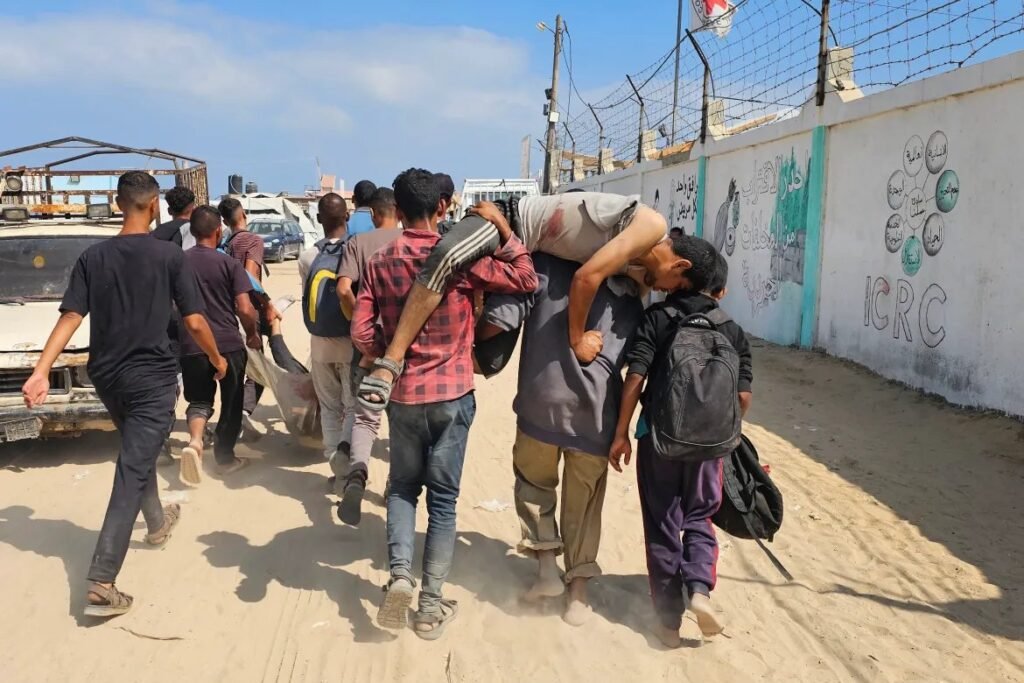
Gaza Herald — Despite formal ceasefires in both Gaza and Lebanon, Israel’s assault on the region has not stopped. On Tuesday, Israeli forces targeted the largest Palestinian refugee camp in Lebanon, firing two missiles that killed at least 13 people. A separate drone strike hit Bint Jbeil the same day, killing another person, followed by additional strikes on villages across southern Lebanon.
Inside Gaza, the attacks have also persisted. Israeli air raids and drone strikes continued throughout the week, killing at least 23 people on Wednesday alone as Gaza City, Rafah, and Khan Younis came under fire. All of this has unfolded despite United States President Donald Trump’s proclamation that peace has returned to the Middle East.
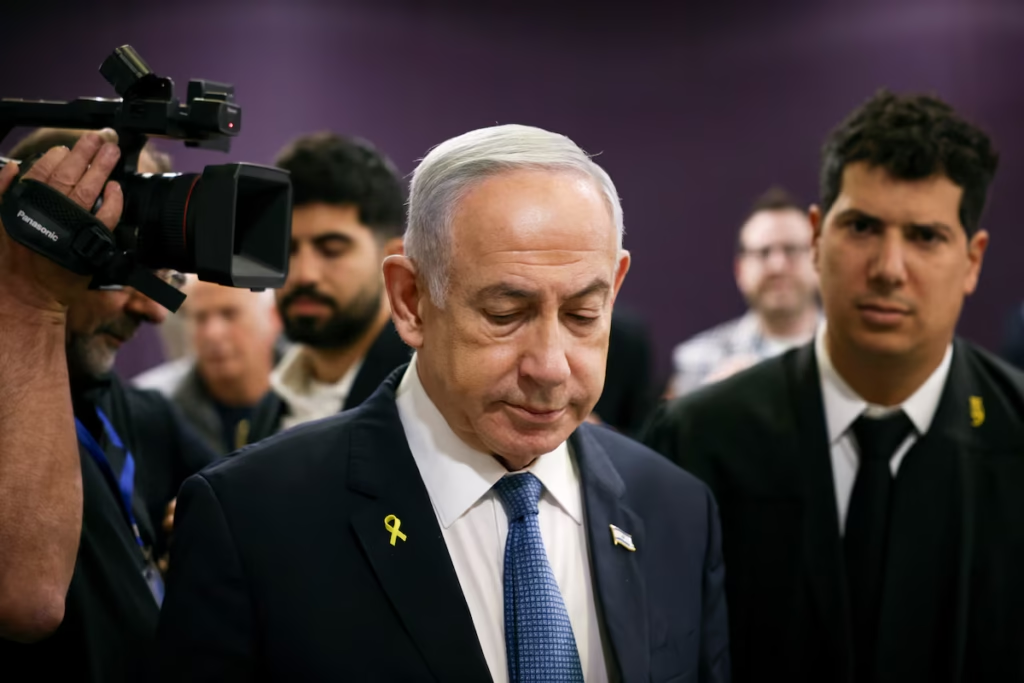
But for Israeli Prime Minister Benjamin Netanyahu, the war is far from over.
In a speech to the Knesset on November 10exactly one month after a ceasefire supposedly took effect in Gaza, Netanyahu declared that the conflict “has not ended,” claiming that Israel’s enemies are rearming and that military operations must continue. His statements come as Israel has killed more than 280 Palestinians since the ceasefire began, and continues to strike Gaza, Lebanon, and the occupied West Bank.
Researchers and analysts say none of this is surprising. Even before ceasefires were announced, Israel showed no indication that it intended to honour them. On October 13, 2025, Trump gathered representatives from more than two dozen countries in Sharm el-Sheikh to announce sweeping peace across the region. Yet just over a month later, Israeli attacks remain a near-daily reality for millions.
As of November 19, Israel’s genocidal war on Gaza has killed 69,513 Palestinians since October 7, 2023. International pressure on Israel had intensified in recent months as leading legal scholars and human rights groups declared that the assault on Gaza constitutes genocide. But the diplomatic spectacle at Sharm el-Sheik and the declaration of a ceasefire have allowed Israel to evade scrutiny.
Meanwhile, people in both Gaza and Lebanon remain unable to return to their homes. Israel has targeted reconstruction machinery, and in Gaza, it continues to obstruct, including much of the assistance promised under the ceasefire agreement. According to researchers, as long as Netanyahu believes he can act with impunity, civilians across the region will remain at risk.
Analysts say Netanyahu’s recent comments reveal a pattern: he is committed to keeping Israel in a constant state of war. Throughout previous ceasefire negotiations, he repeatedly stalled and undermined progress. Protest movements inside Israel have called for an end to the war, but they have largely centred around securing the release of Israeli captives. With all surviving captives now released and only the remains of three people still unaccounted for, the government has shifted its narrative toward claims that enemies are “regrouping.”
Politics of Perpetual War
Netanyahu insists the war must continue because Hamas and Hezbollah are rebuilding. He argues that despite Gaza’s destruction, Israel has not yet achieved its objective of dismantling Hamas, while Israeli media reports claim that Hezbollah is also restoring its military capabilities. Analysts, however, say these goals were intentionally crafted to be unattainable, allowing Netanyahu to prolong the war indefinitely and avoid political accountability.
His political career is at stake: far-right coalition partners demand continued warfare and view the conflict as a chance to advance their plans for the ethnic cleansing of Palestinians. Netanyahu is also embroiled in three corruption cases, all of which have been repeatedly postponed due to the war under the pretext of “national security”. Keeping Israel mobilised for war, analysts say, offers him both political cover and personal protection.
Netanyahu also faces an international arrest warrant from the International Criminal Court for war crimes committed in Gaza. Analysts argue that what Israel calls ceasefires are merely tactics to delay accountability while continuing the same pattern of violence under a different label.
Experts say the Israeli strategy is simple: Israel demands its enemies cease fire, while Israel continues firing with intensified force if there is any response. As international attention drifts, Israel has scaled back only the visibility of its operations, not the operations themselves.
The Human Toll and the Path Forward
The violence is still ongoing in Gaza, Lebanon, and the occupied West Bank. Analysts warn that this will continue until the root causes are addressed: Israel’s apartheid system and its military occupation of Palestinian land. Without dismantling these structures, any pause in violence will remain temporary, and the region will face repeated cycles of escalation.