Gaza Herald_ Just days after the long-awaited ceasefire took effect, Israel has moved to reassert control over the humanitarian lifeline of Gaza, tightening restrictions on aid and maintaining its closure of the Rafah crossing.
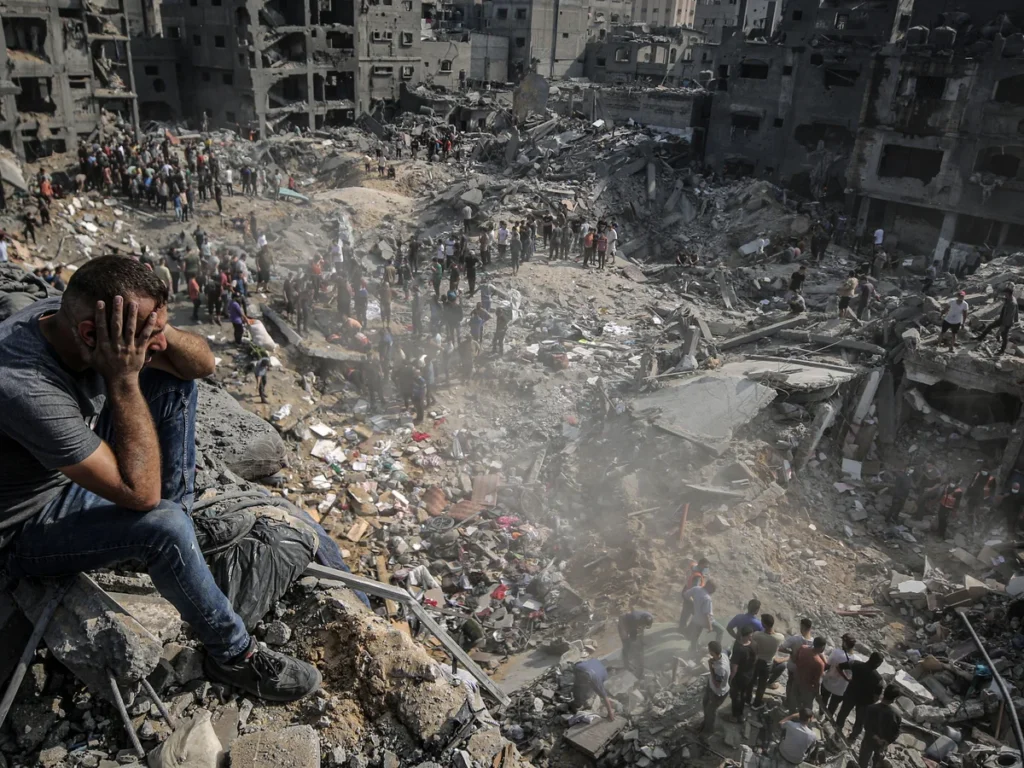
The decision, announced as Palestinians continue to unearth their dead and rebuild what remains, underscores the fragility of the so-called truce and highlights Israel’s enduring use of aid as a tool of leverage and pressure. What was presented as a step toward relief is quickly revealing itself as an extension of the same policies that have kept Gaza on the brink of famine for nearly two years.
Restricting aid amid growing strain on the ceasefire
Israel informed the United Nations on Tuesday that it would reduce the number of daily aid trucks entering Gaza from 600 to 300, half the amount previously agreed upon. The notice, issued by the Coordination of Government Activities in the Territories (COGAT), also stated that no fuel or gas would be permitted into the enclave except for limited humanitarian infrastructure.
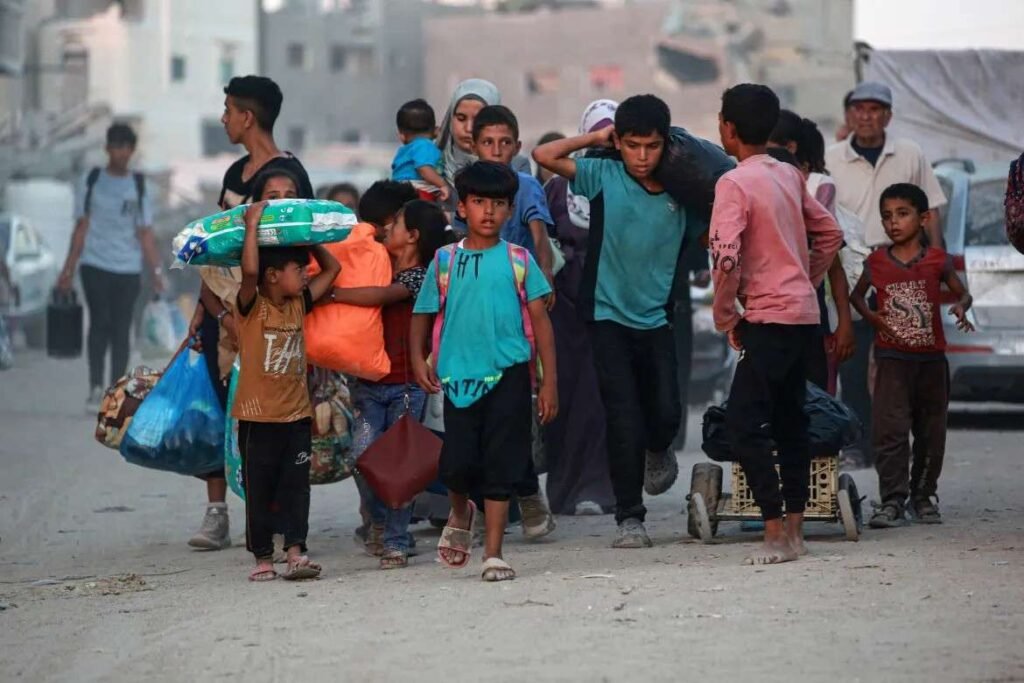
Olga Cherevko, spokesperson for the UN Office for the Coordination of Humanitarian Affairs (OCHA) in Gaza, confirmed receipt of the Israeli directive. “Three hundred trucks are not nearly enough,” she said, as aid agencies warned that the reduction would deepen Gaza’s humanitarian crisis. The UN’s figures estimate that the enclave requires at least 600 trucks of food, medicine, and shelter materials daily to avert famine conditions.
Reporting from Gaza City, journalists described growing anger and despair among residents who had expected a relief surge following the ceasefire. “It’s not going to change anything,” one correspondent said, noting that Israel’s partial allowance of aid remains symbolic rather than sufficient.
Rafah crossing remains sealed
Israeli authorities also announced that the Rafah border crossing between Gaza and Egypt, the territory’s only outlet not directly controlled by Israel, will remain closed indefinitely. The closure delays the planned entry of humanitarian convoys and aid workers, raising further questions about Israel’s commitment to the ceasefire terms.
The new restrictions came hours after Israeli forces carried out attacks in northern and southern Gaza, killing at least nine Palestinians. Six were killed in Gaza City and three in Khan Younis, according to local medical sources. Witnesses from al-Ahli Arab Hospital reported that Israeli soldiers also killed five Palestinians in the Shujayea neighborhood, prompting renewed fears that the ceasefire could collapse under continued Israeli operations.
Ceasefire under pressure
The strikes occurred just four days after the ceasefire agreement between Israel and Hamas took effect, part of the first phase of U.S. President Donald Trump’s 20-point plan for Gaza. The truce includes partial Israeli withdrawal, the exchange of captives, and expanded humanitarian access, though implementation has been uneven.
Since October 2023, Israel’s military campaign has killed at least 67,913 Palestinians and wounded more than 170,000, according to Gaza’s health authorities. Thousands more remain missing beneath the rubble. In Israel, 1,139 people were killed during the Hamas-led attack on October 7, and over 200 were taken captive.
Under the current arrangement, Hamas and Israel exchanged nearly 2,000 Palestinian prisoners for 20 Israeli captives, with 154 Palestinians exiled to Egypt. Hamas was also required to return the remains of 28 deceased Israeli captives, but delays in the handover have fueled Israeli accusations of ceasefire violations. Trump himself escalated tensions with a statement on his social media platform, writing: “THE DEAD HAVE NOT BEEN RETURNED, AS PROMISED! Phase Two begins right NOW!!!”
Hamas has maintained that retrieving the bodies of captives is complicated by Israel’s widespread destruction of Gaza, where many sites of detention no longer exist. The group’s position underscores a broader concern among Palestinians that Israel’s demands for compliance are being used to justify renewed restrictions and, potentially, resumed attacks.
UN calls for expanded access
The United Nations and the International Committee of the Red Cross (ICRC) have both urged Israel to reopen all crossings and allow unrestricted humanitarian access. OCHA reported that 190,000 metric tonnes of aid are currently awaiting entry into Gaza, while UNICEF said it has 1,370 trucks ready to deliver essential supplies.
“The level of destruction is so vast that at least 600 trucks a day are needed,” UNICEF spokesperson Ricardo Pires said. “We’re far from that.” The World Health Organization (WHO) added that hospitals remain overwhelmed and urgently require medical supplies. “Health workers are exhausted, but they continue to serve. They just need the tools to keep people alive,” WHO spokesman Tarik Jasarevic stated.
The tightening of Gaza’s aid corridor just days into the ceasefire serves as a reminder that Israel’s war did not end with the silencing of guns. It continues through administrative control, economic strangulation, and the manipulation of humanitarian relief. For Palestinians, survival has become an act of defiance, a daily resistance against a system that turns food, medicine, and water into instruments of coercion.
As the world hails the ceasefire as progress, Gaza remains in limbo: a place where peace is declared, but siege is enforced; where reconstruction is promised, but starvation persists. In the absence of accountability, the language of truce risks becoming little more than a political disguise for a war that never truly stopped.