
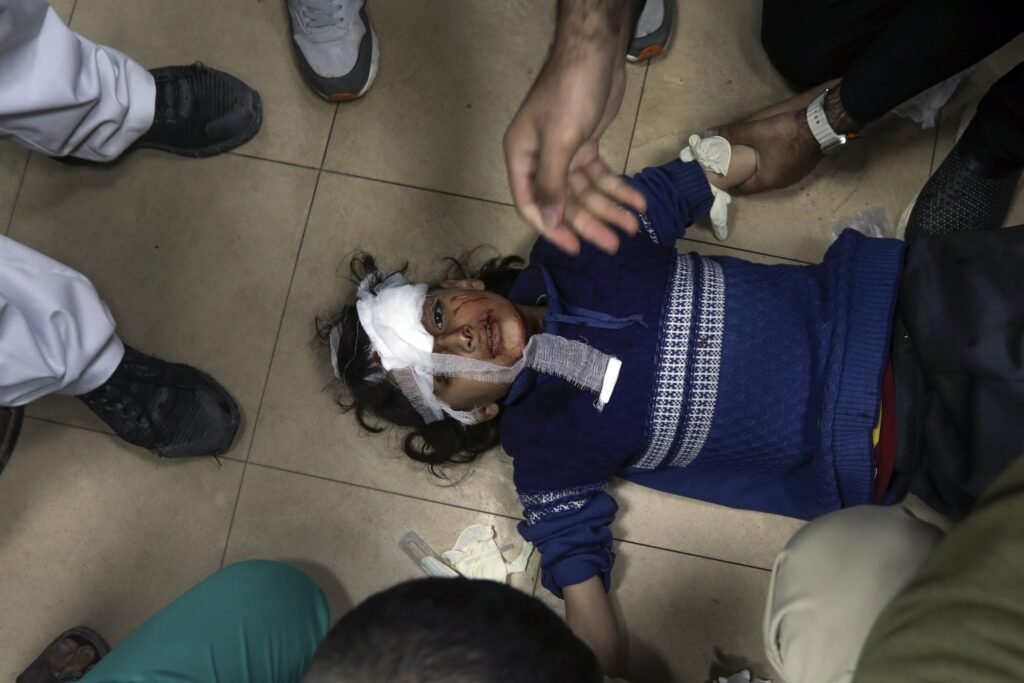
This story is based on the testimony of Mohammed Alnami, a survivor of the ongoing genocide in Gaza. It was translated and published by the Gaza Herald as part of its dedicated section, Genocide Survivors, which documents personal accounts from those enduring one of the most devastating humanitarian crises of our time.
“I see the soldier in my sleep, pointing his rifle at me, and I see the laser light moving across my chest, my head, and my eyes, then I imagine him pulling the trigger, I feel the female soldier burning cigarettes on my back. Then, I see their dogs watching me, ready to attack. I see them often, and I hear their threats as if they were said just now, I wake up terrified and can’t fall back asleep.”
With these words, 12-year-old Mohammed Yassin, from northern Gaza, described what he suffers every night after enduring a brutal experience of arrest and torture at the hands of Israeli forces. This fate also befell members of his family. Mohammed was held for weeks in a detention camp near the border, where he was subjected to severe torture and unbearable conditions that left him deeply traumatized. Even after his release, the psychological scars remain.
One of the clearest signs of Mohammed’s trauma is the recurring nightmares that replay those horrifying moments. Sometimes, he dreams the soldiers carried out their threats and wakes up in shock, believing he is dead.
Mohammed’s suffering mirrors that of thousands of children in Gaza. Those who spend their days exhausting themselves searching for water, food, or bread find no rest at night; instead, darkness brings back the bloody reel of war, the massacres and tragedies that Gazans of all ages have lived through again and again.
79% of Gaza children suffer from chronic nightmares
A Save the Children study on Gaza’s children revealed that more than 79% suffer from chronic nightmares, while around 91% are diagnosed with post-traumatic stress disorder (PTSD). The report further showed that 96% of children feel their death is imminent, and nearly half of them express a wish to die because of their constant psychological suffering. The study also recorded high levels of self-harm and suicidal thoughts among children, with more than half of parents saying their children display violent tendencies toward themselves or disturbing thoughts far beyond their age.
UNICEF has stressed that every single child in Gaza now requires urgent psychological and social support something unprecedented in the organization’s history. Officials have described the crisis as not just PTSD, but ongoing trauma, explaining: “We don’t call it PTSD because the trauma has never ended. It is happening every day.”
For most children in Gaza, nightfall has become a new chapter of pain. Their dreams are invaded by nightmares that reflect the immense psychological damage caused by the massacres and relentless violence. This suffering manifests in visible symptoms: bedwetting, night terrors, loss of speech, premature graying, social withdrawal, depression, and even suicidal thoughts.
Mohammed’s Struggle After Torture
Serene Yassin, the wife of Mohammed’s uncle and his guardian since displacement, said his arrest destroyed him psychologically, stripped him of self-confidence, and robbed him of sleep.
“At night we hear him muttering: ‘It wasn’t me… leave my family… don’t shoot me… it’s cold… let my brother go.’ Sometimes his voice rises and he wakes up the other displaced families in the school where we shelter,” she said.
She explained that his violent movements during sleep reflect the abuse he suffered, and that nightmares have worsened his health—weakening his immunity, making him frequently ill, and leaving him fatigued and withdrawn.
Salwa’s Endless Nightmares
Nine-year-old Salwa al-Qaed relives the bombing of her family’s home in Gaza City’s Zeitoun neighborhood almost every night. Her mother, Suad, says her daughter’s suffering is unbearable, even for adults.
“She dreams of her father and uncles’ blood, their torn bodies, and feels as though she’s walking among the dead and wounded while trying to escape,” Suad said.
Although the massacre happened more than 18 months ago, Salwa still lives as if it occurred yesterday. During the short truce earlier in 2025, her nightmares briefly eased, but with the war’s renewal and continued displacement, her condition worsened again.
Her mother tries to comfort her with hopeful bedtime stories, avoiding any mention of her father so as not to trigger memories, but the nightmares persist. “One night she woke up crying, looking at her hands, convinced they were covered in blood. She rushed to wash them, trying to wipe it away,” Suad recalled.
Sometimes, she has had to give her daughter sedatives just so she can sleep. She pleads with international organizations to provide real psychological support for Gaza’s children, stressing that nothing will help unless the war ends.
Dina Buried Alive
Seventeen-year-old Dina al-Sayed Jad survived a massacre in Shuja’iyya. When the neighboring house was bombed, her home collapsed, burying her under the rubble. She lost consciousness, unable to breathe, convinced she would die.
“That hour under the debris felt like a lifetime. It was dark, I was bleeding, and every breath was harder than the last. I thought only of my family’s fate,” she said.
Though she was rescued alive, Dina remains haunted. “I keep dreaming of being trapped, screaming, suffocating, until I wake up gasping for air. The nightmare repeats itself endlessly.”
She adds that her entire family suffers psychological wounds: “Some of us speak about it, others hide it, pretending to be strong. But the truth is, we’re all broken. The trauma isn’t just nightmares, it’s mood swings, fear, and emotional outbursts we can’t control.”
No Mental Health Care
Despite this overwhelming trauma, children in Gaza have almost no access to psychological care. Dr. Najwa Masoud, a physician in central Gaza, described the situation as catastrophic.
“Every day we receive dozens of children unable to sleep, haunted by constant flashbacks of bombings and massacres. We try to talk to them, but words are rarely enough. Parents beg us for sedatives, just so their children can rest,” she explained.
But sedation is dangerous. Real treatment requires safety and stability, which are impossible under constant bombing. Gaza has no specialized psychiatric hospitals for children, and community centers barely cover 5% of the need.
Dr. Masoud warned that some children display severe trauma symptoms: muteness, loss of movement, dissociation, extreme fear of simple things, or violent behavior. Many never make it to clinics at all.
The crisis extends beyond children: “Even men suffer, but cultural stigma prevents them from admitting it, until it explodes.”
She added that Israel has blocked essential medications since the war began, including antidepressants. Patients who had recovered relapsed severely without treatment. “This is systematic and deliberate,” she said, calling for immediate international intervention.
Dr. Masoud concluded with a desperate appeal: “We need field hospitals for mental health, foreign medical teams, infrastructure, medicine, and above all, we need this war to end so healing can even begin.”

