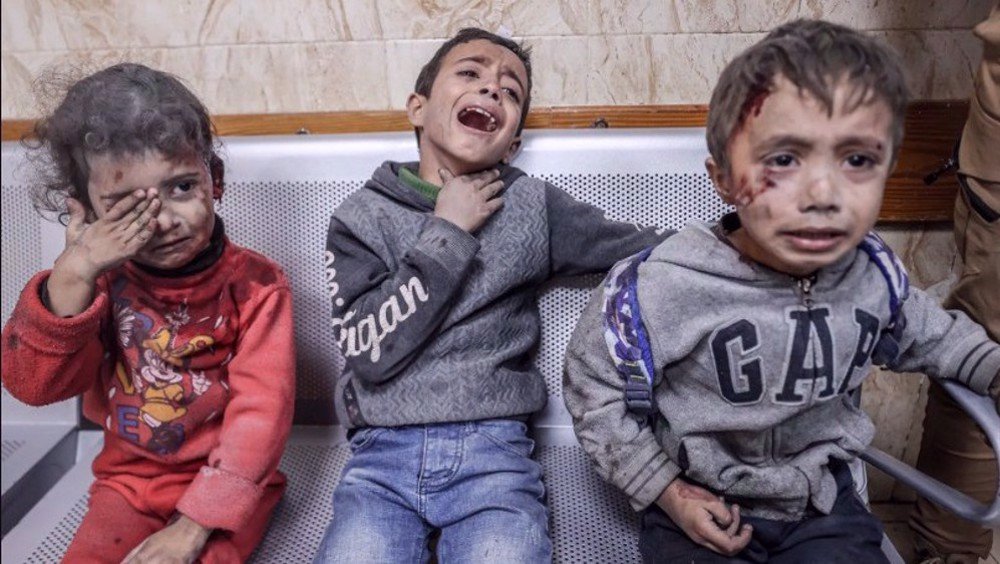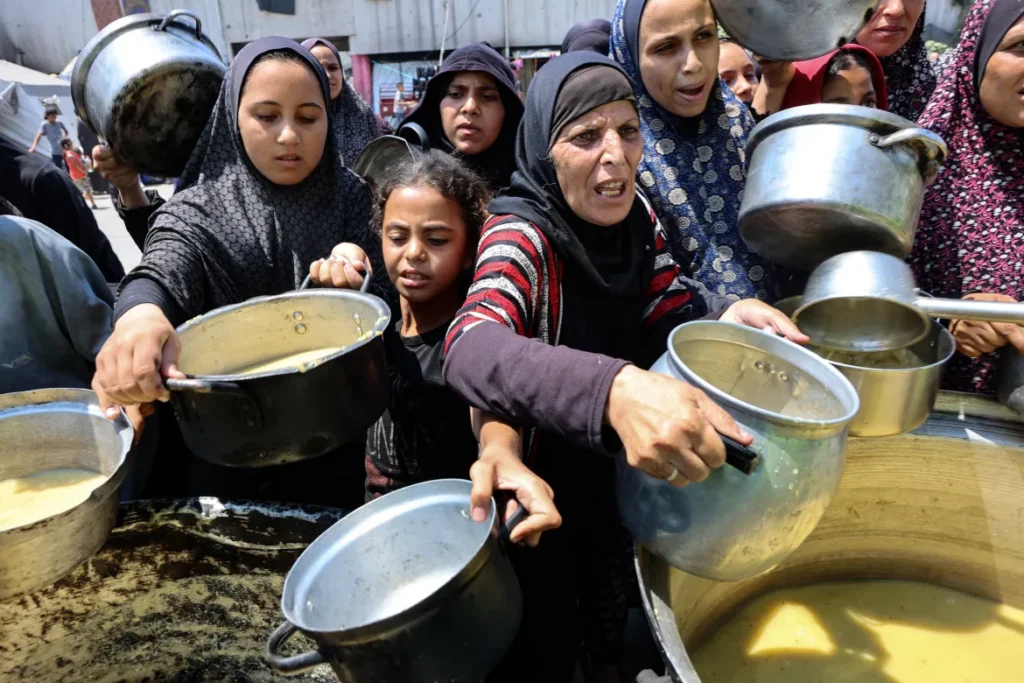
Gaza Herald- The death toll from hunger in Gaza continues to rise as Israel’s nearly two-year blockade and ongoing assaults have created a man-made famine spreading through families living in homes, tents, and shelters.
As of August 17, the Palestinian Health Ministry reported that at least 263 people in Gaza have died from starvation, including 112 children.
What’s Causing Gaza’s Food Crisis?
Between March and mid-May, Israel completely sealed Gaza’s crossings, blocking the entry of food, water, and humanitarian supplies. This total closure triggered extreme shortages, leaving Gaza’s already fragile population facing mass hunger and dehydration.
On August 14, more than 100 aid organizations, including Oxfam, Doctors Without Borders (MSF), Amnesty International, and the Norwegian Refugee Council (NRC), condemned Israel’s use of starvation as a weapon of war. They accused Israel of deliberately obstructing life-saving assistance while large quantities of aid remain stuck in warehouses in Egypt and Jordan.
Earlier this week, Amnesty International directly accused Israel of implementing a “deliberate policy” of starvation, describing it as a systematic effort to destroy the health, well-being, and very fabric of Palestinian life. Amnesty added that Israel’s policies are designed to impose conditions intended to bring about the physical destruction of Palestinians in Gaza, an act it linked to ongoing genocide.
Since Israel first imposed its blockade in 2007, Gaza has been dependent on humanitarian aid. Before October 7, 2023, roughly 500 aid trucks entered Gaza every day, totaling nearly 15,000 per month. Now, deliveries fluctuate dramatically and rarely reach the levels needed to sustain Gaza’s 2.3 million residents.
When Does Malnutrition Become Fatal?
The human body relies on food as its primary source of energy and survival. Every system, from the heart and lungs to the brain and immune system, depends on a steady intake of nutrients to function properly. When food becomes scarce, the body begins to ration its energy, first consuming stored glucose and fat reserves. This process can sustain life for a limited period, but as hunger persists, those reserves are quickly depleted. Once fat stores are exhausted, the body begins breaking down muscle tissue and eventually critical organs to fuel itself. At this stage, the body’s survival mechanisms are overwhelmed, and the gradual failure of organs such as the heart, liver, and kidneys sets in, ultimately leading to death if nutrition is not restored.
Prolonged malnutrition also inflicts devastating effects on the brain. Without enough nutrients, the brain cannot process signals properly, leading to confusion, brain fog, memory loss, and difficulty with speech. Even simple tasks such as holding a conversation, recalling words, or concentrating on routine activities become extremely difficult. For children, these neurological effects are even more severe. Starvation attacks the development of their nervous systems at a time when their brains and bodies should be growing rapidly.
The first 1,000 days of life from conception through the first two years—are considered a critical “window of growth” by pediatric and nutrition experts. If children do not receive adequate food during this period, the consequences can be irreversible. Malnutrition in these early years permanently stunts growth, weakens immunity, and causes long-term cognitive and physical disabilities. In the harshest cases, especially without medical treatment or nutritional therapy, malnutrition at this stage can prove fatal.
Growing Food Crisis
In Gaza, where food shortages have persisted for months under siege, the devastating consequences of this cycle of hunger are becoming increasingly visible. Health workers describe a growing number of children slipping into the “red zone” on MUAC tapes, a diagnostic tool used to measure the circumference of a child’s upper arm to determine their nutritional status. A reading of less than 11.5 cm is a red alert for severe acute malnutrition, signaling that a child is in immediate danger and requires urgent therapeutic feeding and hospitalization. For many of these children in Gaza, access to such treatment is almost impossible due to the destruction of health facilities and the shortage of medical supplies.
Beyond the numbers and measurements, the physical toll of starvation is etched into the bodies of Gaza’s children. Many show the hallmark signs of severe malnutrition: their eyes sunken and pale, their skin dry and peeling, their hair thinning or falling out in patches. Some develop swollen bellies caused by edema, a condition where fluid builds up in the body due to extreme protein deficiency. These outward symptoms are not just visible markers of hunger they are life-threatening warnings that these children are on the brink of collapse.
How Is Famine Defined?
Famine is the most severe stage of hunger, marked by extreme food shortages, widespread malnutrition, and high death rates caused by starvation.
Determining whether Gaza meets the official definition of famine is difficult, as access to the territory is heavily restricted and Israel has destroyed much of the health infrastructure. According to the Integrated Food Security Phase Classification (IPC), a situation is classified as famine when:
- At least 20% of households face extreme food shortages.
- More than 30% of the population suffers acute malnutrition.
- The death rate surpasses 2 per 10,000 people per day.
With starvation deaths climbing, humanitarian groups warn that Gaza is edging closer to this threshold every day, while Israel’s policies continue to block the aid that could save lives.