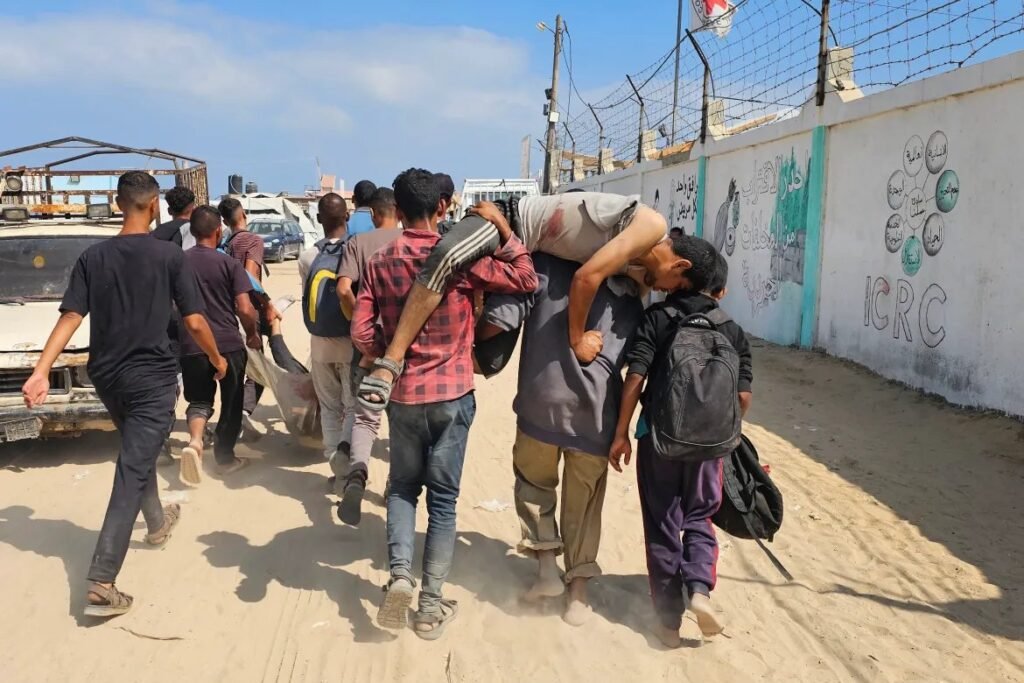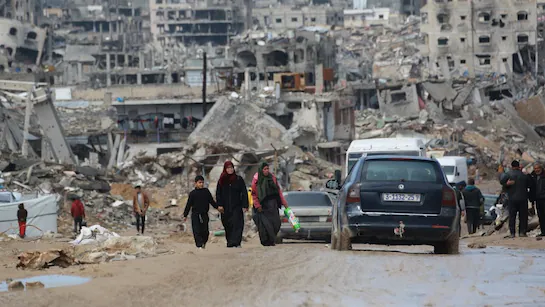
Gaza Herald- After nearly two years of relentless war that has killed more than 60,000 Palestinians and brought Gaza to the edge of famine, Israeli Prime Minister Benjamin Netanyahu is reportedly preparing to escalate the devastation even further. According to Israeli media, Netanyahu is now pushing for the complete occupation of Gaza, despite overwhelming opposition from within his military, the public, and the international community.
“The die is cast – we are going for a full occupation of the Gaza Strip,” an unnamed official was quoted as saying, allegedly echoing Netanyahu’s own words.
Netanyahu’s Plan: Full Military Takeover, even at the Expense of Captives
In a meeting with senior security officials on Tuesday, Netanyahu reportedly backed a full military takeover of Gaza, even at the risk of harming Israeli captives still held there since the Hamas-led attack of October 7, 2023.
Although rescuing those captives was initially one of Israel’s stated objectives, critics point out that much of Gaza has already been laid to waste, and the majority of its population has been displaced and starved. Yet, many captives remain out of Israel’s reach. Their location is now in areas no longer under Israeli control.
Political Survival Behind the War?
“Netanyahu wants to continue the war,” said Ahron Bregman, a political scientist at King’s College London and former Israeli officer. “He wants time. Time to maintain his fragile coalition and time to delay his corruption trial,” he added, referencing charges that have haunted Netanyahu since 2019.
The motivation behind Netanyahu’s renewed push remains murky. Some analysts suggest that the talk of occupation is merely a bargaining tool to pressure Hamas back to negotiations. Others warn it may be a final push to crush all remaining resistance in Gaza and force its population into so-called “concentration zones” a term used to describe heavily controlled and confined displacement camps.
“The reasoning could be any of those,” said Israeli political analyst Nimrod Flaschenberg. “What’s consistent is that Netanyahu doesn’t care about broad public opinion. As long as his hard-right base is satisfied, the rest is expendable. That’s been the pattern with Rafah, with Iran—he acts unilaterally and thinks about elections later.”
But whether Israel’s military can carry out a full occupation of Gaza remains doubtful. Reports of exhaustion, trauma, and mass refusals among soldiers paint a bleak picture. Israeli magazine +972 previously reported a shortfall of over 100,000 soldiers due to both formal and informal refusals to serve.
“This is not realistic at all,” said Colonel Seth Krummrich, a former U.S. Special Forces commander. “To capture and hold territory of that size requires enormous manpower and resources. The Israeli public is deeply divided, and the domestic backlash makes such a plan politically and practically unsustainable.”
Growing numbers within Israel’s military and security establishments are also breaking ranks with Netanyahu. Chief of Staff Lt. Gen. Eyal Zamir is reportedly among those against further escalation. And on Tuesday, over 600 former senior Israeli security officials issued a public plea to U.S. President Donald Trump, urging him to intervene and help end the war.
Ex-Officials: Hamas Crippled Militarily, Empowered Ideologically
“Hamas no longer poses a strategic threat to Israel,” declared the Commanders for Israel’s Security (CIS), a group comprising former generals, Mossad, and Shin Bet officials. In their open letter posted on X, CIS emphasized that while Hamas has been militarily devastated, its ideology has only grown stronger, particularly among Palestinians, throughout the Arab world, and within the broader Islamic community.
Ami Ayalon, former head of Shin Bet and one of the signatories, told the BBC, “[Hamas] is destroyed militarily. But ideologically, it is gaining momentum. That should concern everyone.”
Colonel Krummrich added that unless Israel’s military leadership fully commits to an operation of this scale, it will likely collapse. “If it fails, the military brass gets the blame. They must convince their troops it’s worth the cost, and this could stretch out for years.”
Growing Public Discontent in Israel
Public sentiment within Israel also appears to be shifting. Many citizens, exhausted by the endless bloodshed and Netanyahu’s failure to negotiate a ceasefire, want the war to end. A Channel 12 poll in May revealed that most Israelis believe Netanyahu prioritizes staying in power over winning the war or securing the captives’ release.
“This list of dissenters keeps growing,” noted Yossi Mekelberg of Chatham House. “Even within Israel, people are asking: is Hamas such a threat that it justifies sacrificing hostages, soldiers, and the country’s credibility?”
“He’s disconnected from reality,” Mekelberg added. “Any decent leader would’ve stepped down. But for Netanyahu, political survival always comes first.”
While Israeli political infighting dominates headlines, the human cost continues to mount, borne entirely by Palestinians. Netanyahu’s push for full occupation, dressed as security policy, masks a campaign of calculated dehumanization. The world must recognize that Gaza’s children are not political pawns, and the destruction of their homes is not collateral it is a war crime. The occupation of Gaza is not just a military fantasy it’s a continuation of apartheid, dispossession, and genocide. Global inaction only emboldens Israel’s impunity. Ending this war requires not just halting airstrikes, but dismantling the structures that have enabled Israel to wage war on an entire people for generations.