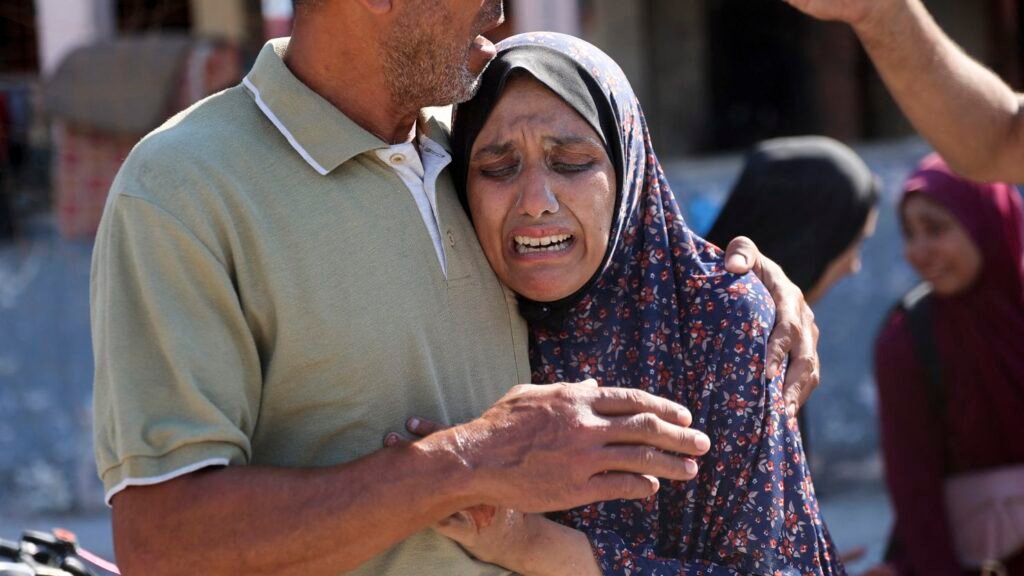
Gaza Herald_ More than three years after the outbreak of the war in the Gaza Strip in October 2023, and as a fourth winter sets in, hundreds of thousands of displaced Palestinians face harsh living conditions marked by a lack of safe shelter, deteriorating basic services, and ongoing restrictions on movement and reconstruction.
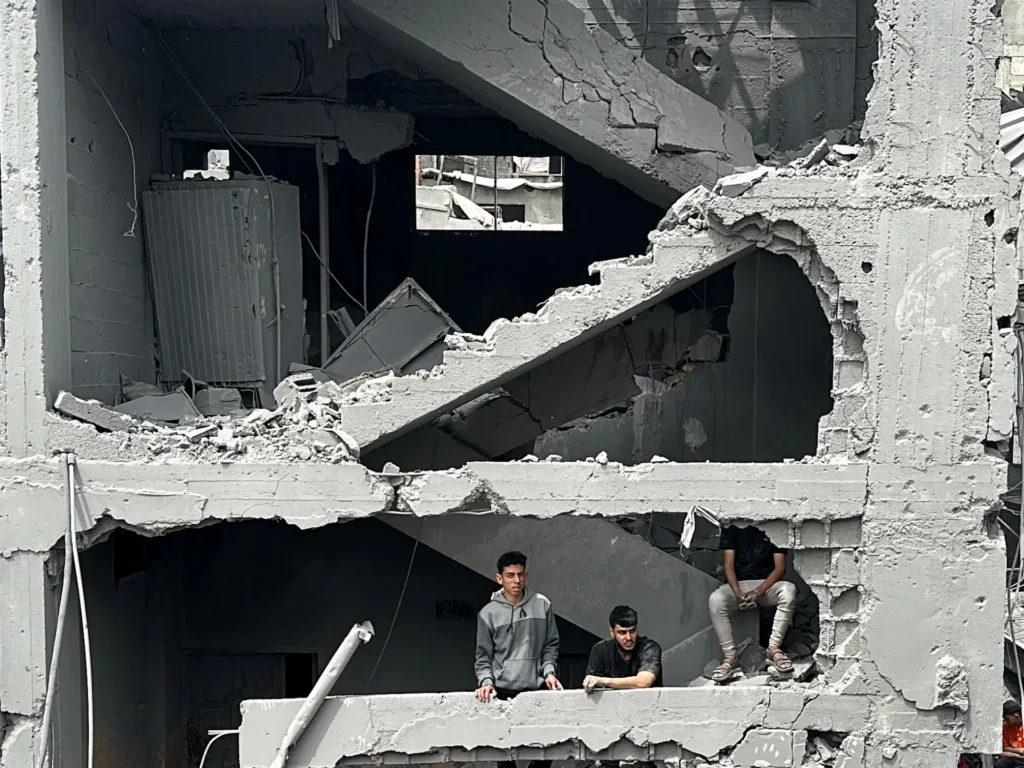
The war’s fallout extends beyond immediate human and material losses to water, sewage, and electricity networks, hospitals, schools, and infrastructure, making a return to stable life exceedingly difficult.
Expansion of the “Yellow Line” and Shrinking Spaces
What is known as the “Yellow Line” is no longer merely a temporary tactical arrangement; according to warnings from the UN Human Rights Office on October 30, 2026, it has become a factor pushing residents into narrower, more overcrowded areas amid efforts to expand Israeli military deployment to cover roughly 70% of the Strip.
According to Ajith Sunghay, head of the office in the Occupied Palestinian Territory, displaced people have very slim chances of returning to areas that now lie behind this line, alongside continued military operations and strikes on displacement shelters, such as in the Shuja’iyya neighborhood in late October, which displaced around 200 families (roughly 800 people).
Winter and Flooding Against a Backdrop of Supply Shortages
Rainstorms and low-pressure systems between November 6 and 8 exposed the fragility of displacement conditions. Estimates from the UN Office for the Coordination of Humanitarian Affairs (OCHA) indicate that about 46,000 families (nearly 226,000 people) were affected, and more than 40,000 shelters were damaged, including over 9,000 rendered unusable, alongside damage to health and service facilities and hundreds of public sanitation facilities, as well as deaths and injuries linked to sand collapsing onto tents and hypothermia in an infant.
On November 13, UN humanitarian teams warned that these losses were compounded by approval procedures and crossing restrictions, noting that more than 150,000 tents remained outside the Strip despite urgent need, alongside shortages of heating supplies, pumps, generators, fuel, and rubble-removal and reconstruction equipment.
Breakdown of Health and Municipal Services
Health risks are rising as rainwater mixes with sewage and contaminated water spreads through displacement sites, compounded by medicine shortages and damage to medical facilities. According to a UN update on November 18, the World Health Organization documented 1,056 attacks on healthcare facilities in Gaza since October 2023, resulting in 1,010 deaths and 1,725 injuries, alongside risks to medical and humanitarian crews as well as municipal and civil defense teams facing shortages of fuel, vehicles, and spare parts.
The Political Track and the Implementation Gap
Politically, the report submitted by the “Peace Council” following up on Gaza arrangements to the UN Security Council on November 17 acknowledged that implementation of the plan remains limited and that transitional administration arrangements and the international stabilization force have not entered into force, while pointing to restrictions on shelter and winter supplies and delayed approvals.
The report warned that the gap between what was agreed upon and conditions on the ground threatens the political process, while linking steps such as withdrawal and reconstruction to unresolved tracks and conditions raises concerns that the transitional phase could become a prolonged waiting period borne by civilians, amid calls to turn pledges and statements into practical steps that ensure relief, protect civilians, open crossings, and launch genuine reconstruction.