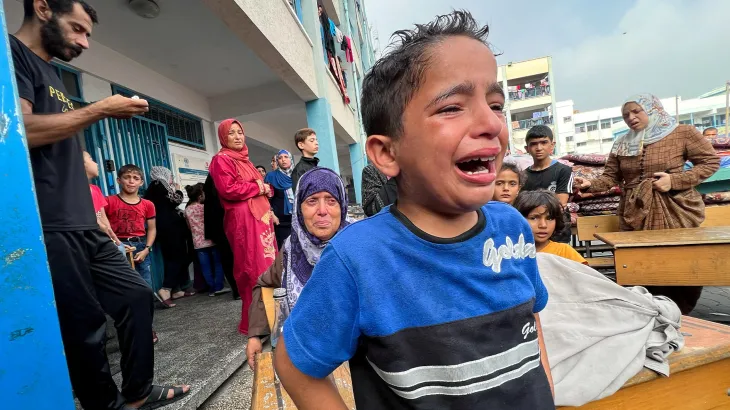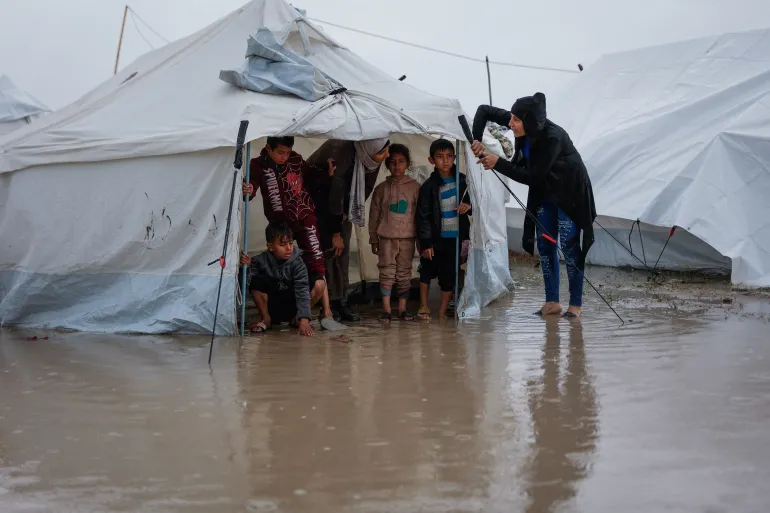
Gaza Herald — For displaced families across the besieged Gaza Strip struggling to find food, clean water, medical care, and schooling amid ongoing assaults by Israeli occupation forces and winter hardship, any weakening of the United Nations Relief and Works Agency for Palestine Refugees (UNRWA) hits like a second catastrophe.
Rising anger from Palestinian unions and refugee committees over austerity moves and job insecurity comes just as Gaza’s workforce has already fallen from roughly 13,500 staff before the war to fewer than 10,000—depleted by staff killings, retirements, hiring freezes, unfilled vacancies, dismissals, and departures, while survival needs across the Strip surge.
In the latest escalation, the Joint Committee for Refugees in the Gaza Strip called for the resignation of Acting UNRWA Commissioner-General Christian Saunders, holding him responsible for moves threatening the job security of thousands of staff. The committee warned that workers’ livelihoods and refugee rights cannot be treated as routine administrative items subject to unilateral orders, especially after the agency sent letters to more than 3,000 Gaza employees with fewer than 13 years of service offering three-month contracts instead of the annual extensions maintained throughout the war.
Rejecting the plan as far more than a temporary budget fix, the committee warned that shorter contracts could serve as a stepping stone to layoffs when terms expire, pushing thousands of households deeper into economic ruin. Those same staff members keep UNRWA schools, clinics, and relief centers running under the harshest conditions in Gaza’s history, making their treatment an affront to their service and a direct threat to displaced families who rely on them daily.
Union Pressure Forces Reversal Amid Lingering Status Disputes
Facing intense pushback from unions and refugee committees, UNRWA announced it would drop the plan to shift roughly 3,000 Gaza staff onto three-month contracts and restore one-year extensions under the wartime arrangement. Yet the climbdown has not eased broader anxieties over job protection, leaving unresolved grievances such as staff in employment category (X) still waiting to move into permanent category (A) status despite more than a decade of service, a gap that directly affects end-of-service pay calculations.
Temporary Decision Freeze Leaves Core Demands Unanswered
Saunders later announced that major operational decisions affecting the workforce would be paused pending consultations with host countries, donors, and staff representatives. Ahmad Abu Holi, Head of the Department of Refugee Affairs at the Palestine Liberation Organization, welcomed the freeze as a response to Palestinian and union pushback raised with Saunders and his deputies during a November 8 meeting of the Supreme Committee for Following Up on UNRWA Affairs.
Still, unions and popular committees insist a temporary hold is not enough without binding guarantees against reviving similar measures and concrete steps to resolve long-standing staff rights. For Palestinian representatives, durable job protections and sustained international funding are essential to keep UNRWA’s mandate intact and safeguard Palestinian refugees’ core rights, above all the right of return.