
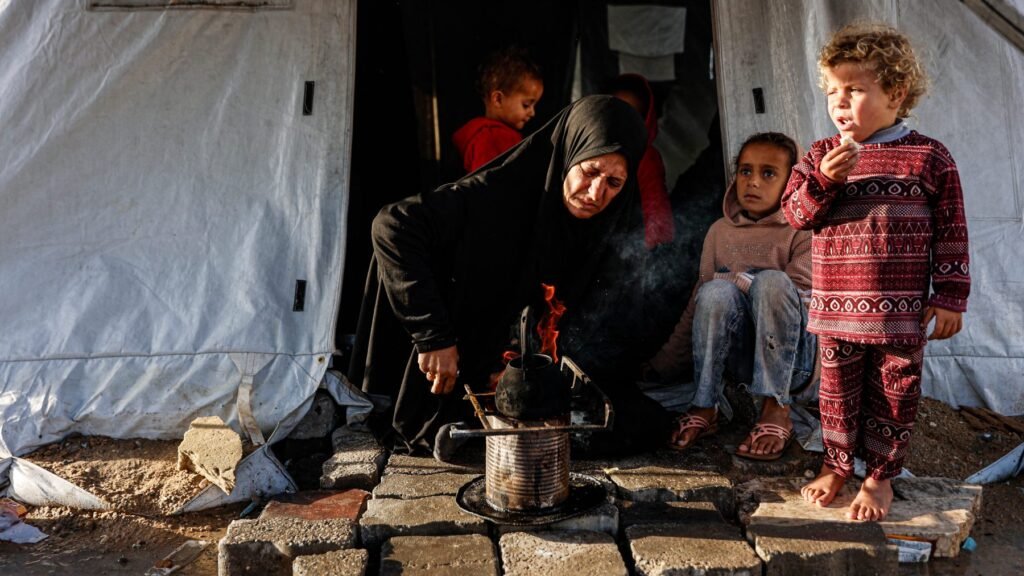
Gaza Herald — One in four Palestinian households in the besieged Gaza Strip is now headed by a woman, according to United Nations warnings that highlight the crushing psychological, economic, and survival burdens borne by mothers, widows, and caregivers amid Israel’s ongoing military aggression, forced displacement, and suffocating blockade.
Speaking during a press briefing at UN headquarters in New York, Farhan Haq, Deputy Spokesperson for the UN Secretary-General, stated that female-headed families across Gaza face urgent humanitarian needs and severe psychological distress as war and deprivation dismantle basic living conditions. Citing data from UN Women, Haq emphasized that households led by women are disproportionately forced into inadequate, unsafe housing, leaving them acutely exposed as displacement camps deteriorate and winter sets in.
Carrying Survival Alone Amid Siege and Loss
Across Gaza, thousands of women, many widowed by Israeli airstrikes, separated from detained spouses, or caring alone for wounded relatives, have become sole providers and protectors for their families. Daily survival requires navigating ruined neighborhoods, queuing for scarce water and food rations, securing fuel or firewood, and sheltering children inside fragile tents without privacy, income, or basic municipal services.
That relentless strain falls heaviest on women supporting young children, elderly parents, or family members with war injuries and chronic illnesses requiring constant care. Deprived of livelihoods, stable shelter, and community support networks shattered by repeated expulsions, women carry both the physical labor of keeping families alive and the silent weight of unaddressed trauma.
Winter Storms Wipe Out Learning Spaces and Deepen Vulnerability
The crisis confronting female-headed households is compounding as winter storms batter makeshift encampments across the Strip. Haq reported that heavy rainfall and flooding earlier this month damaged approximately 200 temporary learning spaces, nearly one-third of all such facilities operating across Gaza, further disrupting children’s education and adding to the caregiving pressures on mothers struggling to maintain any sense of normalcy.
With damaged tents, waterlogged bedding, and falling temperatures threatening displaced communities, Haq warned of an urgent need for expanded shelter and winter assistance ahead of harsher weather in the coming months. Yet global funding continues to lag far behind escalating survival needs: the UN’s $4.1 billion humanitarian appeal has received only 35 percent of required funding, leaving critical gaps in food, shelter, medical care, and psychosocial support.
Overlapping Crises Threaten Gaza’s Most Vulnerable Families
Reaffirming the United Nations’ commitment to defending the rights of Gaza’s children, who continue to endure deprivation and trauma under war and siege, Haq’s briefing underscored how intersecting emergencies converge inside female-headed homes. Without an end to Israeli military attacks, unrestricted entry of shelter and relief supplies, and urgent international funding, women leading a quarter of Gaza’s households remain trapped between severe funding shortfalls and an unforgiving winter, struggling single-handedly to keep their families alive.

