Gaza Herald _ The nominal ceasefire in the Gaza Strip has failed to deliver the civilian protection and humanitarian relief stipulated under the agreement, as relentless military violations by Israeli occupation forces continue to claim lives while strict blockade restrictions keep two-thirds of agreed aid supplies trapped outside the territory.
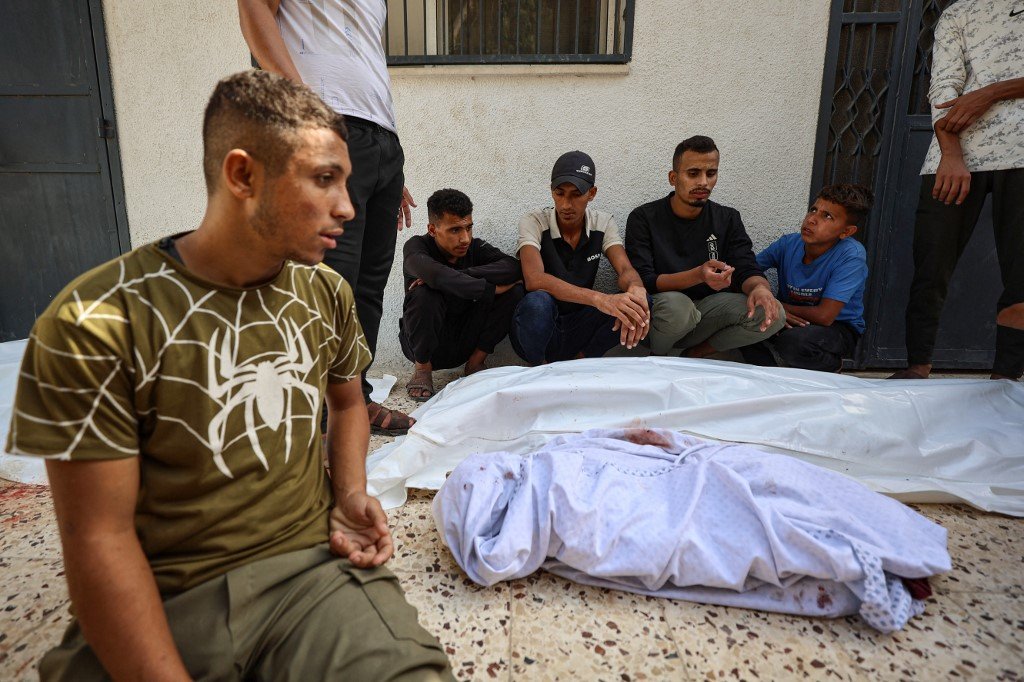
According to documented figures released by Gaza’s Government Media Office, Israeli occupation forces have committed 6,233 violations since the agreement took effect, resulting in the killing of 1,649 Palestinians and injuries to another 5,969.
The official figures further expose a deliberate, vast gap between the humanitarian deliveries mandated under the truce and the restricted trickle actually permitted to cross into Gaza. Only 79,585 aid trucks have been allowed into the besieged Strip out of the 240,600 trucks stipulated by the agreement, representing a mere 33 percent of the agreed total.
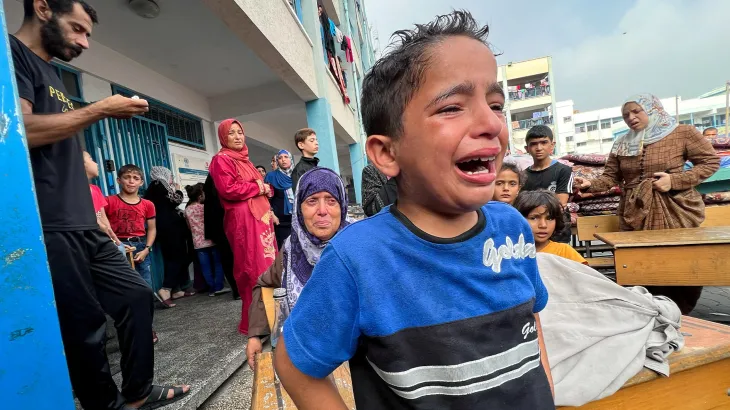
This ongoing violence and engineered scarcity unfold as hundreds of thousands of displaced families battle torrential winter rainfall, flooded encampments, and collapsing living conditions. The Humanitarian Country Team for the Occupied Palestinian Territory warned in a November 13 statement that much of the devastating toll of the recent storm was entirely preventable, stressing that the losses were driven not by weather alone, but by deliberate decisions and Israeli restrictions obstructing efforts to protect civilians.
Thousands of Israeli Violations Hollow Out the Ceasefire
In a comprehensive statement issued Monday, the Government Media Office confirmed that its field and monitoring teams documented 6,233 Israeli violations since the ceasefire entered into force. Alongside the 1,649 fatalities and 5,969 injuries, these violations included the arbitrary abduction and arrest of 223 Palestinians.
The office emphasized that the sheer scale and continuity of these assaults prove the agreement has failed to halt Israeli aggression against Gaza’s civilian population. Rather than fulfilling its binding obligations, Israeli occupation authorities have exploited the ceasefire as diplomatic cover to continue lethal attacks and deepen the humanitarian catastrophe across the enclave.
The staggering toll of 1,649 martyred Palestinians and nearly 6,000 wounded underscores the constant peril confronting civilians, including displaced families exposed to airstrikes, shelling, and gunfire inside makeshift tents and bombed ruins. For Palestinians in Gaza, the ceasefire remains divorced from its most fundamental guarantees: an immediate end to killing, genuine protection for civilians, and the restoration of conditions required for human survival.
Only One-Third of Agreed Aid Permitted Into Besieged Gaza
The systematic shortfall in humanitarian deliveries stands as one of the clearest indicators of Israel’s refusal to honor the agreement’s terms. According to the Government Media Office, Israeli occupation authorities permitted only 79,585 aid trucks to enter Gaza out of the 240,600 mandated under the accord, creating a massive cumulative deficit of 161,015 trucks and leaving approximately two-thirds of life-saving supplies blocked outside the territory.
The office condemned these ongoing restrictions as a deliberate continuation of Israel’s policy of “engineering starvation,” rejecting misleading Israeli claims portraying aid entries as sufficient or unrestricted. The repercussions extend far beyond acute food deficits. Gaza’s displaced population urgently requires weather-resistant tents, thermal blankets, shelter repair materials, and heavy pumping equipment to drain floodwaters and shield families from freezing winter weather. Recent downpours have exposed the fragility of tattered encampments, leaving tens of thousands of families struggling to keep rainwater out of their tents and protect their meager remaining possessions.
In its November 13 statement, the Humanitarian Country Team confirmed that more than 150,000 tents procured by humanitarian partners and donor states remain stranded outside Gaza awaiting entry clearance, with the vast majority stored in Al-Arish, approximately 50 kilometers from Khan Younis.
The statement identified multiple Israeli bureaucratic barriers delaying their delivery, including complex multi-layered approvals, severely restricted border-crossing capacity, and erratic delivery windows, stressing that humanitarian effectiveness must be measured by whether suffering civilians actually receive aid on the ground, rather than by the number of nominal approvals issued on paper.
Crossing Restrictions Deprive Critically Ill Patients of Life-Saving Care
Israeli movement restrictions continue to sever critically ill and wounded Palestinians from urgent medical treatment outside the territory. The Government Media Office reported that only 15,456 travelers have crossed through the Rafah border crossing in both directions, compared with the 41,800 crossings stipulated under the agreement—representing just 37 percent of planned movement, while Israeli occupation authorities arbitrarily barred or turned back 91 travelers.
The office underscored that Israel is deliberately obstructing the evacuation of wounded civilians and patients requiring urgent specialized care unavailable inside Gaza’s shattered hospitals. These travel bans coincide with a catastrophic depletion of medical stocks inside the Strip.
A November 13 report by the UN Office for the Coordination of Humanitarian Affairs (OCHA), citing Gaza’s Ministry of Health, revealed that approximately 42 percent of essential medicines, 55 percent of vital chemotherapy drugs, and 73 percent of supplies required for open-heart surgery and cardiac catheterization hit zero-stock levels during October.
OCHA further warned that severe shortages of engine oil and mechanical spare parts, compounded by erratic fuel deliveries, are crippling hospital power generators and ambulance transport. For patients whose survival depends on specialized surgeries or cancer treatment, blocking medical evacuations while starving local hospitals of medicines amounts to a death sentence.
Winter Rains Expose the Lethal Impact of Blocked Shelter Supplies
The humanitarian emergency has intensified sharply with the onset of winter storms. According to the same OCHA assessment, approximately 46,000 families and more than 40,000 family shelters were directly impacted by recent heavy rainfall. Humanitarian agencies have been prevented from mounting an adequate response due to persistent Israeli import restrictions on shelter materials and heavy equipment.
OCHA warned of escalating public health hazards caused by floodwaters mixing with raw sewage across overcrowded camps, while clinics suffered flood damage, essential health services were suspended, and medicine deficits worsened. The UN report simultaneously documented ongoing Israeli airstrikes, artillery shelling, and gunfire across populated areas, claiming the lives of displaced civilians.
As the Humanitarian Country Team emphasized, much of the storm’s devastation was avoidable; more than 150,000 tents sitting in warehouses outside Gaza cannot shield children from freezing rain while Israeli authorities keep the crossings sealed.
Urgent Demands for International Action to Enforce Compliance
The Government Media Office called upon international mediators and guarantor states to intervene decisively to compel Israel to honor every provision of the ceasefire agreement and immediately halt ongoing killings. It further urged the international community to move beyond empty diplomatic statements and impose concrete measures to enforce accountability.
The documented toll of 6,233 violations, paired with stark warnings from United Nations agencies and humanitarian organizations, lays bare the collapse of ceasefire enforcement. An agreement cannot provide real security while Israeli occupation forces continue killing civilians, blocking two-thirds of agreed aid, trapping 150,000 tents outside sealed borders, and denying critically ill patients medical evacuation.
Until these binding commitments translate into an end to military aggression, unrestricted humanitarian access, and safe passage for patients, the ceasefire will remain a hollow promise for Palestinians fighting to survive in Gaza.