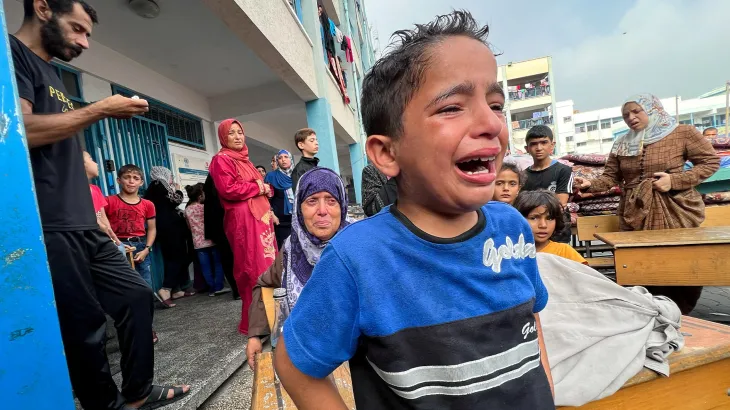
Gaza Herald_ On Saturday morning, Israeli forces targeted and killed Palestinian educator Diaa Abu al-Rous in a drone strike near the power plant north of Nuseirat refugee camp in central Gaza. Abu al-Rous, a teacher at the Malaysian School under the Central Gaza Education Directorate, was killed while commuting to carry out his teaching duties.
Gaza’s Ministry of Education and Higher Education issued a statement mourning Abu al-Rous, holding Israeli authorities fully responsible for his death, and calling on the United Nations and international bodies to hold military leaders accountable for systemic attacks on Palestinian educational staff and infrastructure.
Truce Violations Mount
The killing of Abu al-Rous comes amidst a relentless rise in casualties among school-age children and educators despite the active truce agreement. Figures released by the Ministry of Education documented the deaths of 12 students and four educational personnel between October 18 and 27 alone.
Among the victims were seven-year-old Tahani Mohammed Shalalfah, a first-grader at the Bosnia School in Rafah who was killed by Israeli gunfire, as well as eight-year-old Fatima al-Bayouk, the sole survivor of a 2023 strike on her family, who succumbed to bullet wounds east of Deir al-Balah. Official estimates place the total war casualties at over 22,000 students and more than 1,100 teachers and academics killed across the Strip.
School Infrastructure Shattered
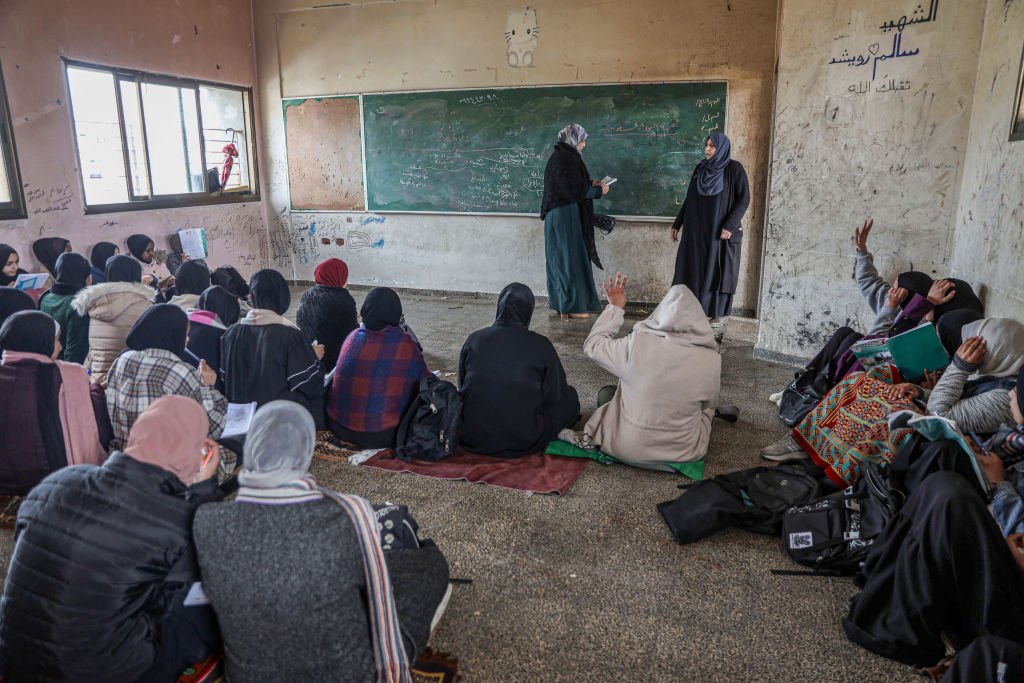
Systemic damage to educational facilities has severely compromised access to basic schooling across the enclave, with UNICEF reporting that approximately 98 percent of Gaza’s school buildings have been damaged or destroyed.
While international humanitarian agencies and local administration have established nearly 700 temporary learning spaces serving roughly 564,000 children, upwards of 200,000 students remain entirely cut off from structured education. These makeshift educational centers face acute shortages of essential supplies, including paper, ink, and printed educational materials, due to entry blockades and severe funding deficits.
Dangerous Daily Commutes
For the surviving students and teachers in Gaza, the physical journey to class remains fraught with extreme operational and personal hazards. Deprived of fuel and motorized transportation, educators like Alaa Abdul Rabbo rely on animal-drawn carts or walk vast distances over shattered roads, while displaced students navigate altered routes to avoid active gunfire and shelling.
Compounded by severe food and water insecurity, young learners face overwhelming fatigue and psychological distress, underscoring that opening temporary tents cannot protect students and staff when the simple act of commuting to school remains a lethal undertaking.