
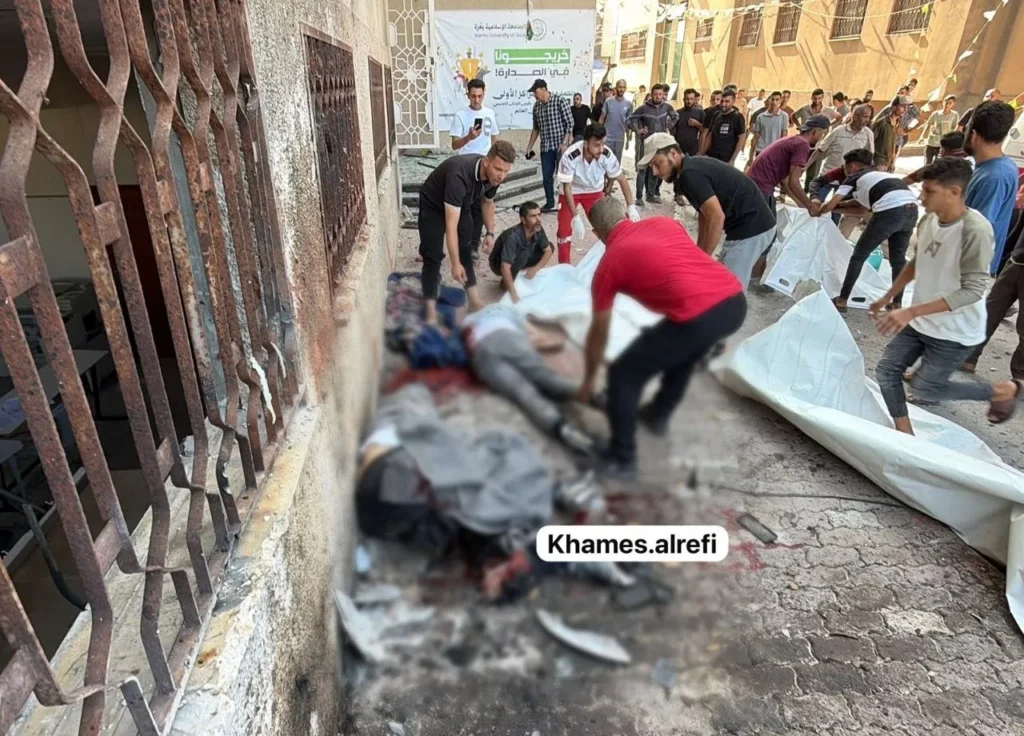
Gaza Herald — Just days after achieving historic international recognition, the Islamic University of Gaza was targeted in a lethal Israeli military attack while students attended morning lectures, underscoring the severe threats facing Palestinian higher education under siege.
On Sunday, October 25, 2026, Israeli forces shelled the university campus, killing three staff members, Sami Baroud, Ashraf Dahlan, and Shadi Abu Ataya, and critically injuring five students inside their classrooms. The strike occurred shortly after the institution climbed five places in the QS Arab Region University Rankings 2027 to rank 78th regionally, third among Palestinian institutions, and first in the Gaza Strip.
The contrast between academic progress and military destruction reflects the realities imposed upon Gaza’s higher education system. In the weeks preceding the attack, the university celebrated major milestones, including top regional rankings in the 2026 Arcif report for its educational, economic, and legal journals, along with public recognition for its top ten researchers published in Scopus-indexed journals between 2024 and 2026. Ten days before the bombardment, the administration had invited graduating senior students to select nearby venues to receive their degrees; ordinary academic milestones transformed into acts of national perseverance.
Systematic Targeting of Higher Education Infrastructure and Academic Life
The attack on the Islamic University of Gaza represents part of a documented pattern of strikes against Palestinian educational infrastructure across the Gaza Strip. Under international humanitarian law, educational facilities are protected civilian objects. However, Israeli military operations have damaged or destroyed major university campuses, research centers, laboratories, and school buildings across the enclave, systematically stripping over half a million students of safe learning spaces and killing hundreds of university professors, researchers, and administrators.
The loss of staff members Sami Baroud, Ashraf Dahlan, and Shadi Abu Ataya highlights the immediate human cost of these operations on academic communities. Beyond structural damage, direct attacks on active lecture halls disrupt the production of knowledge, destroy institutional memory, and force students and faculty to weigh daily academic attendance against immediate risks to physical survival.
International Obligations to Protect Educational Institutions
The Islamic University’s continued research output and academic standing demonstrate the determination of Palestinian scholars and students operating under severe blockades and ongoing bombardment. Yet international human rights organizations stress that global recognition of academic metrics must be accompanied by enforceable international protection for Palestinian educational facilities and personnel.
Restoring the right to education in the Gaza Strip requires an immediate cessation of attacks on civilian infrastructure, transparent international investigations into targeted strikes on academic institutions, and an end to the blockade on construction materials, laboratory equipment, and academic supplies essential for rebuilding the enclave’s higher education sector.

