Gaza Herald — Fears of widespread famine across the Gaza Strip have escalated dramatically following the World Food Programme’s (WFP) decision to slash food assistance to approximately 500,000 Palestinians due to severe international funding shortages. The devastating cuts coincide with a sharp 43% drop in aid truck entry over the past month, pushing more than 95% of Gaza’s blockaded population, who rely entirely on humanitarian aid for survival, into extreme vulnerability as winter approaches.
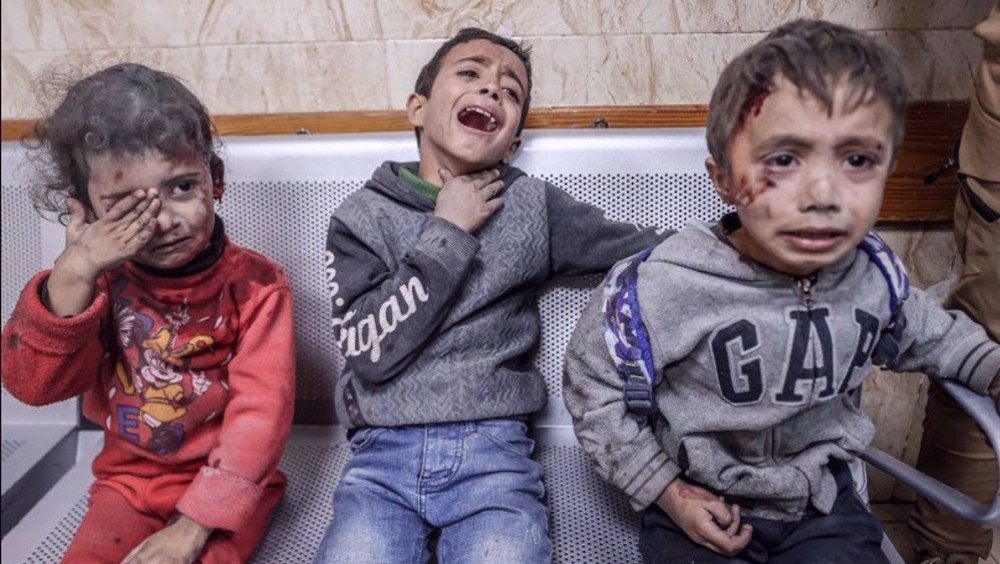
This reduction leaves hundreds of thousands of impoverished families facing an immediate collapse in food security. Deprived of income, property, and livelihoods after years of relentless warfare and siege, local authorities and human rights organizations warn that the aid reduction will accelerate acute malnutrition, particularly among infants, pregnant women, the elderly, and forcibly displaced families.
According to a Reuters report published on October 19, 2026, the WFP is forced to reduce its monthly food recipient target in Gaza from 1.6 million people down to 1.1 million due to a critical $450 million funding shortfall.
The agency’s emergency measures include halving monthly family food rations, cutting cash assistance for 75,000 families, and reducing daily hot meal distributions from 250,000 to 150,000 meals. In isolated, hard-to-reach zones, displaced families who previously received daily hot meals will now receive them only once every two days.
Aid Truck Entry Drops by 43%, Creating Massive Supply Deficit
Highlighting the physical collapse of the humanitarian pipeline, Mohammad Salha, Director of the Palestinian Non-Governmental Organizations Network (PNGO) in Gaza, warned of an acute drop in aid trucks permitted entry through Israeli-controlled border crossings.
Salha confirmed that the monthly count of aid trucks entering Gaza plummeted from 2,182 trucks in August to just 1,244 in September, a loss of 938 trucks in a single month.
“Over 95% of Gaza’s population depends directly on humanitarian aid after losing their incomes, homes, and assets during the war,” Salha emphasized. “The minimum daily humanitarian requirement ranges between 600 and 800 trucks carrying food, medical supplies, and basic commodities. Yet current entry levels hover between 180 and 250 trucks per day at best, creating a catastrophic deficit.”
Salha noted that the modest rise in private commercial trucks does not compensate for lost humanitarian aid. After three years of total economic destruction, the vast majority of Palestinian families have exhausted their lifetime savings and possess zero purchasing power to buy inflated commercial goods in local markets.
Local Authorities Warn of Total Relief Network Collapse
Gaza’s Ministry of Social Development warned of the complete collapse of local social safety nets following the WFP’s announcement. The ministry stated that the cuts will directly impact tens of thousands of impoverished households, widows, orphans, elderly citizens, disabled individuals, and displaced families, triggering severe spikes in acute malnutrition.
Local emergency committees and community kitchens are unable to bridge the gap due to severe food shortages and fuel depletion, forcing several charity kitchens to shut down operations permanently.
The ministry called on the WFP, UN agencies, and international donors to declare a global humanitarian emergency and mobilize immediate funding to restore full rations, warning that charity kitchens alone cannot prevent widespread starvation without sustained international backing.
Rights Advocates: Food Is a Fundamental Right, Not a Conditional Grant
Human rights organizations strongly condemned the reductions, stressing that access to food is an indivisible human right that cannot be subjected to donor fatigue or political maneuvering.
Iman Abu Awaimer, a human rights researcher, urged the WFP to reverse the decision, emphasizing that funding shortfalls cannot justify abandoning civilians under siege. She called on donor nations to fulfill their pledge commitments immediately to prevent preventable loss of life.
Concurrently, the Protection Center for Human Rights demanded an immediate restoration of food distributions, emphasizing that food aid is a basic human right rather than a conditional privilege to be suspended. The center warned that depriving half a million people of food rations amidst widespread physical destruction violates international humanitarian standards.
Government Media Office Holds Occupation Responsible for Starvation Policy
Gaza’s Government Media Office issued a grave warning regarding the catastrophic fallout of the decision, holding the Israeli occupation fully responsible due to its ongoing blockade, border closures, and systematic restrictions on humanitarian supplies.
The media office characterized the deliberate restriction of food and aid as an instrument of collective punishment. It appealed to the United Nations, Arab and Islamic nations, and global donors to exert pressure on occupation authorities to open all land crossings unconditionally and guarantee the uninterrupted flow of emergency supplies.
Winter Storms Threaten Unprotected Displaced Encampments
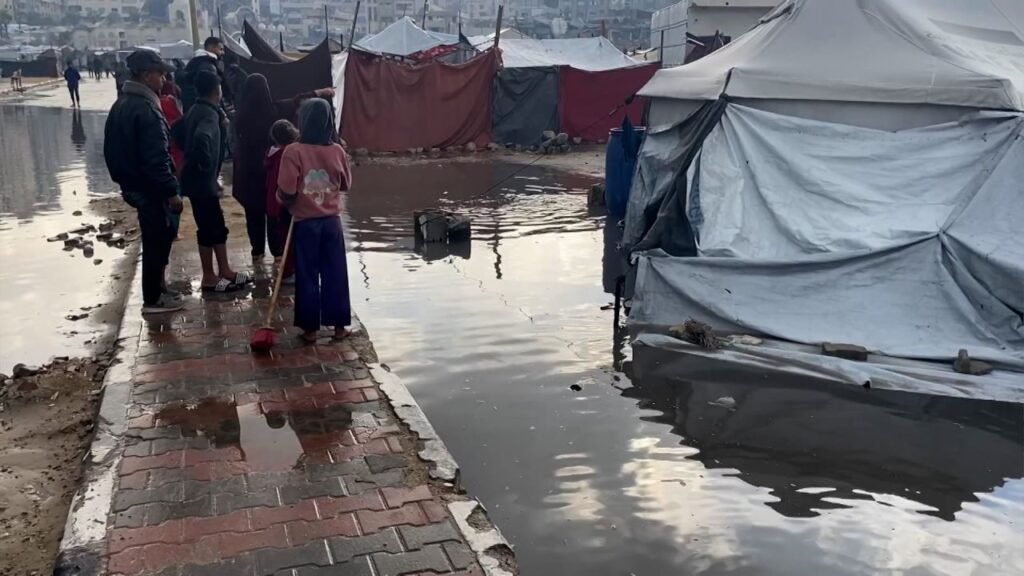
The food aid cuts arrive as Gaza faces its fourth winter since the outbreak of full-scale war, compounding the misery of hundreds of thousands of displaced Palestinians living in rotting canvas tents.
PNGO Director Mohammad Salha reported that nearly 75% of existing tents across displacement camps are severely degraded and offer zero protection against heavy rain and gale-force winds. Large families of seven or eight people remain crammed inside single damaged tents without thermal blankets, winter clothing, or floor insulation.
Humanitarian workers stress that effective winterization requires not merely tents, but prefabricated housing units, construction materials, and heavy drainage equipment to protect low-lying encampments from sewage overflows and torrential flooding.
With the WFP requiring $450 million to sustain emergency operations across Gaza and the West Bank over the next six months, the convergence of aid cuts, blockaded border crossings, and severe winter weather threatens to plunge half a million Palestinians into unprecedented starvation.