Gaza Herald – The Palestinian Center for Political Studies stated on Sunday that Palestinian curricula have faced American and European pressure, coinciding with direct Israeli imposition and educational fragmentation in Gaza. The center considered a national review under UNESCO reference a necessity before the end of 2026.
Researcher Ibrahim Al-Hawajri authored a paper titled “Palestinian Curricula Under Pressure,” noting the file shifted from an internal educational issue to one of conflict over funding, reform, governance, and national narrative. The study questioned who holds the right to define evaluation criteria amid growing external pressures.
The analysis distinguished three main pressure paths based on documents up to October 3, 2026. The first path involved American-European pressure using funding and assessment reports as tools. The second appeared as direct Israeli action in East Jerusalem through imposing Israeli curricula. The third crystallized in Gaza, where system collapse allowed parallel educational models during reconstruction.
These paths converged in redefining Palestinian education content without necessarily coordinating openly. The study offered a critical reading of debates, citing EU-commissioned research by Georg Eckert Institute, IMPACT-se reports, Cambridge University’s REAL center reviews, and American and UN reports.
Evidence did not support claims of systematic incitement nor fully defend curricula as free of content requiring review. Areas needing treatment included negative generalizations and conflict-related materials, while emphasizing separating these from core narrative elements like Palestine, Nakba, Jerusalem, right of return, and occupation critique under international law.
The study highlighted the July 2024 Memorandum of Understanding between the European Commission and Palestinian Authority regarding educational reform. It noted the text mentioned updating curricula but clarified it created no legally binding obligations, serving only as a statement of intent.
This point represented a key element in Palestinian negotiations as the program timeline approaches December 2026. Internal Palestinian confusion over commitments weakened their position against donors, allowing opponents to present contradictory narratives about compliance.
Regarding the Peace Council, the study differentiated between proven facts and allegations. It dismissed rumors about replacing “Palestine” with “Samaria” as unverified due to reliance on indirect sources and clear denials. The study stressed avoiding converting unverified news into facts.
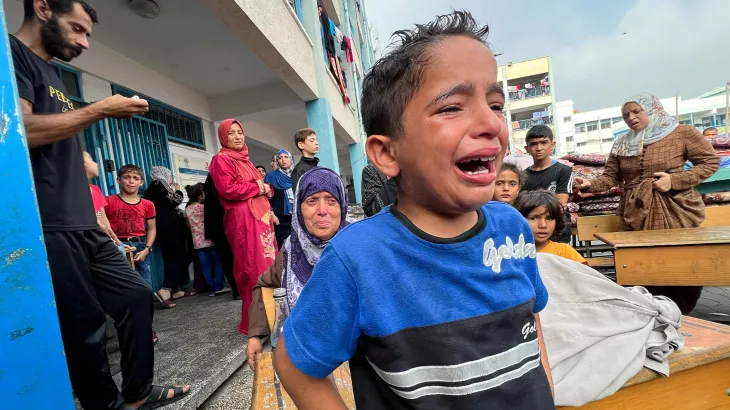
East Jerusalem provided the clearest model of direct intervention, with Israeli curricula imposed on tens of thousands of students in municipal schools during the 2026–2027 academic year. Meanwhile, Gaza experienced educational fragmentation above ruins of destroyed schools.
The study warned that continuing this situation could produce curriculum divergence between Gaza, West Bank, and Jerusalem, turning education into a sign of political and geographical disintegration rather than social cohesion.
Responsibility was not limited to external parties; weak points included lack of independent national reference for evaluation and conflicting official statements. This gap granted external reports disproportionate influence because Palestinians lacked institutional alternatives to review evidence professionally.
The study proposed transitioning from defensive posture to Palestinian-led review under UNESCO reference, independent national committee, open archives, and clear editorial guidelines. It warned remaining time until December 2026 is crucial window preventing ambiguity from increasing pressure on funding and education.
This report was produced in the Gaza Herald newsroom.