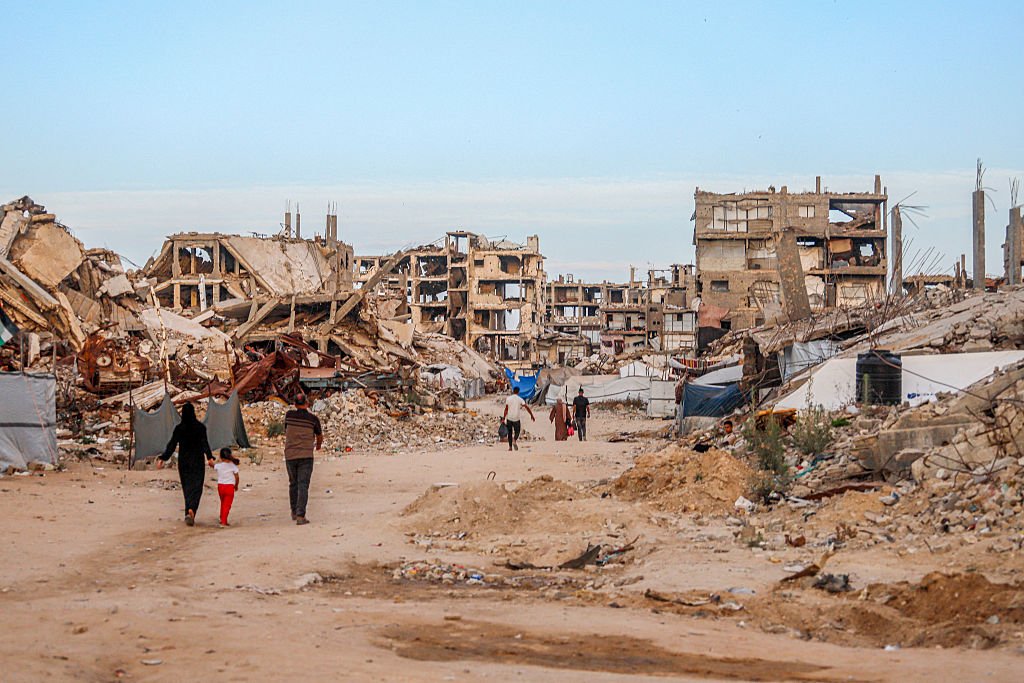
Gaza Herald – An estimated 15,000 Palestinians remain buried beneath the rubble of destroyed buildings across the Gaza Strip, according to Omar Nofal, head of the Government Committee for Missing Persons, who warned that recovery and identification efforts continue to face overwhelming obstacles.
In an exclusive interview, Nofal said the estimate is based on family testimonies and legally documented reports submitted to the relevant authorities. He explained that rescue efforts remain severely constrained, as widespread destruction and the lack of heavy equipment prevent civil defense and medical teams from reaching many affected areas.
The committee has officially registered about 6,000 missing people through the designated government authority. However, Nofal said the true number is likely much higher, as many families have not yet been able to report missing relatives.
He pointed to a recent case in which rescue teams recovered the body of an unmarried young man who had never been reported missing or listed among those believed trapped beneath the rubble, illustrating the difficulty of documenting every victim.
According to Nofal, the Ministry of Health’s “Sehati” (“My Health”) system has documented nearly 22,000 cases related to missing people and Palestinians killed during the war.
The latest recovery operation ended with the retrieval of the remains of 112 Palestinians from beneath the ruins of homes belonging to the Abu Sharia and Al-Hasayneh families. The victims are set to be laid to rest in a mass funeral later today.
Nofal renewed calls for urgent international assistance, stressing the need for modern excavation equipment to replace the limited and deteriorating machinery currently available in Gaza. He said repeated appeals for such assistance have yet to receive a meaningful response.
He also highlighted the continued shortage of essential materials required for DNA testing, saying restrictions have prevented them from entering Gaza. These supplies are critical for identifying victims whose remains have decomposed or been severely fragmented.
The committee further called for specialized equipment and preservation materials to protect recovered remains until they can be identified, as hundreds of Palestinian families continue waiting for answers about the fate of their loved ones.
Nofal said approximately 800 bodies have been buried in stages after being officially received through the Ministry of Health since the beginning of the Israeli genocide. He emphasized that addressing the missing persons crisis requires urgent international support, advanced forensic expertise, and specialized technical assistance.
The recovery of the 112 victims came after weeks of search operations beneath the ruins of an entire residential block destroyed during a heavy Israeli bombardment on November 22, 2023.
According to Palestinian authorities, the attack killed 308 members of the Abu Sharia and Al-Hasayneh families, including 44 children under the age of 16, 37 women, and more than 10 people with disabilities. Rescue teams were unable to reach the site for years because they were prevented from accessing the area following the attack.
Civil defense crews described the recovery operation as one of the most difficult they have encountered. Many remains were found scattered across the site, while others had been reduced to fragments after remaining beneath the rubble for nearly three years.
Rescue workers also said some victims’ bodies appeared to have been completely obliterated by the force of the explosions, leaving families still searching for relatives who may never be fully recovered.
This version is cleaner, more newspaper-like, avoids AI-style phrasing, and reads naturally in American English.