Gaza Herald – Israeli forces have intensified their military assault on the Gaza Strip despite the announcement of a roadmap for the second phase of Gaza’s ceasefire agreement, raising concerns that the renewed escalation could undermine efforts to reach a lasting truce.
U.S. President Donald Trump described Hamas’ acceptance of the proposed agreement as a major step toward restoring security and stability. On the ground in Gaza, however, Israeli attacks have continued unabated.
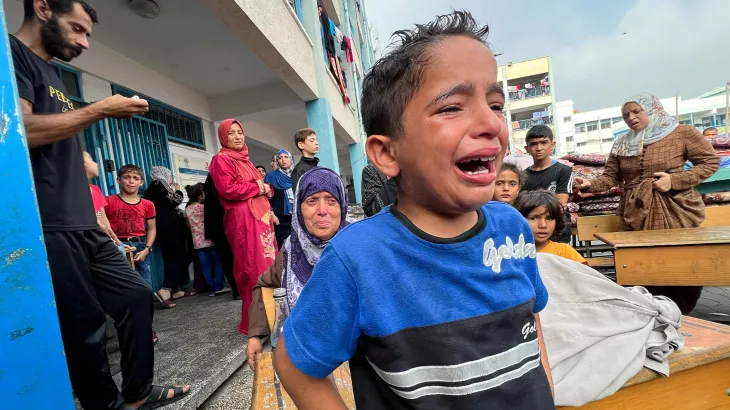
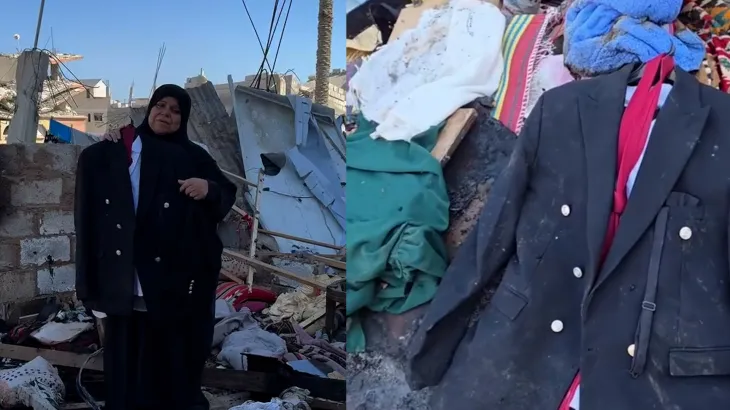
At least 19 Palestinians were killed on Saturday in Israeli strikes across the enclave, bringing the weekend death toll to 26, including women and children.
Although Hamas accepted a phased disarmament framework outlined in the proposal, the Israeli government said it has “serious security concerns” about the plan. The proposal has also faced strong opposition from Israeli political figures.
The continued bombardment has added to repeated Israeli violations of the ceasefire agreement reached in October 2025, threatening diplomatic efforts while deepening Gaza’s humanitarian catastrophe.
Violence Overshadows Diplomatic Progress
The sharp increase in Israeli attacks has contrasted with diplomatic efforts led by the United States and international mediators.
The Board of Peace and the International Stabilization Force (ISF), which are expected to oversee Gaza’s post-war administration, recently announced a 15-point roadmap outlining the next phase of the ceasefire agreement.
While Hamas formally accepted the proposal, the continued Israeli military campaign has raised questions about whether the agreement can survive if the attacks persist.
Palestinian political analyst Eyad al-Qarra said Palestinian factions remain cautious about abandoning the process despite the ongoing escalation.
“There is still hope that the factions will not reach that point,” al-Qarra told Al Jazeera.
“Otherwise, there are fears that Israel would use such a move as justification to launch an even broader war on Gaza.”
He added that Palestinian factions are seeking to avoid giving Israel any pretext to portray both sides as equally responsible for the collapse of the agreement.
The Weapons Pretext
Rather than embracing the roadmap, the Israeli government has moved to impose additional conditions that could complicate implementation of the agreement.
Israeli media reported that officials are demanding the complete disarmament of Hamas, with all weapons handed over to a Western state, while rejecting any Palestinian role in supervising the process.
Doron Spielman, a spokesperson for Israeli Prime Minister Benjamin Netanyahu’s office, said Israeli forces would not withdraw from Gaza until Hamas is fully demilitarized, adding another obstacle to advancing the next phase of the agreement.
Eyad al-Qarra, a Gaza-based Palestinian political analyst, said Palestinian factions have shifted their priorities toward alleviating the humanitarian catastrophe rather than rebuilding their military capabilities.
“The priority for Hamas and other factions today is relieving the population, not restoring weapons or military workshops,” al-Qarra said.
He added that while Palestinian factions accepted placing weapons under international or regional oversight as part of efforts to end the war, they would not accept terms that eliminate what they view as the Palestinian right to resist occupation.
Netanyahu’s Political Calculations
Analysts say Israel’s position is also shaped by domestic political considerations, particularly with Israeli elections scheduled for October.
Mtanes Shehadeh, an expert on Israeli affairs, said Netanyahu’s government appears to be treating the Gaza roadmap as a political tactic rather than a genuine commitment to ending the war.
“Israel seeks to continue the killing, starvation, and siege in Gaza while blocking any meaningful progress toward implementing the second phase of the agreement, without openly declaring its rejection of the roadmap,” Shehadeh said.
According to Shehadeh, Netanyahu is also seeking to avoid a direct confrontation with U.S. President Donald Trump by projecting limited cooperation—such as allowing modest increases in humanitarian aid—while delaying decisions on key issues, including an Israeli military withdrawal from Gaza.
He said Netanyahu is likely to continue a strategy of delay and obstruction until Israel’s October 27 elections, arguing that meaningful implementation of the agreement could carry high political costs for the prime minister and his governing coalition.
Diplomatic Tensions Deepen
Political analyst Ahmed al-Hila shared a similar assessment, saying Israel appears to be prolonging uncertainty while using continued military operations to undermine the agreement before it can be implemented.
The diplomatic dispute has also expanded beyond the battlefield.
According to Israeli media reports, Israel has formally objected to Qatar and Türkiye participating in the roadmap’s verification mechanism and has called for both countries to be excluded from overseeing implementation.
Eyad al-Qarra said the move reflects an effort to weaken Palestinian diplomatic support.
“Israel believes that one of Hamas’s strongest diplomatic assets today is its relationship with Qatar and Türkiye,” al-Qarra said. “By targeting Qatar’s role, Israel is trying to isolate the Palestinian side and remove the regional backing that could help ensure Israel fulfills its commitments.”
As negotiations have stalled, confidence in Washington’s role as a neutral mediator has continued to erode.
Nickolay Mladenov, the lead envoy for the Board of Peace, condemned the latest escalation in a post on X after two days of deadly attacks across Gaza, though he did not identify Israel by name.
“Two days of strikes across Gaza have killed civilians and destroyed medical supplies that people depend on,” Mladenov wrote. “Achieving a lasting peace is hard but achievable if everyone makes their best efforts.”
Al-Qarra said Palestinian leaders have long understood the limitations of the U.S. role.
“The issue is not about trust,” he said. “The challenge is preventing the United States from becoming a full partner with Israel in shaping the outcome.”
Ahmed al-Hila said Netanyahu and his governing coalition view the agreement as politically damaging because it preserves what Palestinians regard as their right to resist, rejects the forced displacement of Gaza’s population, and opens the door to reconstruction.
He added that Israel’s refusal to formally endorse the roadmap has effectively frozen the critical 14-day period intended to negotiate implementation procedures.
Who Will Govern Gaza?
Another major obstacle remains the future administration of Gaza.
Israel has refused to withdraw from the first section of the so-called “Yellow Line,” an area covering roughly 52 percent of the Gaza Strip, while also insisting on maintaining unrestricted military freedom throughout the enclave.
The roadmap, however, proposes establishing an independent, technocratic Palestinian administration to oversee civilian affairs, humanitarian relief, and reconstruction.
Al-Qarra argued that such a government cannot function while Israeli forces retain unrestricted military control.
“Freedom of Israeli military action in Gaza effectively means continued occupation,” he said. “No administrative committee can operate without heavy equipment, open crossings, and an environment where it can rebuild infrastructure, schools, and public services.”
He added that any Palestinian administration operating under direct Israeli military control would struggle to gain public legitimacy.
“If an administrative committee functions in areas controlled by the Israeli military, people will see it as nothing more than a collaborating authority,” he said.
‘The Palestinian factions understand the broader regional landscape,” he said. “Their objective is to keep communication channels open, document Israeli violations, and prevent Washington from giving Israel a green light to finish destroying what remains of Gaza.,