
Gaza Herald _On the morning of October 7, 2023, as reports of military developments along Gaza’s eastern border began to spread, 22-year-old Khaled Abu Hamada left his family’s home in the Al-Bureij refugee camp to see what was happening.
He took only his mobile phone.
He never returned.
From that morning onward, all contact with Khaled disappeared. His family has never learned what happened to him or where he was taken.
His disappearance not only left an empty place in the family, but it also set in motion the heartbreaking final chapter of his mother’s life.
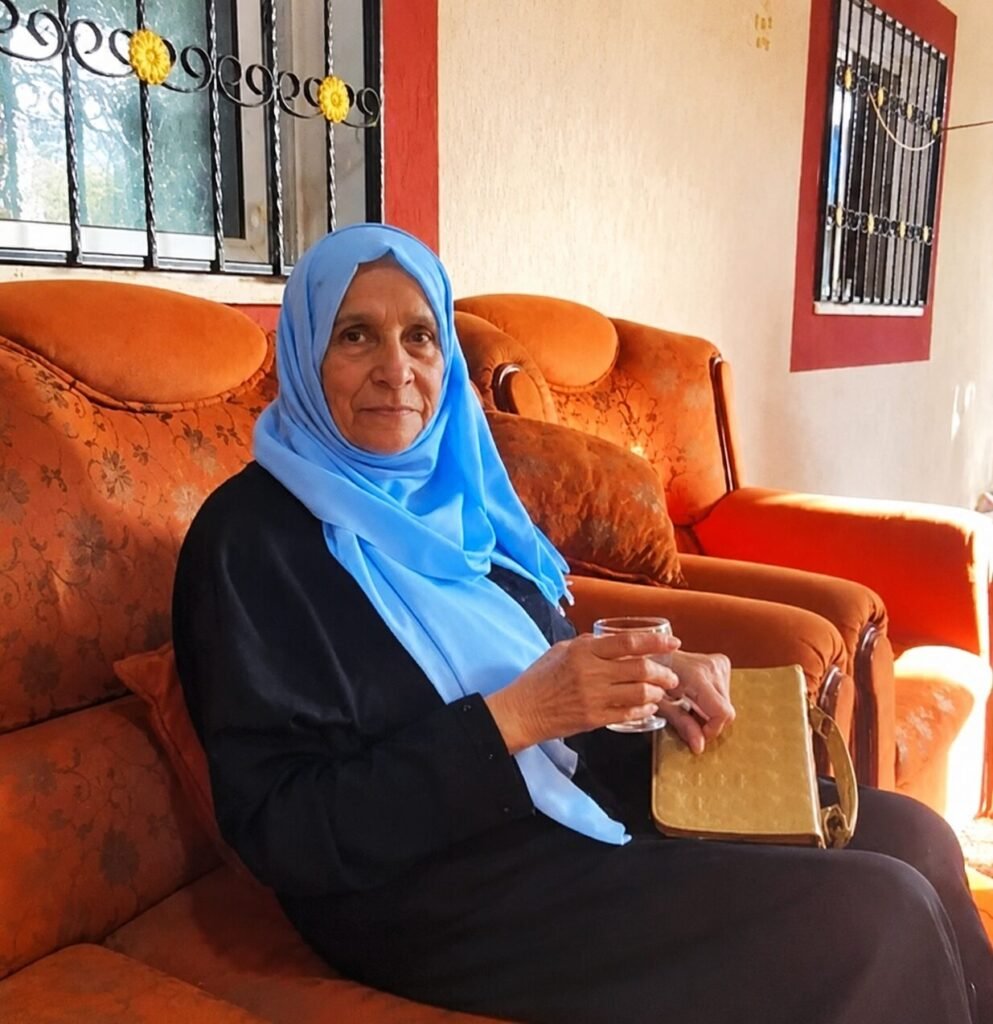
For Intisar Abu Hamada, 62, Khaled was more than her youngest son. He was the child she worried about most, the one who stayed closest to her, and the last person she waited up for every night. She refused to sleep until she heard him walk through the front door.
A Mother’s World Reduced to One Question
As Israel’s attacks intensified, the Abu Hamada family home was destroyed, forcing the family to flee to an UNRWA school shelter.
Like thousands of displaced Palestinians, they faced overcrowding, hunger, and uncertainty. But for Intisar, none of it mattered as much as the unanswered question that haunted every waking moment:
Where was Khaled?
Weeks turned into months without a single piece of information.
Her health deteriorated rapidly. By the third month of displacement, she suffered a severe physical and psychological collapse. She gradually lost her memory and no longer recognized her children or relatives.
Yet one name never left her lips.
“Khaled.”
According to testimony provided by the Abu Hamada family to the Palestinian Centre for Missing and Forcibly Disappeared, she would stop strangers inside the shelter, hold their hands, and ask whether they had seen her son.
As night fell and the shelter grew quiet, her voice would grow faint.
“Are you still alive, Khaled… the light of my eyes?”
She Never Received an Answer
On January 29, 2024, almost three months after Khaled disappeared, Intisar suffered a fatal heart attack inside the classroom where the family had been sheltering.
She died without ever learning what had happened to her son.
Her family says the uncertainty surrounding Khaled’s fate became the greatest burden she carried during her final months.
Thousands of Families Still Waiting
The Abu Hamada family has repeatedly contacted the International Committee of the Red Cross (ICRC) and human rights organizations, submitting reports and identification documents in the hope of finding information about Khaled.
To date, they have received no confirmation of his whereabouts or what became of him.
Khaled is one of thousands of Palestinians whose fate remains unknown since the start of the war on Gaza.
For their families, the absence of answers has become a humanitarian crisis of its own—one marked by prolonged uncertainty, psychological trauma, and grief without closure.
The Palestinian Centre for Missing and Forcibly Disappeared documents cases in which individuals disappear without confirmation of detention or recovery of their remains, identifying them as situations that carry the risks associated with enforced disappearance under international law.
International humanitarian law recognizes the right of families to know the fate of missing relatives and requires parties to armed conflicts to provide information on detainees and those who have died.
For the Abu Hamada family, however, those legal principles have yet to bring the answer Intisar spent her final days pleading to hear.
She died calling her son’s name. Nearly three years later, the silence surrounding Khaled’s disappearance remains unbroken.

