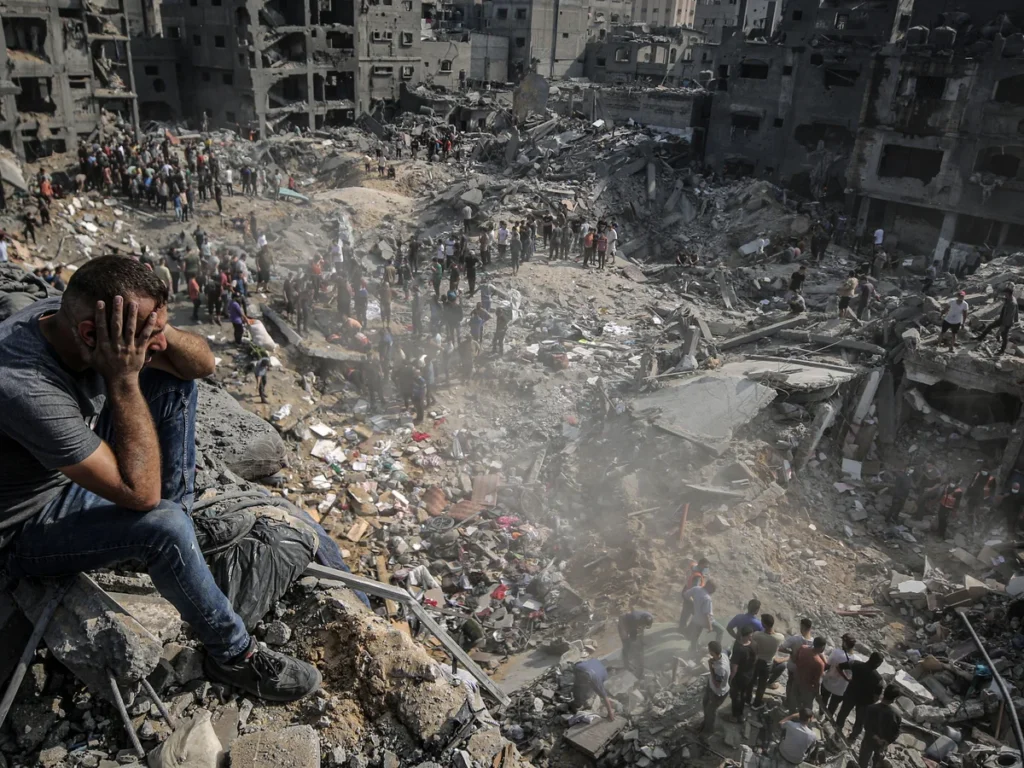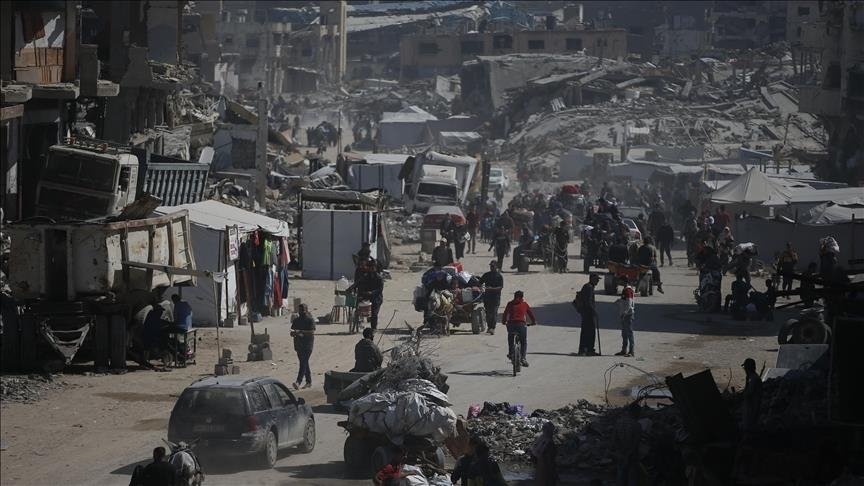
Gaza Herald- Nearly three years into the war, Gaza remains largely without electricity, with new satellite analysis showing that the territory has recovered only a fraction of its pre-war nighttime illumination.
An analysis of satellite imagery found that Gaza retained just 19 percent of its pre-war nighttime light levels after nearly two years and nine months of widespread destruction and infrastructure damage.
A separate spatial analysis excluding the area inside the Israeli-controlled “Yellow Line” found that the remaining populated areas recorded only 12 percent of their pre-war nighttime brightness, underscoring the continuing collapse of electricity across much of the territory.
The findings illustrate how the energy crisis extends far beyond the absence of street lighting. Families living in displacement camps struggle to operate fans during extreme summer heat, refrigerate food and medicine, or charge mobile phones and essential devices.
The shortage of electricity has also affected access to healthcare, with patients facing increasing difficulty obtaining treatment for chronic illnesses while medical facilities continue operating under severe power constraints.
Water, Hospitals, and Bakeries Continue to Struggle
The electricity crisis has disrupted the operation of water wells, pumping stations, hospitals, bakeries, and telecommunications networks, further limiting access to basic services.
Limited electricity, unreliable internet connections, and the inability to charge electronic devices also prevented some high school students from completing their national examinations.
The analysis was conducted by Al Jazeera’s Open Source Unit using nighttime light data from NASA’s Black Marble project. Researchers compared consecutive 28-night periods beginning with a pre-war reference period between September 9 and October 6, 2023, and ending with the most recent period between June 12 and July 9, 2026.
The report found that declining nighttime illumination reflects a much broader collapse in electricity infrastructure, as water systems, healthcare facilities, bakeries, and communications networks all depend on reliable power supplies.
Daily Life Continues Without Reliable Electricity
The satellite findings align with field reporting by Palestinian journalist Bisan Owda, who documented how the lack of electricity has transformed everyday activities into constant challenges.
From finding enough power to charge a mobile phone to keeping basic household equipment running, access to electricity has become one of the most pressing daily concerns for families across Gaza.
The analysis showed that nighttime illumination in populated areas outside the Israeli-controlled zone remained at only 12 percent of pre-war levels during July 2026.
Inside displacement camps, prolonged power outages coincide with high temperatures and the spread of insects and rodents. Families remain unable to operate lights or cooling equipment, making living conditions inside tents increasingly difficult, particularly during nighttime hours.
Doctors Warn of Serious Health Consequences
Medical professionals quoted by the Gaza Electricity Distribution Company said the consequences of prolonged electricity shortages now extend well beyond daily inconvenience, directly affecting patient safety and access to healthcare.
They described the ongoing power crisis as a life-threatening situation for patients who depend on continuous medical care and electrically powered equipment.
Electricity shortages have also disrupted water and sanitation facilities, healthcare services, food production, and telecommunications infrastructure.
In July 2026, the Sheikh Radwan pumping station was forced to reduce operating hours because of shortages of engine supplies and maintenance materials, leading to rising wastewater levels inside the stormwater collection basin.
According to the United Nations Office for the Coordination of Humanitarian Affairs (OCHA), the station resumed operating between 12 and 16 hours per day after receiving limited quantities of engine oil, allowing workers to stabilize water levels and reduce additional environmental risks.
Essential Services Remain Severely Disrupted
Much of Gaza’s healthcare system also remains partially inoperative.
By July 2026, fewer than half of the health service facilities that operated before the war remained functional, with continuing difficulties powering medical equipment, storing medicines safely, and maintaining water supplies inside hospitals and clinics.
OCHA reported that essential healthcare services for approximately 350,000 people living with chronic illnesses remain severely disrupted because of damaged water and sanitation infrastructure, shortages of humanitarian supplies, restricted access, and continuing shortages of fuel, engine oil, generators, and specialized equipment.
Students Search for Electricity to Take Exams
The electricity crisis has also affected education.
Around 6,000 of the 37,000 students registered for Gaza’s 2026 secondary school examinations were unable to participate on the first day because they lacked access to electronic devices, reliable internet connections, or sufficient electricity to charge their equipment.
Videos shared from across Gaza showed students taking online exams on mobile phones inside crowded cafés, displacement tents, and makeshift shelters while searching for electricity and internet access despite overcrowding, technical disruptions, and extreme heat.
The satellite analysis found that nighttime illumination across Gaza remains dramatically lower than before the war. While nighttime light data does not directly measure electricity outages, researchers said it provides a reliable indicator of the territory’s continuing energy crisis and the severe disruption of essential civilian services.