Gaza Herald _Despite a ceasefire that has remained in place for months, Israeli forces continue carrying out deadly attacks across the Gaza Strip, prompting growing concern among analysts that the strikes are part of a broader effort to undermine the territory’s ability to recover and govern itself after the war.
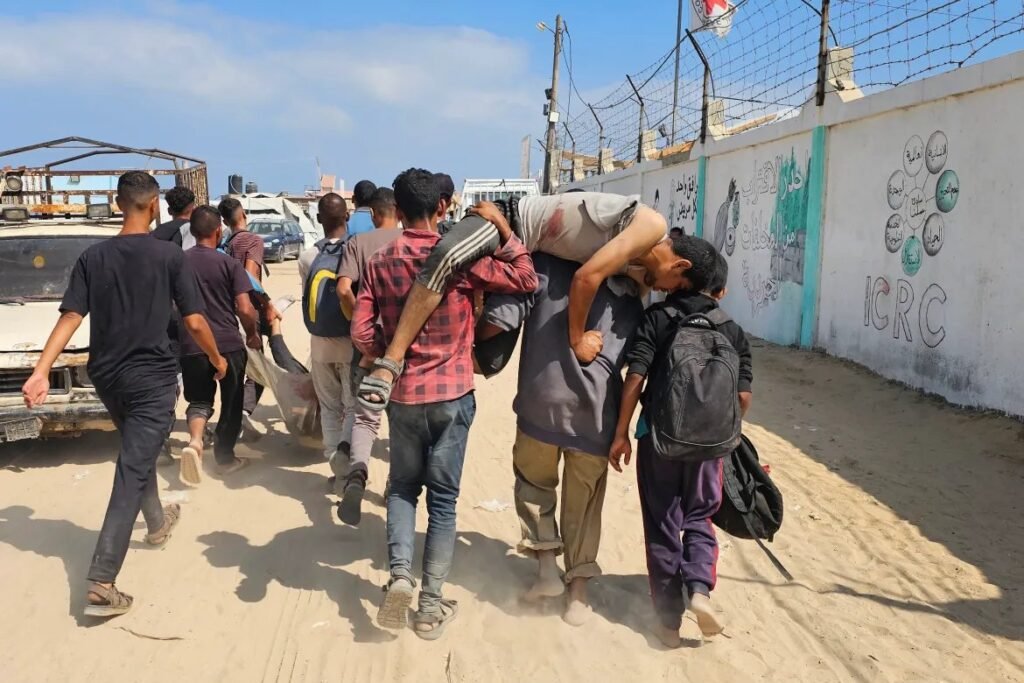
On Tuesday, an Israeli strike on the Jabalia refugee camp in northern Gaza killed the director of a local police station along with several police officers, adding to the mounting civilian death toll. Israel has continued launching near-daily attacks, saying its operations target Hamas fighters and respond to what it describes as imminent security threats.
Political and strategic analysts, however, argue that the pattern of attacks extends well beyond military objectives. They say Israel has increasingly targeted police officers, healthcare workers, government officials, academics, and other civilian figures who form the backbone of Gaza’s public institutions.
According to these analysts, the continued targeting of civilian leadership threatens to derail internationally backed efforts to establish a post-war governing framework in Gaza. They also warn that it could weaken the proposed Board of Peace established under the Trump administration’s plan while allowing Israel to maintain long-term control over a territory whose infrastructure has been devastated by months of war.
Ceasefire Violations Continue
Analysts say Israel has gradually normalized daily military operations despite the ceasefire, creating a situation in which repeated strikes have become routine while the agreement itself has had little effect on limiting military activity.
According to Gaza’s Government Media Office, Israeli forces have committed 3,689 ceasefire violations during the first 275 days of the agreement. The office says those incidents have killed 1,122 Palestinians and wounded another 3,599.
The humanitarian crisis has also continued to worsen. The Government Media Office reports that only 35 percent of the expected humanitarian aid trucks have been allowed into Gaza, while just 36 percent of approved travelers have been permitted to cross border checkpoints.
Health authorities in Gaza say that since October 7, 2023, at least 73,233 Palestinians have been killed and 173,707 injured.
Civilian Institutions Under Sustained Pressure
Human rights organizations and analysts say the impact of Israeli attacks extends far beyond military targets, severely affecting the institutions responsible for maintaining daily life inside Gaza.
The UN Human Rights Office (OHCHR) has documented repeated attacks on police officers, whose work is considered essential for maintaining public order and supporting any future reconstruction efforts.
Since January 2026, the office has recorded at least 12 separate attacks on police personnel that killed 35 officers. Some were reportedly targeted while directing traffic or overseeing marketplaces rather than engaging in combat operations. In one incident on May 23, an Israeli strike on a police checkpoint in Gaza City killed at least five officers.
Education and Healthcare Devastated
The destruction has also taken a heavy toll on Gaza’s healthcare and education sectors.
Most of Gaza’s hospitals have sustained extensive damage or been destroyed during the war, while large numbers of doctors, nurses, and medical workers have been killed.
According to the Palestinian Ministry of Education, at least 441 teachers and education employees have lost their lives, along with more than 11,000 schoolchildren.
Academics have also been heavily affected.
At least 117 university professors and researchers have been killed during the war, including mathematician and Islamic University president Sufyan Tayeh, who was killed alongside members of his family during an Israeli strike on the Jabalia refugee camp.
Analysts See a Broader Objective
Ahmed Al-Tanani, a Gaza-based writer and political analyst, says Israel’s justification for many of its attacks has evolved over time.
According to Al-Tanani, earlier operations were often presented as responses to specific security incidents. More recently, however, he says individuals have increasingly been targeted based on claims that they could pose future threats.
He argues that the recent strikes against police officers and civilian officials came shortly after Hamas announced the dissolution of its administrative committee, a move widely viewed as demonstrating flexibility regarding Gaza’s future governance.
According to Al-Tanani, the attacks suggest that Israel’s objectives extend beyond confronting Hamas.
He says the broader target is Gaza’s entire civilian infrastructure and its ability to recover after the war.
“The goal,” he argues, “is to keep Gaza trapped in a continuous cycle of destruction, instability, and institutional collapse, preventing any meaningful recovery.”
Israeli Strategy Seen as Blocking Gaza’s Recovery
Analysts say Israel’s military campaign extends beyond immediate security objectives, arguing that it is also intended to prevent the implementation of international plans for Gaza’s post-war administration while preserving long-term Israeli control over the territory.
Mohannad Mustafa, an academic specializing in Israeli affairs, says Israel is pursuing this objective through several parallel strategies.
According to Mustafa, the first involves carrying out regular military strikes under the framework of enforcing the ceasefire, creating a situation in which daily attacks become normalized despite the agreement remaining in effect. He says the approach resembles Israel’s military operations in southern Lebanon.
Expanding Military Control
Mustafa says Israel has also continued expanding the areas under its military control inside Gaza.
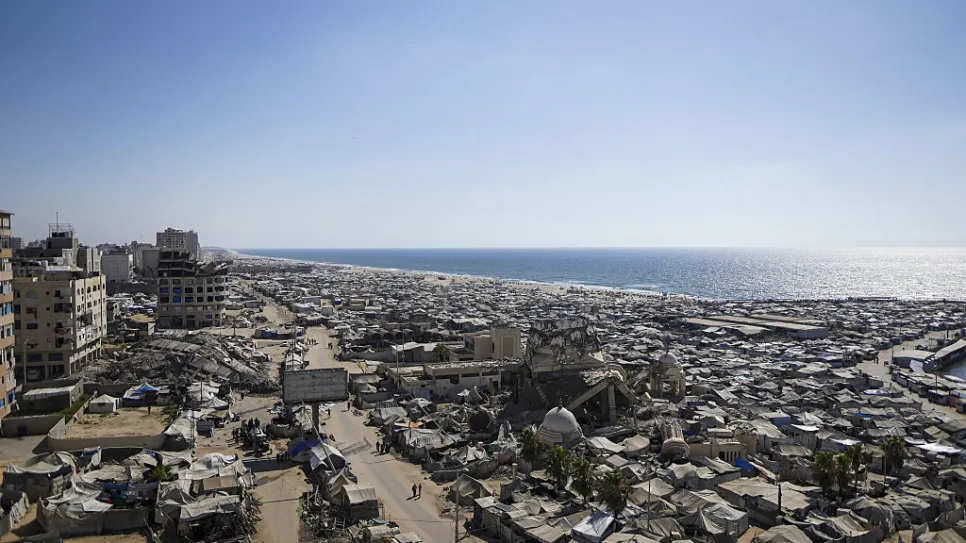
According to his assessment, Israeli forces have increased their presence from roughly half of the territory to nearly 70 percent, while widespread destruction of residential neighborhoods and civilian infrastructure has continued.
He argues that the expansion is aimed at reshaping conditions on the ground while limiting the possibility of restoring normal civilian life.
Preventing Political Transition
Another key objective, Mustafa says, is preventing the planned political transition in Gaza.
He argues that Israel has blocked the entry of the Palestinian National Committee, delayed humanitarian assistance, and obstructed reconstruction efforts, effectively keeping Gaza under a security framework rather than allowing it to move toward civilian governance.
According to Mustafa, maintaining those conditions makes it difficult for any future governing body to establish authority or begin rebuilding the territory.
A Policy of Destruction
Analysts also point to statements by senior Israeli officials as reflecting the government’s broader approach toward Gaza.
Israeli Defense Minister Israel Katz recently said in an interview with Israel’s Channel 14 that the destruction in Gaza is part of Israel’s strategy to eliminate future threats, adding that seeing the devastation gives him a sense of comfort.
Mustafa says such remarks reflect a broader political consensus within Israel.
“What Katz expressed is not an isolated opinion,” he says. “It reflects a prevailing view inside Israel that Gaza should be destroyed, and current policies are moving in that direction.”
He adds that resettlement of Gaza remains one of the long-term objectives discussed within the Israeli government.
Making Gaza Unlivable
Paolo von Schirach, president of the U.S.-based Global Policy Institute, says the scale of destruction extends beyond military objectives.
Commenting on Katz’s remarks, von Schirach says the devastation suggests a broader effort to make life in Gaza increasingly impossible.
“The objective goes beyond fighting Hamas,” he says. “The destruction points toward making Gaza unlivable in the hope that its population will eventually leave.”
According to analysts, the continued destruction of homes, infrastructure, hospitals, schools, and civilian institutions has significantly reduced Gaza’s ability to recover, raising growing concerns over the territory’s future once the war ends.
Board of Peace Faces Growing Challenges
Analysts say Israel’s continued military operations have placed increasing pressure on the proposed Board of Peace, the body envisioned under U.S. President Donald Trump’s post-war plan to oversee Gaza’s transition, governance, and future peacekeeping arrangements.
Paolo von Schirach, president of the U.S.-based Global Policy Institute, says the board was originally intended to gradually assume administrative responsibility for Gaza, establish a functioning civilian government, and eventually facilitate the deployment of an international peacekeeping force. Under the proposal, Israeli forces would withdraw while Hamas would be disarmed.
“So far, none of those objectives have materialized,” von Schirach says.
He argues that the Board of Peace currently lacks both the institutional capacity and security forces needed to establish authority inside Gaza, leaving the U.S.-backed initiative unable to move beyond the planning stage.
Von Schirach also says that while Washington’s attention has recently shifted to regional developments, including tensions in the Strait of Hormuz, the United States has yet to secure Israeli cooperation with the plan.
Different Approaches, Shared Goals
Mohannad Mustafa believes the current situation reflects more than a lack of U.S. influence over Israel.
He argues that Washington and Israel ultimately share the objective of disarming Hamas, although they differ over the strategy for achieving it.
According to Mustafa, Israel has been encouraged by the Board of Peace’s position linking broader implementation of the post-war agreement to the issue of disarmament.
Palestinian Diplomatic Efforts Continue
Meanwhile, Palestinian factions have increasingly focused on diplomatic initiatives aimed at advancing implementation of the ceasefire and the post-war political framework.
Analysts say Hamas’ decision to dissolve its Government Follow-up Committee and transfer administrative responsibilities to a technocratic National Committee was intended to remove obstacles that have delayed the next phase of the transition.
Ahmed Al-Tanani says Palestinian factions are continuing consultations with mediators in Cairo, including Egypt, Qatar, and Türkiye, in an effort to build a unified Arab and Islamic position capable of supporting the implementation of the agreed framework.
According to Al-Tanani, those efforts are intended to encourage the United States to move beyond general support for the ceasefire by helping ensure that its practical provisions are carried out.
He says this includes increasing pressure to ease Gaza’s humanitarian crisis and advance the implementation of the ceasefire agreement.
An Uncertain Future
Analysts warn that without meaningful political progress, Gaza is likely to remain caught between continuing military operations, delayed reconstruction, and uncertainty over its future governance.
They argue that resolving the humanitarian crisis and enabling civilian institutions to function will depend not only on maintaining the ceasefire, but also on implementing the political arrangements intended to guide Gaza’s post-war transition.
Until those conditions are met, they say, the territory faces continued instability, with reconstruction efforts and long-term governance remaining uncertain.