Gaza Herald _ After two decades marked by an Israeli blockade, repeated military offensives, political division, and mounting humanitarian crises, Hamas has brought its administration in Gaza to an end by dissolving its Government Emergency Committee, the body that had overseen the enclave’s civilian affairs in recent years.
Administrative authority is now set to pass to the newly established National Committee for the Administration of Gaza, a technocratic body operating under the internationally supported Gaza Peace Council, signaling a major political transition after 20 years of Hamas-led governance.
The decision closes one of the most consequential chapters in Gaza’s modern history. Analysts say the significance of the move cannot be understood without looking back at the events that shaped Hamas’s rule, including Israel’s blockade, repeated military campaigns, political isolation, and the humanitarian crisis that unfolded over the past two decades.
2006: Election Victory Followed by Isolation
Hamas’s rise to power began on January 26, 2006, when the movement won a decisive victory in the Palestinian legislative elections. It secured 76 of the 132 seats in the Palestinian Legislative Council, defeating the long-dominant Fatah movement, which won 43 seats. Nearly 78 percent of Gaza’s eligible voters participated in the election, making it one of the highest-turnout votes in Palestinian history.
Following the election, Hamas leader Ismail Haniyeh sought to reassure the international community, describing the movement as politically responsible and open to engagement. At the same time, Palestinian politician Hanan Ashrawi cautioned that the election outcome could leave the Palestinians facing growing international isolation.
Her warning soon became reality. Rather than being accepted as the outcome of a democratic process, Hamas’s victory was followed by sweeping political and economic sanctions led by Israel and supported by several Western governments. Israel tightened restrictions on Gaza during the first half of 2006, laying the foundation for what would become a prolonged blockade.
Palestinian political analyst Mohammad Al-Aila argues that while the election itself was widely recognized as free and fair, many governments that publicly champion democratic principles refused to accept the results once they produced a political leadership they opposed. According to Al-Aila, early efforts to engage Hamas eventually gave way to a broader policy of political isolation.
2006–2010: Internal Division and the Beginning of the Blockade
Tensions escalated on June 25, 2006, when Palestinian fighters captured Israeli soldier Gilad Shalit during a cross-border operation. Israel cited both the capture and Hamas’s electoral victory as reasons for imposing even tighter restrictions on Gaza.
The internal Palestinian political divide deepened over the following year. On June 14, 2007, after months of armed clashes between Hamas and Fatah, Hamas assumed full control of the Gaza Strip. In response, Palestinian President Mahmoud Abbas dissolved the national unity government, while Israel imposed a comprehensive land, sea, and air blockade on the territory.
The blockade fundamentally reshaped life in Gaza. Over the following years, the local economy deteriorated sharply as factories shut down, unemployment soared, and the overwhelming majority of residents became dependent on humanitarian assistance. International efforts to challenge the blockade, including the 2010 Freedom Flotilla, which ended with the deadly Israeli raid on the Mavi Marmara, failed to bring an end to the restrictions, leaving the siege as one of the defining features of life in Gaza.
2014–2023: Administrative Changes and Repeated Reconciliation Efforts
As Gaza endured years of blockade and successive Israeli military offensives in 2008, 2012, and 2014, Hamas repeatedly adjusted its governing structure in an effort to manage the enclave’s worsening humanitarian and political conditions.
Following the collapse of a Palestinian reconciliation agreement in 2014, Hamas established an administrative committee to oversee Gaza’s civilian affairs. Three years later, the movement unveiled a revised political document aimed at easing its international isolation. Later in 2017, under Egyptian mediation, Hamas dissolved the committee in an attempt to pave the way for a Palestinian unity government.
However, repeated reconciliation initiatives failed to produce lasting political unity. In 2018, the Government Action Follow-up Committee was established to oversee Gaza’s public services and day-to-day administration, effectively becoming the territory’s primary civilian governing body.
Palestinian political analyst Mohammad Al-Aila argues that Hamas’s recent decision to step away from governing Gaza did not emerge solely because of the current war. He noted that the movement had previously expressed its willingness to share administrative responsibilities, including its support for the Palestinian general elections scheduled for 2021, which were later postponed by President Mahmoud Abbas, as well as its endorsement of the 2022 Algiers reconciliation agreement.
According to Al-Aila, Hamas increasingly recognized that governing Gaza alone had become politically and economically unsustainable, particularly under the prolonged blockade. In his view, the movement came to see that the enclave’s future administration would require a broader Palestinian national consensus rather than the continued rule of a single political faction.
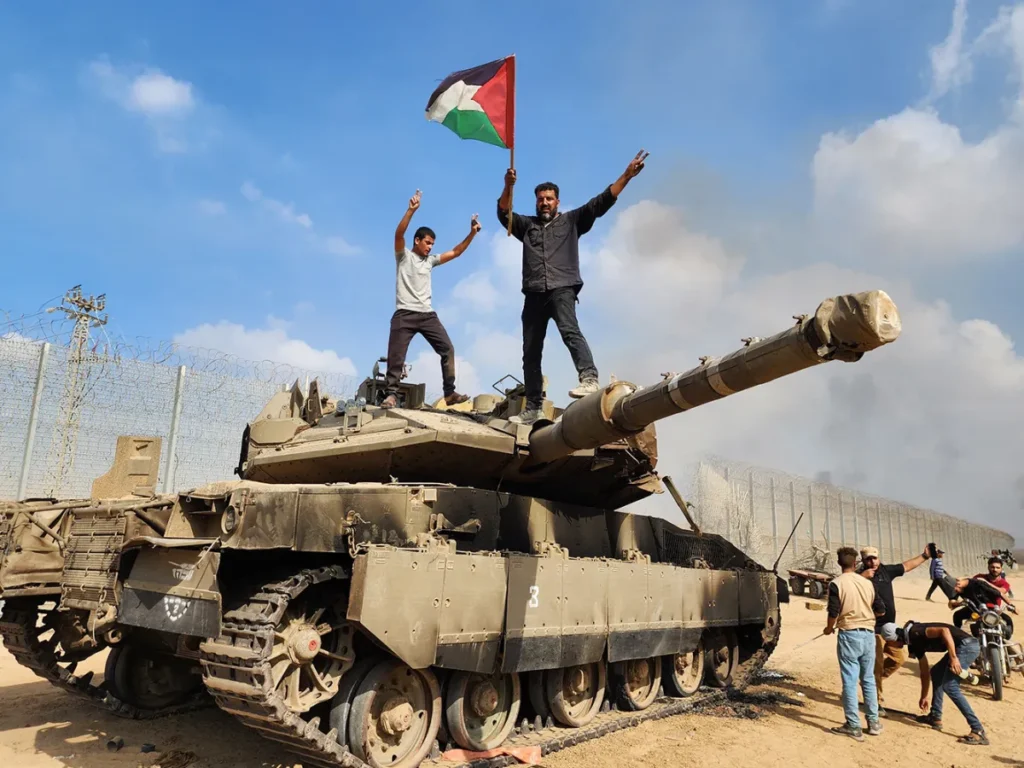
But everything changed in October 2023, when Hamas fighters led an attack on southern Israel. Nearly 1,200 people were killed, and Palestinian fighters took more than 200 captives to Gaza. Israel responded by launching a genocidal war on Gaza, in which more than 70,000 people have since been killed.
2023 – 2025: War, emergency governance, and targeted assassinations
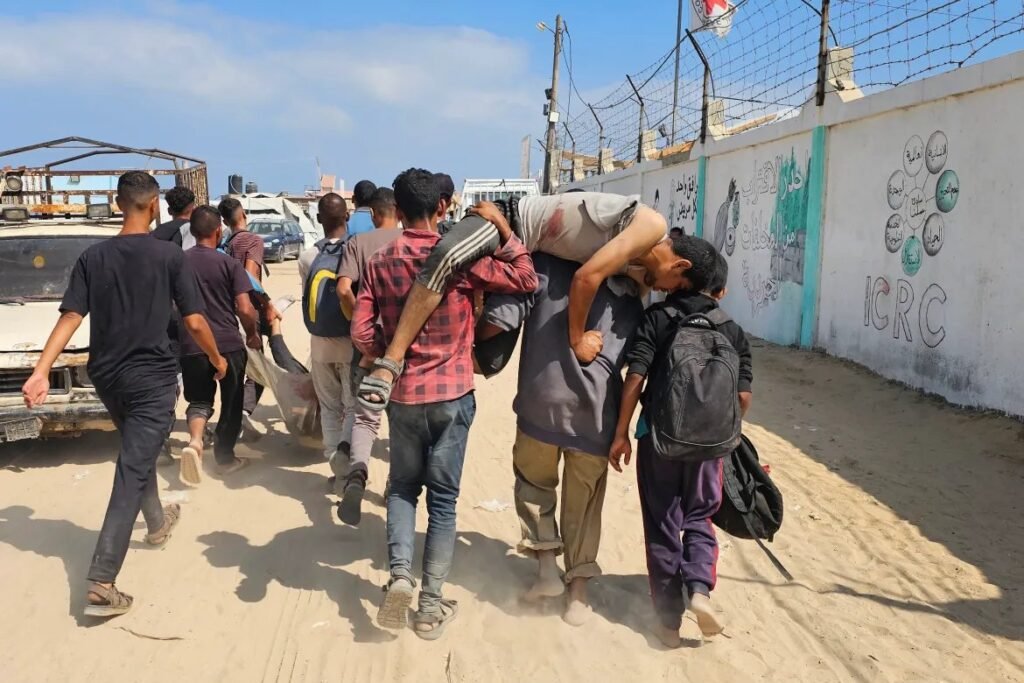
Following the outbreak of the war in October 2023, the Hamas governing body activated a central operations room, officially forming the “Government Emergency Committee.” This body coordinated the management of hospitals, displacement shelters, water supplies, and rubble removal.
Throughout the war, Israel systematically targeted Gaza’s civil infrastructure and administrative cadres, as well as senior Hamas leaders. In July 2024, Hamas leader Ismail Haniyeh, who was involved in peace negotiations, was assassinated while visiting Tehran.
In a major blow to the local governance system in Gaza, Israeli forces assassinated Issam al-Da’alis, the head of the Government Action Follow-up Committee, in March 2025.
According to Al-Aila, this was a deliberate strategy. He explained that the Israeli army systematically worked to dismantle administrative capabilities by striking civil and police headquarters to create an “administrative void.”
This resulting institutional chaos made Gaza more susceptible to alternative, internationally imposed administrative arrangements, framing them as a necessary response to the vacuum created by the Israeli military.
2026: The Peace Council, the final handover, and the future
Following a ceasefire agreement, the White House approved a transitional administration structure in January 2026. This included the establishment of a “Gaza Peace Council” and the technocratic “National Committee for the Administration of Gaza,” headed by Ali Shaath, a Palestinian official and civil engineer.
On July 6, 2026, the Government Media Office in Gaza held a news conference outside Al-Aqsa Martyrs Hospital to announce the official dissolution of the Emergency Committee.
Israeli officials have expressed deep skepticism about the transition. Israeli Foreign Minister Gideon Saar dismissed the move as a “trick,” arguing that Hamas is attempting to replicate the “Hezbollah model” in Lebanon, allowing a technocratic government to handle municipal services; in Lebanon, the group retains its military power.
Under the transition terms, approximately 45,000 existing government employees across the health, education, and interior security sectors will remain in their positions to ensure the uninterrupted delivery of essential services.
Challenges Facing the Transition
Al-Aila cautioned against any effort to dismantle Gaza’s existing civil service, arguing that removing tens of thousands of experienced public employees would severely disrupt government institutions and undermine the delivery of essential services. He warned that replacing a workforce with decades of institutional knowledge could trigger administrative paralysis and deepen social instability.
He also questioned the notion that the National Committee for the Administration of Gaza is entirely apolitical. While the committee has been presented as a technocratic body, Al-Aila said it was established under US-backed arrangements with clear political objectives. In his view, its long-term viability will depend on its ability to avoid political exclusion and to build broad-based cooperation with Gaza’s existing political factions, local communities, prominent families, and civil society organizations.