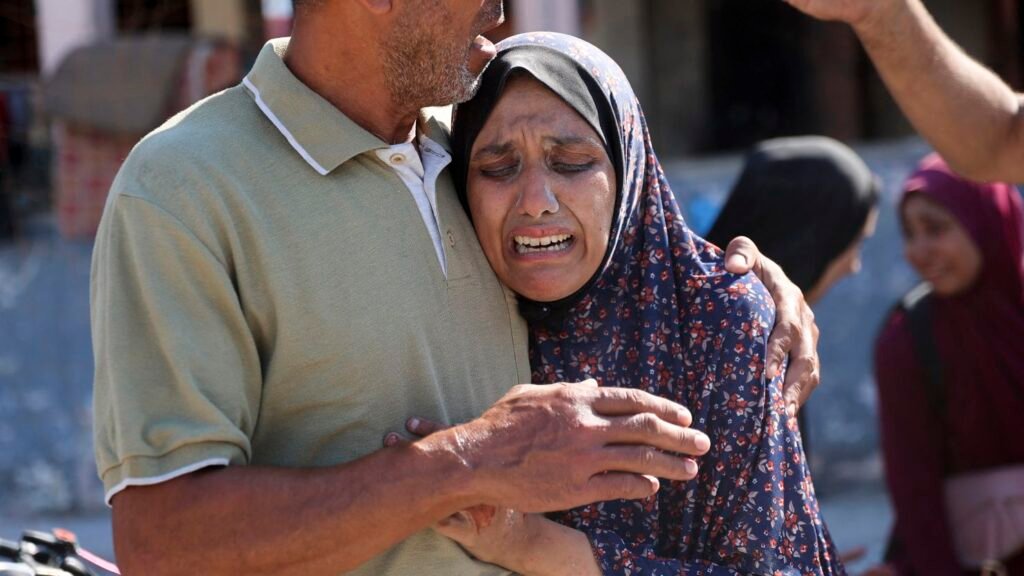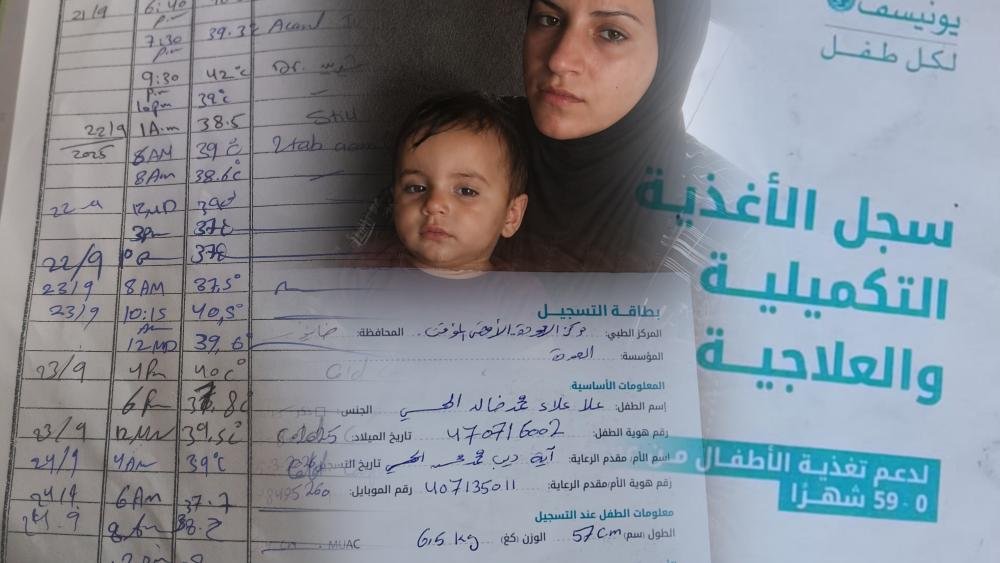
Gaza Herald – In Gaza, a paper identity card is no longer the only document Palestinians carry to prove who they are. Thousands of families now carry another document, a “malnutrition booklet”, a record that reflects bodies worn down by hunger and disease, documenting a daily struggle to stay alive.
Twenty-four-year-old Aya Mohsen carries this booklet alongside her infant daughter, Ola, who has not yet reached her first birthday. For her, it has become a painful testament to the harsh reality created by war, blockade, and severe food shortages.
Speaking with a voice weighed down by exhaustion, Aya describes her ongoing battle with malnutrition, which began during the peak of Gaza’s famine. She says her condition has not improved despite the limited flow of food aid since the ceasefire.
One Year Old, Half the Expected Weight
“I suffer from malnutrition, and so does my daughter,” Aya says. “She’s one year old and weighs only seven kilograms, while she should weigh at least 14 to 15 kilograms.”
She explains that her own severe weight loss has also affected her daughter’s health. Every day, she struggles to provide the nutrition and care her child needs, only to face circumstances beyond her control.
“We received nutritional supplements from Al-Awda Hospital, where I receive treatment,” she says. “But my daughter refuses to take them. I’ve tried many times, but she simply won’t accept them.”
A Mother Battling Cancer
Hunger is only one of Aya’s battles. Her weakened body is also fighting cancer, which has caused dramatic weight loss and spread throughout her body.
“I used to weigh 71 kilograms. Now I weigh only 48,” she says. “I’m suffering from malnutrition, and I have cancer that has spread throughout my body.”
Aya is still waiting for permission to travel abroad for treatment after receiving notification from Gaza’s Ministry of Health that she had been referred for medical care in Egypt. However, the journey has yet to happen, while her illness continues to worsen.
“I’m waiting to travel for treatment with my daughter,” she says. “My health is getting worse every day.”
War and Illness
The family’s hardship extends beyond Aya and her daughter. Her husband also suffered a serious back injury during the war, leaving him unable to work and nearly paralyzed, she says.
“My husband has a back injury and came close to becoming paralyzed.”
With the family’s ability to earn a living severely reduced, coping with illness and malnutrition has become even more difficult. Aya alone requires medication costing around 1,200 shekels (about $360) each month, while the family struggles to meet even its most basic needs.
Life in a Tent Makes Everything Worse
Inside their displacement tent, the family’s suffering is compounded by the lack of adequate healthcare, nutritious food, and basic living conditions.
“We have a malnutrition booklet,” Aya says. “Our condition has continued to deteriorate even though the famine has somewhat eased in Gaza.”
She explains that displacement, life inside tents, cancer, pregnancy, and worsening economic conditions have combined to make recovery seem almost impossible.
Thousands of Children at Risk
Aya’s story reflects the reality facing thousands of families across Gaza, where shortages of food and medical supplies have fueled a growing malnutrition crisis, prompting repeated warnings from United Nations agencies about catastrophic consequences for children.
According to official figures released by Gaza’s Ministry of Health and the Government Media Office, approximately 34 children have died directly from severe malnutrition and dehydration, while more than 3,500 children remain at risk of death because of shortages of infant formula and nutritional supplements amid continued restrictions on humanitarian aid.
Meanwhile, reports from the United Nations Children’s Fund (UNICEF) and the World Health Organization (WHO) warn that the crisis continues to deepen, with more than 50,000 children in Gaza suffering from acute malnutrition.