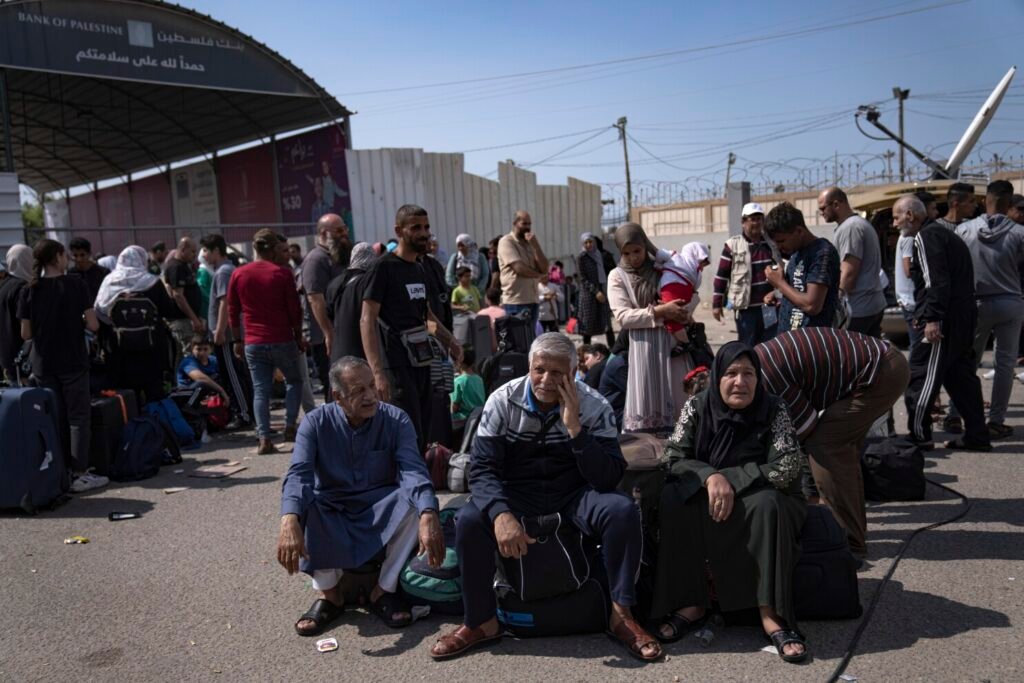
Gaza Herald_Palestinians returning to the Gaza Strip through the Rafah land crossing say Israeli occupation authorities confiscated personal belongings during extensive security inspections, with many travelers reporting the loss of mobile phones, gold jewelry, and other valuables.
Several returnees described lengthy searches that they said resulted in the seizure of items they had carried throughout their displacement. According to their accounts, Israeli authorities retained valuable personal possessions without prior warning or adequate explanation.
One traveler said Israeli personnel confiscated three suitcases, an iPhone, and his daughter’s wedding jewelry.
“They took three of our bags, an iPhone, and my daughter’s wedding gold set, including five bracelets, a necklace, a ring, and her wedding band,” he said, describing the items as family possessions brought back to Gaza.
Another woman said the confiscations affected numerous female travelers, many of whom allegedly lost their jewelry and mobile phones during inspections.
“They took our phones, and the gold disappeared along with many other belongings. More than ten women had their gold taken,” she said.
A third woman echoed those claims, saying inspectors confiscated nearly every phone they found and took jewelry belonging to her daughter-in-law.
“They didn’t leave a single mobile phone. They also took my son’s wife’s gold necklace and rings. These were her own belongings that she had taken with her to Egypt and was simply bringing home,” she said.
A young girl who recently returned to Gaza said passengers were only informed at the crossing that bringing gold into the territory was prohibited.
“They told us gold wasn’t allowed. If we had known beforehand, we would have left it in Egypt instead of bringing it with us and losing it,” she said.
The allegations come as Palestinians continue to endure severe humanitarian conditions and strict limitations on movement into and out of the Gaza Strip. Residents and human rights advocates have called for an end to what they describe as the unlawful confiscation of travelers’ personal property and demanded greater protection for civilians crossing the border.
Under the first phase of the ceasefire agreement that took effect on October 10, 2025, Israeli authorities were expected to fully reopen the Rafah crossing without imposing restrictions. Palestinian officials, however, say those commitments have not been implemented.
According to figures released by the Palestinian Crossings Authority, travel through the Rafah crossing resumed on February 2, 2026. Between that date and June 11, a total of 3,516 Palestinians left Gaza through the crossing, while 2,701 people returned to the enclave during the same period.