Gaza Herald — The Palestinian Ministry of Health in the besieged Gaza Strip declared an “epidemic alert” across all governorates, amid a sharp surge in meningitis infections. The ministry reported 272 meningitis cases in October alone, more than eight times the usual monthly average of 30 to 50 cases.
Nidal Ghoneim, Deputy Director-General of Primary Healthcare for Public Health Affairs, stated during a press conference that 15 deaths linked to meningitis have been recorded since the beginning of the year, including five deaths across August, September, and October. He added that bacterial meningitis cases jumped from the usual 10 to 20 cases per month to 108 in October, with another 100 cases recorded since the start of November, warning that the escalating outbreak carries heightened risks of death and permanent neurological complications.
While laboratory testing confirmed the circulation of a virus from the Enterovirus group alongside the surge in bacterial infections, Ghoneim explained that identifying the exact genetic strains and fully distinguishing between viral and bacterial cases across the caseload has been impossible due to severe shortages of laboratory equipment and testing reagents barred by Israeli blockade restrictions.
Destroyed Sanitation and Israeli Blockade Fuel Outbreak
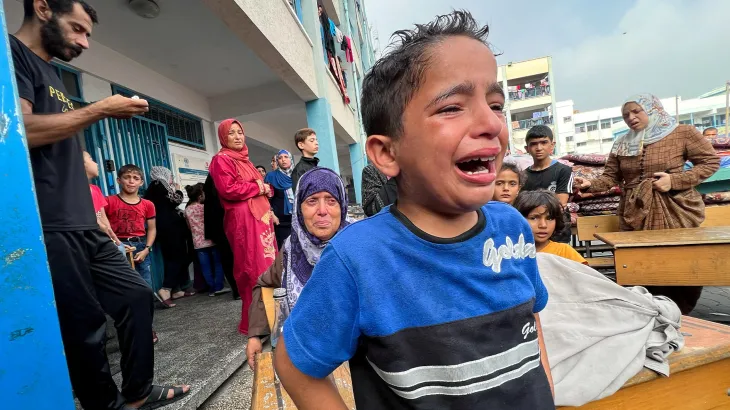
Ghoneim attributed the outbreak directly to the destruction of water and sanitation infrastructure, severe overcrowding in displacement shelters, drinking water contaminated with raw sewage, and flooding following recent winter rains.
The Palestinian Ministry of Health held Israel fully responsible for the spread of the disease, citing its ongoing blockade on maintenance spare parts, disinfection supplies, and fuel required to operate water and sewage facilities.
The ministry called for urgent international pressure to rehabilitate Gaza’s shattered water and sanitation networks and urged the World Health Organization (WHO) and the United Nations Children’s Fund (UNICEF) to mount an emergency intervention providing laboratory supplies, antibiotics, and dedicated isolation wards. Health officials also urged residents to observe strict hygiene precautions and seek immediate medical care if symptoms such as sudden fever, severe headaches, neck stiffness, or repeated vomiting appear.
Oxfam Report Documents Environmental War Crimes Across 99% of Gaza
Separately, Gaza’s Government Media Office on Tuesday highlighted the key findings of a report published Monday by Oxfam and the Conflict and Environment Observatory, titled Environmental War Crimes: How Israel’s Military Assault Has Turned Gaza into a Toxic Wasteland, Threatening Human Survival. The office described the study as an explicit indictment of what it termed the crime of “ecocide.”
According to the Government Media Office, the report identified potential toxic contamination affecting more than 99 percent of Gaza’s territory, based on satellite imagery, spatial analysis, and attack mapping covering October 2023 through April 2026. The findings also documented direct ground assaults across 78 percent of Gaza’s land area and the destruction or damage of more than 85 percent of its water infrastructure.
The office noted that systematic Israeli attacks on industrial sites, sewage treatment plants, and waste management facilities, compounded by vast piles of rubble and heavy munitions use, have released hazardous pollutants into soil, groundwater, and air. These contaminants include explosive residues, rocket fuel, heavy metals, dioxins, and carcinogenic asbestos, alongside a tenfold spike in fecal bacteria compared with normal levels. Central Gaza City, Khan Younis, Rafah, Jabalia, and areas along Salah al-Din Road were identified among the zones facing the highest toxic contamination risks, threatening infectious disease outbreaks and long-term health hazards for over 2.4 million Palestinians.
The Government Media Office demanded an immediate halt to Israeli military aggression, unrestricted entry for international relief teams and environmental experts, and the clearance of rubble and unexploded ordnance, stressing that environmental remediation and decontamination must be central to Gaza’s reconstruction.
UN Warnings Underscore Compounding Public Health Risks
These warnings arrive amid the ongoing collapse of water and sanitation services across the Strip. In a November 13 report, the United Nations Office for the Coordination of Humanitarian Affairs (OCHA) reported that heavy rainfall and flooding damaged more than 40,000 displacement shelters and affected roughly 46,000 families amid mounting fears of rainwater mixing with raw sewage. Meanwhile, the World Health Organization continues to warn of the lethality of bacterial meningitis, noting that roughly one in six people infected dies while one in five survivors suffers lasting complications such as hearing loss and neurological damage.