
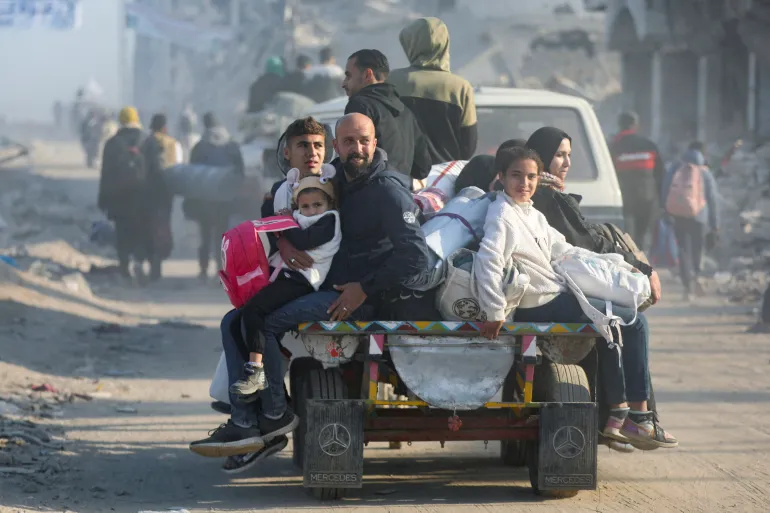
Gaza Herald — Gaza’s Ministry of Labor has exposed the staggering economic devastation inflicted on the besieged Strip, reporting that unemployment has climbed to roughly 78 percent while more than 90 percent of working-age residents are out of work.
In a report detailing the destruction wrought by the genocidal war waged by Israeli occupation forces on Gaza, the ministry noted that 92 percent of economic establishments have been damaged or destroyed, citing a September 2026 report by the United Nations Conference on Trade and Development (UNCTAD). The ministry also reported that Gaza’s economy contracted by 83 percent in 2024, reflecting the sweeping paralysis across productive and commercial sectors throughout the territory.
Productive Sectors Ravaged and Recovery Costs Soar
Economic collapse has hit Gaza’s core productive sectors on an unprecedented scale, with construction output plunging by 99 percent and both industry and agriculture contracting by 94 percent, severing economic infrastructure, jobs, and local productive capacity.
A joint assessment by the World Bank, the United Nations, and the European Union estimated physical damage to Gaza’s infrastructure at roughly $35.2 billion, economic and social losses at $22.7 billion, and recovery and reconstruction needs at around $71.4 billion. The ministry said these figures capture the immense scale of the obstacles confronting efforts to restore economic and social life and rebuild foundations for resilience and production.
Human Toll Behind Every Lost Job and Shattered Enterprise
The ministry warned of compounding humanitarian, economic, and social fallout as living standards and livelihoods disintegrate amid deepening poverty and hunger, shrinking healthcare services, scarce employment, and thousands of households stripped of income, conditions that directly imperil residents’ lives, health, and human dignity.
War consequences extend far beyond direct casualties, physical ruin, and displacement, the ministry stressed, accumulating in daily hardships that steadily erode survival through shortages of food, medicine, and medical care, lost shelter and livelihoods, halted economic activity, and severe psychological and social strain on families and future generations.
Workers, business owners, university graduates, and job seekers bear the heaviest brunt as ruined enterprises and stalled commerce, industry, and agriculture wipe out hundreds of thousands of jobs, expanding unemployment and poverty while eroding purchasing power and worsening food insecurity across thousands of Palestinian families.
Livelihoods and Dignity Cannot Wait on Aid Alone
Emphasizing that these statistics are not abstract economic figures but embody a harsh human reality, the ministry noted that behind every lost job is a family cut off from income, behind every ruined business is a worker stripped of livelihood, behind every jobless graduate is a deferred future, and behind every household unable to meet basic needs is daily hardship threatening health, stability, and dignity.
Protecting Palestinians cannot be postponed, the ministry stressed, calling the restoration of work, livelihoods, and production an urgent priority equal to humanitarian relief. A dignified life requires at least minimum guarantees of employment, income, food, healthcare, and safe shelter, while prolonged collapse of livelihoods and essential services will deepen suffering and strip society of the pillars needed for recovery. Genuine response, the ministry concluded, must go beyond emergency relief to protect people and enable them to reclaim their livelihoods, work, and productive capacity.

