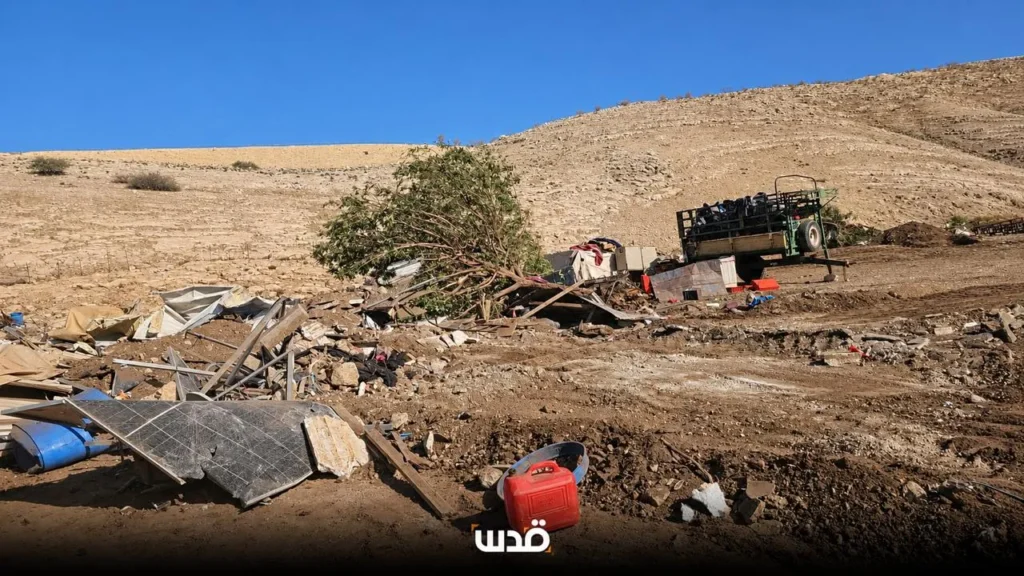
Gaza Herald – Israeli forces demolished all residential structures and facilities in the village of Samra located in the northern Jordan Valley. The operation left three Palestinian families, comprising approximately 30 individuals who are mostly children, without shelter. These families had lived in the area for decades and inherited the land from their fathers and grandfathers.
The destruction extended beyond simple housing units to erase the remaining infrastructure that sustained daily life. Tents were leveled, animal pens were destroyed, and feed storage sheds disappeared. Mobile health facilities, residential annexes, solar energy cells, and water tanks of various types were also removed. The operation eliminated the basic elements required for survival in this settlement.
Only three families remain in Samra after dozens of others fled over previous years due to settler attacks and continuous harassment. More than thirty families previously inhabited the community before gradual displacement reduced the population. One family member, who is over fifty years old, stated he was born on this land and lived there his entire life, just as his father and ancestors did before him.
Fares Al-Faqaha, an activist against settlement in the Jordan Valley, confirmed that the land where the homes stand is privately registered with the Tabu department. The families possess ownership papers and registration documents known as Koshan. Al-Faqaha emphasized that these are not state lands or unowned territories but private property held by the residents.
The families reported receiving no prior notice regarding the demolition. They were not given an opportunity to object or seek legal defense in courts. The operation was executed suddenly without the residents having any advance knowledge that their homes and facilities would be removed on that specific day.
The loss included essential livelihood sources such as livestock breeding facilities and animal shelters that protected animals from cold weather. Feed stores and water tanks critical for a region dependent on such resources were turned into rubble. Solar power systems providing electricity and mobile health units were also destroyed.
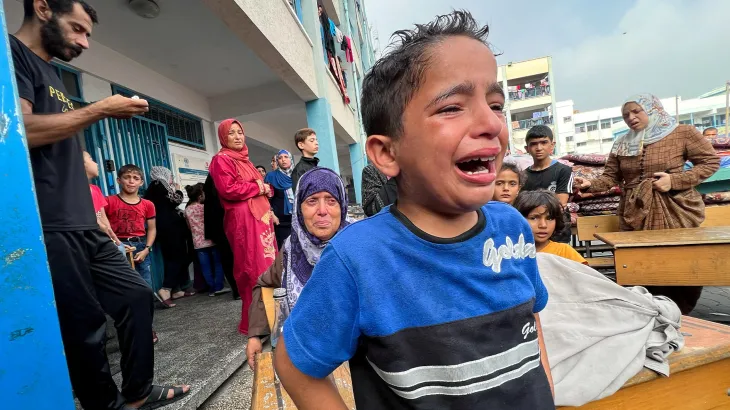
The most severe aspect involves the fate of children who found themselves without tents or safe places to protect them from the cold. Livestock were left exposed after their pens were destroyed. Families face urgent questions about where they will sleep and how they will protect their children and animals from the cold weather.
As evening approached, the families had nothing to rely on except the land they had lived on for decades. Tents that served as homes were removed, leaving only the ground and the sky for protection. This night transformed from a refuge into a memory of what was lost.
The story of Samra reveals a long path of displacement rather than a single event. Settler attacks and harassment forced most residents to leave until only three families remained. After the demolition of their homes and facilities, these families face an existential threat due to the absence of shelter and basic living conditions.
In the northern Jordan Valley, attacks on Bedouin settlements continue while families face increasing pressure to abandon their lands. The case of Samra represents more than removed tents; it represents generations born and raised in the place who inherited the land from their forefathers. They now face a night without a home on land they still assert belongs to them.
This report was produced in the Gaza Herald newsroom.