
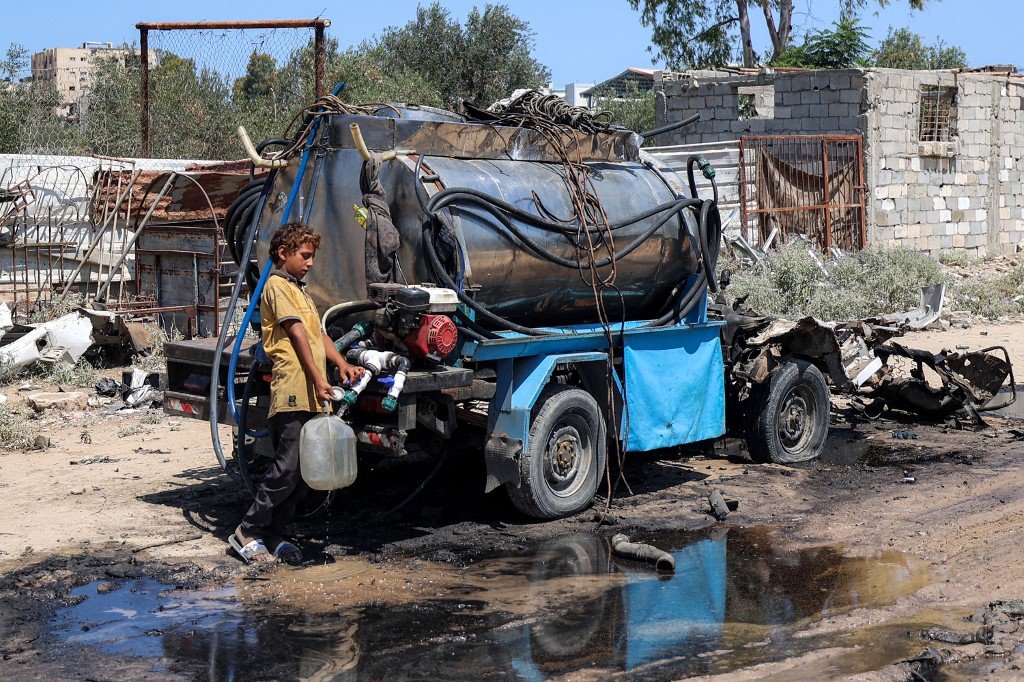
Gaza Herald — Roughly 85 percent of Palestinians in the besieged Gaza Strip suffer frequent, unpredictable disruptions in access to safe drinking water, fueling a sharp surge in viral and bacterial meningitis across overcrowded displacement camps, according to the United Nations Relief and Works Agency for Palestine Refugees (UNRWA).
In its latest humanitarian situation report, UNRWA warned that the ongoing assault by Israeli occupation forces and crippled water and sanitation infrastructure are driving a dangerous public health emergency. Suspected viral meningitis cases have jumped roughly 2.6-fold, while bacterial meningitis cases have surged up to 4.1 times compared with last year, propelled by contaminated water, raw sewage, and accumulating waste.
UNRWA reported that 76 percent of households across Gaza face acute shortages of basic hygiene supplies, compounding the spread of communicable diseases. The agency also noted that 94 percent of the population, approximately 1.98 million Palestinians, urgently requires shelter assistance and non-food relief items amid the widespread destruction of homes and civilian infrastructure.
Direct attacks by Israeli occupation forces have simultaneously eroded UNRWA’s operational capacity. The agency documented 1,059 incidents targeting its facilities and displaced civilians sheltering inside them from the start of the genocidal war through mid-November, leaving 312 UNRWA facilities damaged, nearly its entire network across the Strip.
Rainstorms Deepen Shelter Collapse and Health Risks
UNRWA reported that recent winter rainstorms have worsened conditions for more than 220,000 Palestinians and damaged over 40,000 temporary shelters. The storms also damaged 960 sanitation facilities and nine medical facilities, alongside several temporary learning centers serving displaced children.
Newly displaced families seeking refuge in UNRWA emergency shelters face severe overcrowding and a near-total absence of safe alternatives, leaving thousands exposed to cold rain and flooding. Nearly two million Palestinians remain confined within less than 100 square kilometers without functioning sewage networks or reliable water grids.
Disease Surveillance Under Severe Field Constraints
To contain outbreaks inside packed displacement sites, UNRWA health teams are working to expand disease surveillance, strengthen early detection, and verify vaccination records among displaced families despite severe operational constraints. The agency is also coordinating medical referrals with the Ministry of Health and international partners, while ongoing Israeli military operations and blockade restrictions on essential equipment continue to hinder municipalities, Civil Defense crews, and relief agencies.

