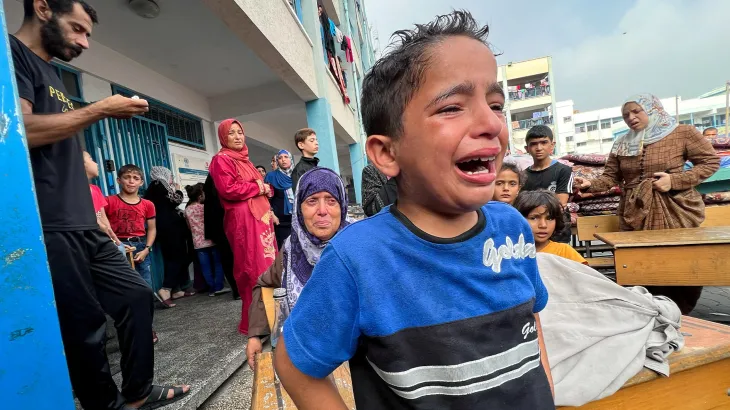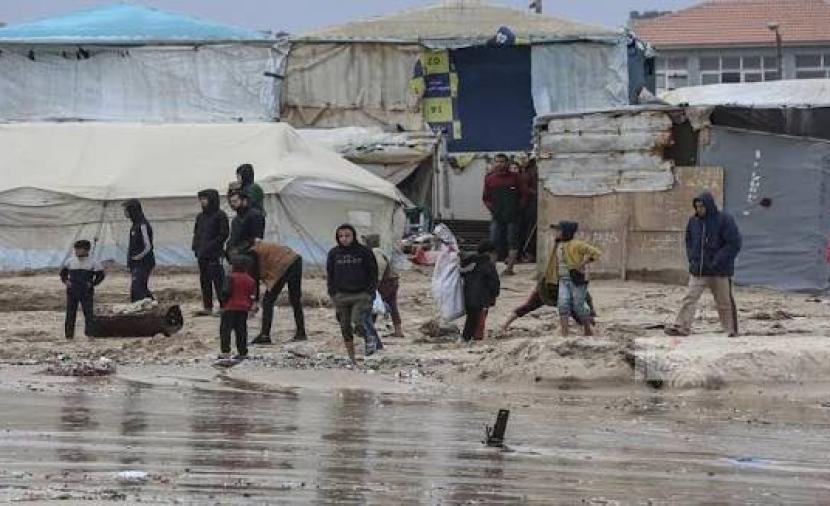
Gaza Herald – The United Nations Relief and Works Agency for Palestine Refugees in the Near East announced on Monday that heavy rains have damaged the shelters of more than 2000 displaced families across the Gaza Strip. The agency stated in a statement via the American platform X that the downpour caused floods that inundated tents and emergency shelters under its management.
The agency added that the flooding worsened the already poor living conditions of displaced people who live in temporary tents and centers. It explained that its teams are working to assess damage and identify urgent needs, alongside clearing water drain blockages. This work is being carried out in cooperation with humanitarian partners to pump water from displacement sites and surrounding areas.
UNRWA warned that forecasts for further rainfall increase the urgent need to provide safe shelter for displaced families, along with blankets, mattresses, and other winter supplies. The agency confirmed that its teams continue to respond to the consequences of the floods despite severe operational constraints and a shortage of basic equipment and supplies.
This statement comes as incidents related to the low-pressure system hitting Gaza since Friday evening continue to rise. On Monday evening, several Palestinians were injured when a cracked building wall collapsed onto a tent housing displaced persons in the Al-Mufti area in the Nuseirat camp in the center of the strip, according to medical sources to Anadolu.
The exact number of injured or the nature of their injuries was not immediately clear, and information regarding the reasons for the wall collapse was unavailable. On Sunday evening, two women and three Palestinian children were killed, and others were injured due to a sand and rock collapse on displaced tents in Deir al-Balah city in the center of the sector, according to the Gaza Civil Defense.
According to the government media office, the low-pressure system accompanied by heavy rain and strong winds caused more than 70 thousand tents to flood and dozens of walls to collapse, in addition to causing injuries and material losses.
In mid-October last year, the United Nations Office for the Coordination of Humanitarian Affairs warned that approximately 950 thousand Palestinians living in displacement sites were exposed to medium or high risks of flooding. The office clarified that about 294 thousand families needed shelter assistance during the winter season.
In a related context, the Peace Council warned on Monday that floods hitting Gaza over the past two days had inundated tens of thousands of tents and temporary shelters, leaving displaced families exposed to cold and unsafe conditions. The council described the situation in the sector as an urgent humanitarian emergency rather than just a threat approaching winter.
The council called on the Israeli government to act immediately to allow the entry of all winter supplies and essential humanitarian aid, considering that delays in Israeli approvals and the implementation of commitments from Sharm El-Sheikh exacerbated the humanitarian crisis. Since the start of the Israeli war on Gaza in October 2023, most areas of the strip have suffered widespread destruction affecting homes, infrastructure, and water and sewage networks.
Repeated displacement has drained Palestinian families’ assets, pushing large numbers to live in tents and temporary centers that do not provide adequate protection from rain and cold. Despite the ceasefire agreement running since October 2025, shelter and reconstruction needs still exceed available aid amid continued Israeli restrictions on entering materials for temporary housing and repairing damaged homes.
This report was produced in the Gaza Herald newsroom.