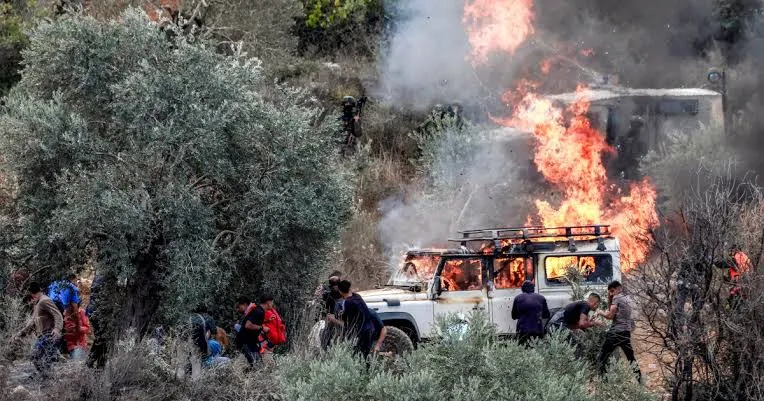
Gaza Herald – The United Nations has warned of escalating violence by Israeli settlers against Palestinians during the olive harvest season in the occupied West Bank. The Office for the Coordination of Humanitarian Affairs recorded more than 200 incidents this year, surpassing the 185 attacks logged during the 2025 season.
Farhan Haq, Deputy Spokesperson for the UN Secretary-General, stated that these figures reflect a sharp rise in hostility despite the official start of the harvest today. He noted that approximately 80 percent of the attacks occurred within the past two weeks, indicating an intensification of violence coinciding with the collection period.
The reported casualties include one Palestinian fatality and injuries to more than 120 others. Additionally, damage has been inflicted on over 2,500 olive trees and saplings. These figures highlight the severe physical toll exacted on agricultural workers and their livelihoods during this critical economic period.
Beyond direct assaults, farmers face significant restrictions imposed by Israeli authorities limiting access to orchards. Many plots are located near settlements or behind the separation barrier, which extends for 712 kilometers. These constraints prevent thousands of families from reaching their land, turning the harvest into a daily struggle against both violence and bureaucratic obstacles.
UN humanitarian partners are currently providing agricultural equipment and legal support to assist farmers in completing the harvest. However, the organization emphasized that ongoing violations continue to undermine the ability of Palestinians to sustain their agricultural activities in the region.
In Gaza, the agricultural sector faces even greater challenges due to strict limitations on importing essential supplies. The ban on machinery parts, engine oils, and other tools severely hampers planting and harvesting operations. This restriction also prevents the operation of the few remaining olive presses still functioning in the territory.
Farmers in Gaza struggle to access land, particularly areas situated behind what is known as the Yellow Line. The destruction of orchards and the difficulty of reaching fields have further exacerbated the crisis, threatening the survival of local agricultural communities.
The olive harvest holds immense economic and social significance for Palestinian families. It serves as a primary source of income for thousands of households. The continuous attacks and property damage threaten to deepen losses and compromise the capacity of farmers to maintain their agricultural practices.
The UN report underscores the urgent need to address these violations. The organization calls for measures to protect farmers and ensure safe access to their lands during the harvest season.
This report was produced in the Gaza Herald newsroom.